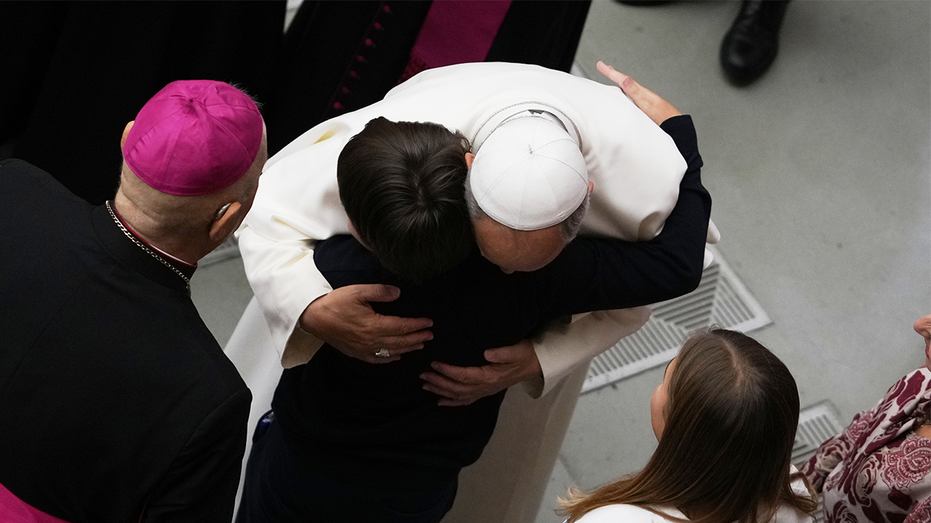
Beyond Condolences: What Pope Leo XIV’s Response to the Sydney Antisemitic Massacre Really Signals

Sarah Johnson
December 18, 2025
Brief
Analysis of Pope Leo XIV’s condemnation of the antisemitic Sydney massacre, exploring Catholic–Jewish history, rising global antisemitism, interfaith dynamics, and how moral rhetoric can — and can’t — counter violent extremism.
Pope Leo XIV, Sydney’s Antisemitic Massacre, and the New Test for Interfaith Solidarity
The Vatican’s condemnation of the antisemitic massacre at a Hanukkah celebration in Sydney is more than a ritual statement of sympathy. It signals how religious authority, political power, and rising global hatred are colliding at a dangerous moment — and how institutions that once helped fuel antisemitism are now being tested on whether they can help dismantle it.
Why this moment matters
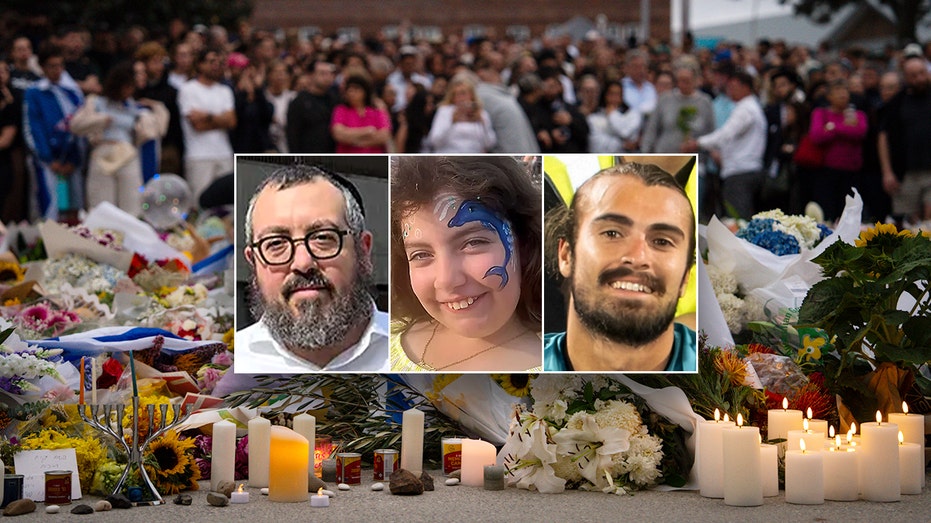
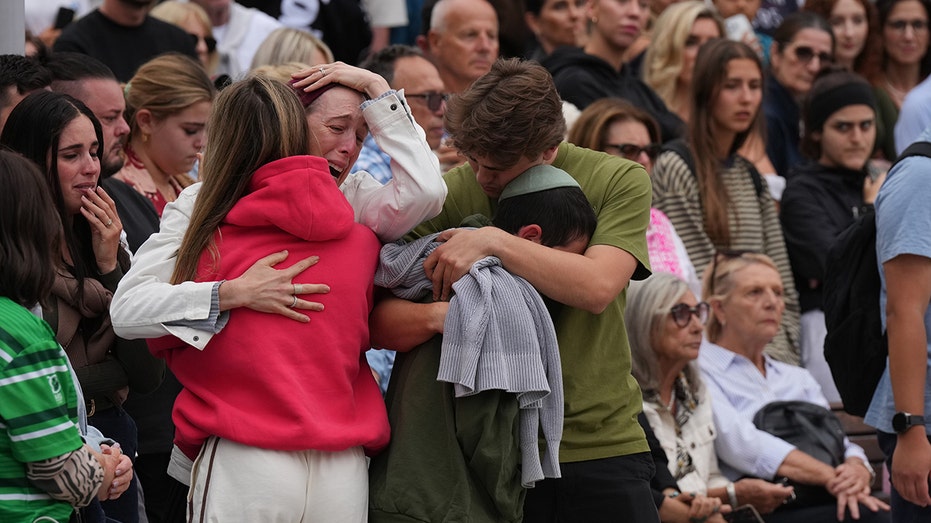
Pope Leo XIV’s sharp denunciation — “Enough of these forms of antisemitic violence! We must eliminate hatred from our hearts” — comes in the wake of a mass shooting at a “Chanukah by the Sea” event on Sydney’s Bondi Beach, where at least 15 people were killed and dozens wounded. Australian Prime Minister Anthony Albanese has labeled it “an act of pure evil... antisemitic terrorism.”
On the surface, this is a familiar pattern: a terrorist attack, political condemnation, prayers from religious leaders. But underneath, several deeper currents are converging:
- The global resurgence of antisemitism — online, on the streets, and now in mass casualty attacks targeting Jewish events.
- The Catholic Church’s ongoing effort to confront its own historical role in fomenting anti-Jewish sentiment.
- The question of whether moral rhetoric from religious leaders can meaningfully counter radicalization, or whether it risks becoming background noise.
- The way religious messaging on other contentious issues — like abortion — becomes intertwined with responses to political violence.
This episode is a litmus test: can moral appeals from one of the world’s most visible religious leaders translate into real-world changes in security, political discourse, and interfaith cooperation, or will they be treated as symbolic gestures in an increasingly polarized environment?
How history shapes this moment
To understand why a papal condemnation of antisemitic violence carries particular weight, you have to start with the Church’s historical relationship to the Jewish people.
For centuries, Christian teaching in Europe portrayed Jews as cursed, rejected by God, or collectively responsible for the death of Jesus. This theological framing fed into discrimination, ghettoization, forced conversions, and pogroms. While the Holocaust was a Nazi project, Church silence and entrenched Christian antisemitism helped create an environment where Jews were already marginalized and demonized.
The turning point came with the Second Vatican Council (1962–1965), particularly the 1965 declaration Nostra Aetate, which formally rejected the idea of Jewish collective guilt for the crucifixion and affirmed that “the Jews should not be presented as rejected or accursed by God.” It encouraged dialogue and respect between Catholics and Jews. Subsequent popes — John Paul II, Benedict XVI, and Francis — reinforced this shift with visits to synagogues, prayers at Holocaust memorials, and explicit denunciations of antisemitism.
Pope Leo XIV’s comments sit squarely in this post–Nostra Aetate trajectory. But the historical contrast is stark: an institution that once normalized anti-Jewish prejudice now frames antisemitism as a form of moral and spiritual corruption that must be “eliminated… from our hearts.” The measures of success, however, are no longer internal theological reforms; they are security statistics and whether Jewish communities feel safe celebrating a holiday in a public space.
The deeper forces driving the surge in antisemitic violence
The Sydney attack is not an isolated event. It reflects several overlapping trends:
- Global spike in antisemitic incidents. Data from countries with robust hate-crime monitoring has shown sharp increases in antisemitic incidents over the past decade, often spiking around Middle East crises. In multiple Western democracies, Jewish institutions report record levels of harassment, vandalism, and threats.
- Convergence of ideologies. Antisemitism no longer maps neatly onto a single political spectrum. It appears in jihadist propaganda, white supremacist manifestos, and some far-left conspiratorial narratives. The Sydney shooting, allegedly carried out by a father-son duo targeting a Hanukkah celebration, echoes the pattern of ideologically motivated violence where family units or small cells radicalize together.
- Digital echo chambers and rapid radicalization. Online platforms are amplifying extremist content that blends antisemitic tropes with grievances about geopolitics, economics, or identity. Young people and isolated individuals are particularly vulnerable to this content, which often masquerades as “resistance” or “truth-telling.”
- Normalization of coded hate speech. Mainstream discourse increasingly tolerates or fails to punish dog whistles and conspiracy theories about “globalists,” “elites,” or “dual loyalty” — all historically intertwined with antisemitic narratives. This lowers the threshold for more explicit and violent expressions of hate.
In that context, the Pope’s language is notable for its clarity: he labels the attack as antisemitic violence and terrorism, not as a generic “tragedy.” That matters because vagueness has often been used to avoid naming antisemitism directly.
What the Vatican is trying to do — and its limits
Leo XIV’s response combines three layers of messaging:
- Condemnation and solidarity with victims. Publicly “entrusting to the Lord the victims… against the Jewish community” situates Jews not as theological rivals but as victims to be mourned and protected. This reinforces the post–Vatican II stance that antisemitism is a sin, not a fringe opinion.
- Appeal to would-be perpetrators. In his telegram, Leo expresses “renewed hope that those tempted to violence will undergo conversion and seek the path of peace.” This is directed not only at the attackers themselves (one is already dead) but at a broader pool of potential imitators. It frames extremism as a moral and spiritual crisis that can be interrupted.
- Integration with a broader moral agenda. During the same audience, he issues a strong anti-abortion message, praising a Nativity scene with 28,000 ribbons representing “lives saved from abortion.” For the Vatican, the link is coherent: defending life from conception to its violent end. But politically, this juxtaposition complicates the narrative. Some will see it as a consistent ethic of life; others as conflating distinct issues or shifting focus from antisemitic terror to culture-war terrain.
The deeper question: does this kind of moral rhetoric drive real change in behavior or policy?
- Among practicing Catholics and other Christians, strong, unambiguous messages against antisemitism can reshape attitudes, especially in regions where religious identity still strongly influences worldview.
- Among secular or non-Christian extremists, papal statements carry less direct influence. Their value is in shaping broader social norms, which in turn can affect law enforcement priorities, political discourse, and civic education.
- Within Jewish communities, consistent Vatican solidarity can help rebuild trust after centuries of hostility — but any disconnect between words and institutional actions, especially on issues like Holocaust memory or antisemitic preaching in parts of the world, will be closely scrutinized.
Australia’s response and the gun-law question
Australia already has some of the strictest gun laws in the world, tightened dramatically after the 1996 Port Arthur massacre. Prime Minister Albanese’s vow to strengthen those laws further underscores a crucial point: legal frameworks can reduce the frequency of attacks, but they don’t eliminate the underlying hatred that leads someone to target a Jewish holiday event.
The reported heroism of Ahmed al Ahmed, a man who tackled and disarmed one of the shooters and was himself shot, adds another layer. A likely Muslim or Arab-identifying name appearing as the person who put his body on the line to protect a Jewish crowd punctures simplistic narratives about permanent inter-communal hostility. It illustrates that in the real world, solidarity often emerges from individuals who refuse to be bound by their group’s supposed “side.”
For policymakers and religious leaders alike, this raises a challenge: how can institutions amplify these examples of cross-community courage, rather than letting the attackers define the narrative?
Expert perspectives: symbolism vs. structural change
Experts on religion, extremism, and antisemitism tend to converge on one point: high-profile condemnations matter, but only as part of a larger ecosystem of prevention and accountability.
Religious historian Dr. Deborah Lipstadt, now the U.S. Special Envoy to Monitor and Combat Antisemitism, has repeatedly argued that antisemitism is “not just a problem for Jews; it’s a threat to democracy itself.” From that vantage point, a papal denunciation isn’t simply interfaith outreach; it’s a statement about what kind of societies we want to build.
Extremism researchers also stress the need to translate moral language into concrete action: better monitoring of hate crimes, funding for security at religious institutions, community-based deradicalization programs, and digital platforms that clamp down on incitement rather than amplifying it for profit.
The Vatican itself does not control these levers, but it does influence national churches, Catholic schools, and lay organizations across continents. The real test will be whether those institutions treat Sydney as a call to deepen education on antisemitism, foster joint Jewish–Catholic initiatives, and confront antisemitic myths where they still surface in local contexts.
What mainstream coverage often misses
Several important angles tend to be underplayed when headlines center on the Pope’s words and the horror of the attack:
- The evolving Catholic–Jewish relationship. This story is part of a decades-long effort by the Vatican to redefine that relationship. Each papal response to antisemitic violence either strengthens or weakens the credibility of that project.
- The cross-pressures within religious messaging. By pairing condemnation of antisemitic terror with a highly charged anti-abortion display, the Vatican is asserting a “consistent life ethic.” But for many outside the Church, these issues are politically and morally distinct. That gap in perception can affect how these statements are received.
- The interfaith dimension of heroism and villainy. A likely Muslim-heritage man risking his life to stop an antisemitic attack on Jews complicates simplistic "civilizational" narratives that extremists on all sides try to promote.
- The risk of fatigue. As attacks and condemnations repeat, there’s a danger that public reactions become ritualized. The challenge for leaders is to prevent moral statements from becoming a kind of liturgical response to violence — emotionally powerful but structurally inert.
What to watch next
Several developments will indicate whether this moment becomes a turning point or another tragic data point:
- Concrete initiatives from local Catholic institutions. Do dioceses in Australia and beyond announce new joint programs with Jewish communities, security support, or educational campaigns on antisemitism?
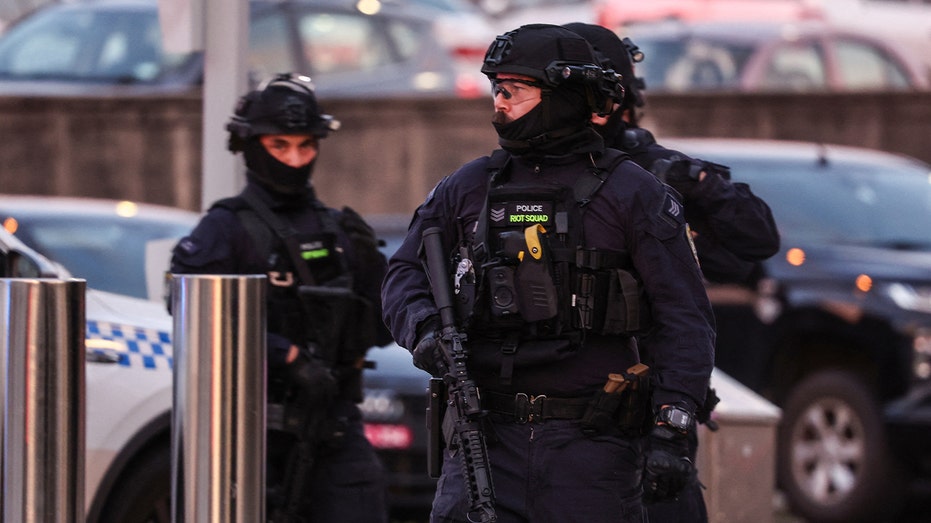
- Policy follow-through in Australia. Beyond potential gun-law adjustments, does the government invest in targeted protection for Jewish events, improved intelligence on extremist networks, and better support for hate-crime victims?
- Digital accountability. Do tech companies and regulators respond to this attack by examining the online spaces where antisemitic incitement and glorification may have thrived?
- Public narrative. Is more attention paid to the attacker’s ideology than to the heroism of those who resisted? Which story ends up shaping public consciousness?
The bottom line
Pope Leo XIV’s condemnation of the Sydney massacre is not just another statement of condolence. It sits at the intersection of a dangerous rise in antisemitic violence, the Catholic Church’s struggle with its own history, and the global search for tools that can actually disrupt radicalization.
Words from the Vatican cannot by themselves stop the next attack. But they can either reinforce or erode a moral consensus that antisemitism is not just wrong but incompatible with any vision of a decent society. The real measure of this moment will be whether religious, political, and civic institutions turn that consensus into action, so that a Hanukkah event on a beach — or any public celebration of Jewish life — is no longer a soft target but an ordinary, unremarkable exercise of communal joy.
Topics
Editor's Comments
One uncomfortable but necessary question is whether we are becoming desensitized to this cycle: atrocity, condemnation, fleeting outrage, and then a return to business as usual. The Pope’s words are morally strong, but they risk being absorbed into that familiar rhythm unless institutions move beyond statements to measurable commitments. That might mean Catholic schools introducing rigorous curricula on antisemitism and conspiracy theories, or national bishops’ conferences lobbying for concrete protections for Jewish communities. Another underexplored tension is the Vatican’s dual role as a moral authority and a political actor. By pairing condemnation of antisemitic terror with a clear anti-abortion message, the Pope is asserting moral consistency — yet he is also entering disputed political terrain. The more the Church links responses to hate violence with other hot-button issues, the more it risks having its stance on antisemitism interpreted through partisan lenses rather than as a universal ethical demand. The next phase will show whether religious leadership can maintain moral clarity while navigating these political crosscurrents.
Like this article? Share it with your friends!
If you find this article interesting, feel free to share it with your friends!
Thank you for your support! Sharing is the greatest encouragement for us.