Carlton Davis, a Late Flag, and the NFL’s Growing Officiating Crisis

Sarah Johnson
December 16, 2025
Brief
Carlton Davis’ anger over a late pass interference flag is more than sour grapes. It exposes the NFL’s deeper crisis of trust in officiating, from rules shifts to betting-era scrutiny.
Patriots, Penalties, and the NFL’s Trust Problem: Why Carlton Davis’ Complaint Hits a Nerve
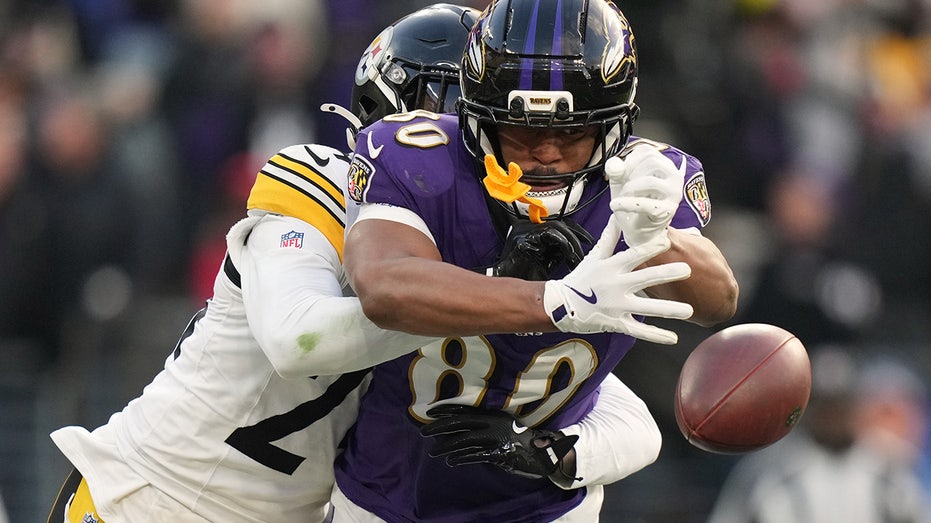
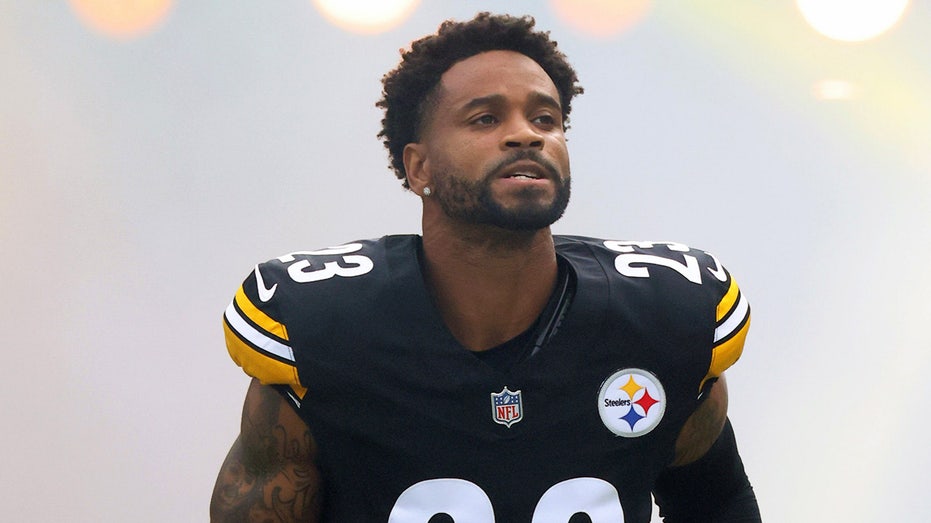
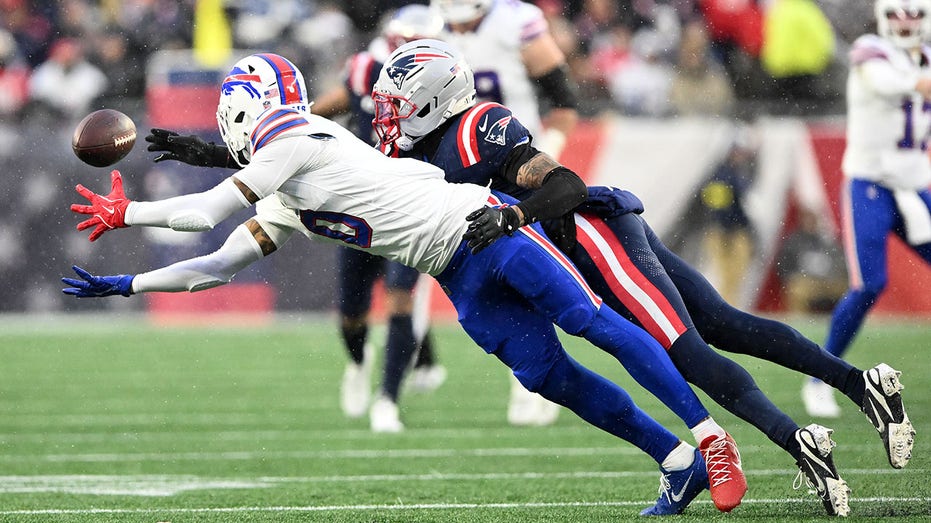
New England Patriots cornerback Carlton Davis’ frustration over a late pass interference flag in a blown 21-point lead against the Buffalo Bills is more than a postgame rant. It taps directly into one of the NFL’s deepest and most persistent fault lines: the legitimacy of officiating in the biggest moments, and the growing perception among players and fans that outcomes are too often shaped by judgment calls, not just performance.
On its face, this is a familiar storyline — emotional loss, questionable flag, angry quotes. But beneath it lies a broader struggle over consistency, transparency, and the very credibility of the league’s product at a time when betting, broadcast money, and fan expectations have never been higher.
The Bigger Picture: A Long History of Officiating Controversies
The Davis play fits into a long and troubled history of officiating controversies that have shaped how the NFL is viewed:
- The 2018 NFC Championship Game between the Saints and Rams, where an obvious missed defensive pass interference call effectively altered who went to the Super Bowl and helped push the league to temporarily allow DPI reviews.
- The 2019–2020 DPI review experiment, which was widely criticized for inconsistent standards and quietly scrapped after one season, leaving both coaches and players even more skeptical about officiating oversight.
- The “Tuck Rule” game (Patriots vs. Raiders, 2002), still invoked whenever a judgment call changes the trajectory of a season.
- The 2022–2023 “roughing the passer” flare-up, when multiple dubious calls on defensive hits prompted league-wide debate, player backlash, and even public criticism from broadcast crews.
Against that backdrop, Davis’ specific complaint is revealing. He’s not only arguing that the call was wrong; he’s attacking how it was made — the timing of the flag, the delay, and what that suggests about uncertainty or outside influence in a high-leverage moment.
His key line — “If it’s a flag, it’s like definitive… you don’t take 10 seconds to throw a flag” — shows where the trust is breaking down. Players can live with tough calls; what they struggle with is the feeling that officials are hedging, reacting to the moment, or second-guessing after seeing the impact of the play.
What the Late Flag Really Signals
The late pass interference flag on Buffalo’s go-ahead drive matters for three intertwined reasons:
- Perception of “situational officiating”
Players increasingly believe that officials call games differently in critical moments — sometimes letting more contact go, other times throwing flags that feel overly technical or late. When a flag comes out long after the contact, it feeds the suspicion that the moment, not the rulebook, is driving the decision. - Defensive players feel the rules creep
Over the past two decades, the league has steadily tilted rules toward offense: illegal contact emphasis (2004), defenseless receiver protections, PI enforcement changes, and ongoing points-of-emphasis campaigns. In that environment, late flags in big moments feel, to defenders, like one more way the deck is stacked. - The integrity issue in a betting era
With legal sports betting now deeply integrated into NFL broadcasts and partnerships, every borderline call in the fourth quarter of a close game isn’t just a football issue — it’s also a financial one. Even if officials are acting in good faith, appearances matter more than ever.
In this game, Davis’ penalty extended a drive that ended in a James Cook touchdown and a 35–31 Bills lead. No single call decides a game, but when it comes after a 21-point collapse and shifts a critical possession, it becomes the emotional and narrative focal point — especially for a team that had the division title in its grasp.
How We Got Here: Rules, TV, and a League Built on Offense
To understand why a single PI flag can feel so consequential, you have to look at how the NFL evolved.
Since the early 2000s, the league has calculated — correctly — that higher scoring, dramatic comebacks, and passing explosions drive ratings. The result has been a steady rules shift:
- 2004 illegal contact emphasis: Defenders no longer permitted to significantly disrupt receivers beyond five yards; this coincided with an explosion in passing stats.
- Expanded defenseless receiver protections: Hits that were previously legal are now flags, often subjective ones.
- Spot foul pass interference: A single DPI call can be effectively equivalent to a long completion, often swinging tens of yards in field position.
- Quarterback protection rules: Hits that used to be routine now draw roughing flags, extending drives.
Add high-definition replays, multiple camera angles, and social-media slow-motion breakdowns, and every call is instantly dissected. Yet, paradoxically, the league still leans heavily on on-field judgment rather than fully exploiting technology for real-time corrections.
That gap — between the precision fans expect and the human limitations of officiating crews — is where games like Patriots–Bills become flashpoints.
Expert Perspectives: What’s Really at Stake
Former players, coaches, and analysts have been circling the same themes for years.
Sports law scholar Michael McCann has argued that the NFL’s biggest officiating challenge isn’t individual mistakes, but system design: “You have a multi-billion-dollar entertainment product relying on part-time crews, inconsistent interpretations, and limited transparency. That’s a governance issue, not just a human error problem.”
Former NFL head coach and analyst Rex Ryan has repeatedly warned that defenders feel like they’re “playing a different sport” under current enforcement trends: “You can’t jam, you can’t hit late, you can’t be too physical, and if it’s late in the game, forget it — any contact is a risk.”
And longtime official-turned-analyst Mike Pereira has emphasized that late flags are especially damaging for credibility: when a flag appears well after the contact, viewers assume that officials:
- Reacted to the outcome rather than the action, or
- Were influenced by another official or the crowd response.
That’s precisely what Davis is reacting to. It’s less about the grab itself and more about the sequence: contact, no flag, play develops, then suddenly a marker flies. For defenders, that feels like punishment by hindsight.
Data & Evidence: How Much Do Penalties Really Matter?
Context matters: the Patriots were flagged seven times for 65 yards in this game. That’s not an extreme outlier in raw numbers, but the timing and type of penalties are crucial.
- Defensive pass interference is one of the most impactful penalties in football. Because it’s a spot foul, a single DPI can be equivalent to a 30–40-yard completion. Analytics shops have repeatedly found that DPIs rank among the highest in expected points added (EPA) swing per flag.
- Comeback games magnify each flag’s impact. When a team blows a 21-point lead, every extended drive becomes a pivot point in the narrative. A late-game DPI that leads directly to the go-ahead score doesn’t just move chains — it rewrites the story from “dominant win” to “collapse helped by officiating.”
- League-wide trends show penalties influencing critical moments. Independent analyses of multiple seasons have found that the rate of defensive penalties, particularly DPI and defensive holding, often rises in high-leverage, late-game situations. That doesn’t prove bias, but it feeds the perception that officials are more likely to insert themselves into the game’s outcome when the stakes are highest.
For a team like the Patriots, trying to re-establish an identity in the post-Brady, post-Belichick era, such swings carry extra weight. They’re not just fighting opponents; they’re fighting the perception that close games slip away because of factors they can’t control.
What Mainstream Coverage Often Misses
Most headlines frame this story as a frustrated player complaining about a call in a tough loss. That framing misses several deeper points:
- This is part of a growing player movement demanding clearer standards and faster, more transparent calls, particularly on judgment penalties.
- The emotional energy is directed at timing and consistency, not merely disagreement with the call itself. Davis’ focus on the delay — “you don’t take 10 seconds to throw a flag” — speaks to suspicions about the decision-making process, not just the outcome.
- There’s an unspoken labor dynamic: players risk fines if they criticize officials too directly. So when someone speaks out anyway, it often reflects a deeper level of frustration inside the locker room.
- These controversies directly intersect with the NFL’s business model in an era of heavy gambling integration, where officiating trust is not just a fairness issue but a reputational and financial risk.
Looking Ahead: What Needs to Change?
If the NFL wants to reduce Carlton Davis-type blowups — and the distrust they signal — several reforms are on the table, some already quietly discussed inside league circles:
- Full-time officiating crews
Despite the size of its revenues, the NFL has historically relied on officials who often have other jobs. Moving to truly full-time, year-round training and evaluation could reduce inconsistencies and improve mechanics, including late-flag issues. - Real-time centralized review for judgment calls
Instead of replay only correcting objective errors (like feet in bounds or ball placement), a small, empowered centralized crew could assist with borderline PI, holding, and roughing calls in real time — including overruling late flags that don’t meet a clear standard. - Transparent postgame reports
Currently, the league may privately grade officials but rarely explains controversial decisions in detail. Releasing standardized, public postgame officiating reports for high-profile games could build trust by acknowledging errors and clarifying interpretations. - Revisiting the severity of spot fouls
Some analysts have long argued for a hybrid approach (e.g., maximum yardage on DPI or automatic first down with capped distance) to reduce the enormous leverage a single subjective call can carry. - Clearer “late flag” guidance
Mechanically, the league could instruct officials to throw immediately if they’re leaning toward a foul and use huddles to pick up flags if necessary, rather than the reverse — which looks and feels like “after the fact” officiating.
Whether the NFL embraces any of these changes will depend on how much it believes officiating controversies threaten its brand. So far, ratings have remained strong despite periodic outrage, giving the league less urgency to overhaul the system.
The Bottom Line
Carlton Davis’ anger about a late pass interference flag isn’t just about one play, one drive, or even one game. It reflects a broader crisis of confidence in how NFL games are decided — a crisis magnified by years of rule changes favoring offense, a mixed track record on using technology to improve officiating, and the massive growth of sports betting that makes every borderline call feel economically as well as emotionally loaded.
The Patriots’ collapse against the Bills will be remembered for the blown 21-point lead and the second-half swing. But inside locker rooms and front offices, the longer-lasting memory may be the sense that, when the game tightened and the season hung in the balance, it wasn’t just the players deciding the outcome — it was the flags.
Until the league can convincingly show that those flags are timely, consistent, and transparent, postgame complaints like Davis’ won’t just continue; they’ll become central to the way fans and players talk about the modern NFL.
Topics
Editor's Comments
What’s striking in the Davis episode is how normalized this kind of officiating angst has become. Ten or fifteen years ago, a marquee game swinging on a subjective penalty would dominate discourse for weeks. Now, it’s almost routine — one more data point in a larger pattern. That normalization is dangerous for the league. If fans and players start to view officiating volatility as an unchangeable feature rather than a solvable problem, they adapt by blaming the refs, hedging with conspiracy talk, or disengaging emotionally from results. The NFL’s gamble so far has been that offensive fireworks and close finishes outweigh frustration over officiating. But there’s a tipping point where cumulative mistrust erodes the drama those same close games are supposed to deliver. The question isn’t whether the league can eliminate human error — it can’t. The question is whether it’s willing to redesign the system so that, when a call like this decides a drive, the default reaction is acceptance, not suspicion.
Like this article? Share it with your friends!
If you find this article interesting, feel free to share it with your friends!
Thank you for your support! Sharing is the greatest encouragement for us.