Engineered Failure: What the Senate’s Dueling Health Care Votes Really Reveal About Power and Premiums

Sarah Johnson
December 11, 2025
Brief
The Senate’s dueling health care votes are engineered to fail. This analysis explains the deeper strategy, historical context, and how both parties are positioning themselves for looming premium hikes and midterms.
Why Both Senate Health Care Plans Are Designed to Fail — And What That Reveals About Washington’s Real Strategy
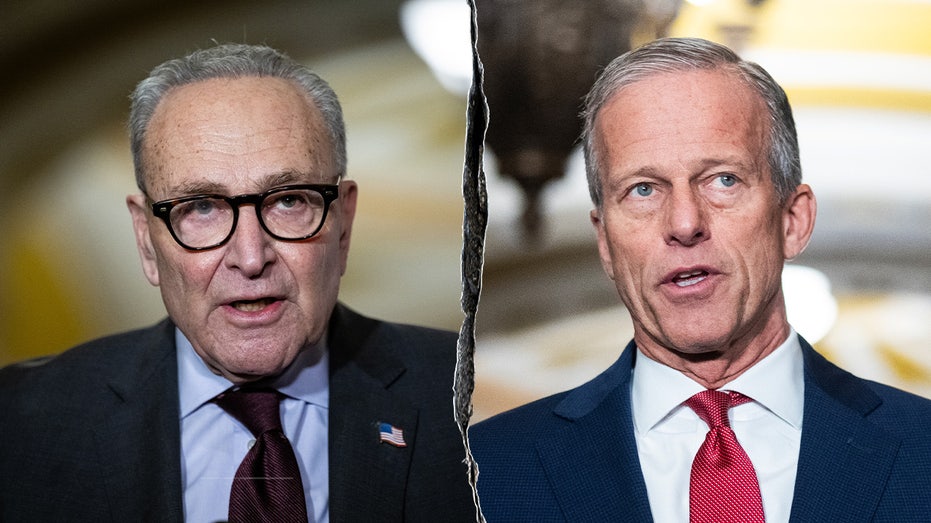
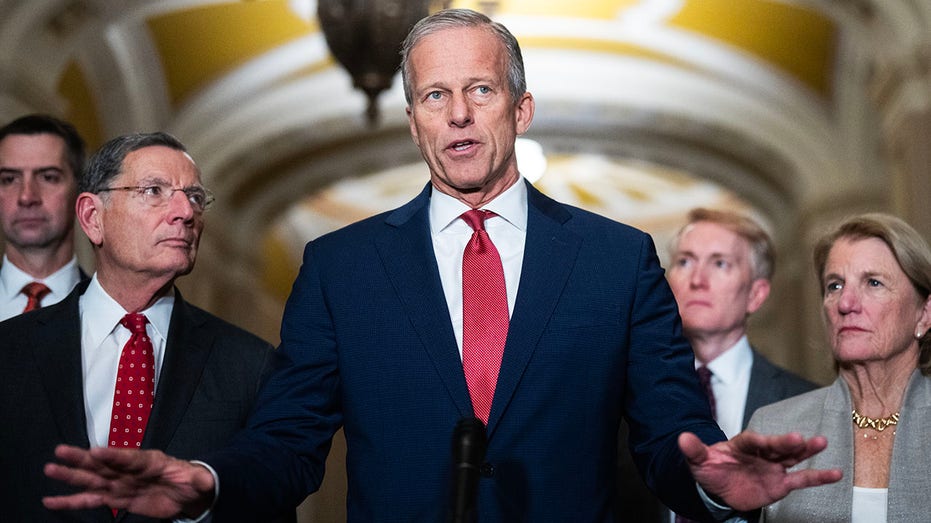
On the surface, Thursday’s Senate votes on health care look like another partisan clash over Obamacare subsidies and health savings accounts. In reality, they’re something else entirely: a highly choreographed exercise in failure, timed to a year-end deadline, aimed less at solving the affordability crisis than at assigning blame for it.
Understanding what’s happening requires looking past the roll call and into the structure of the health insurance market, the history of Obamacare politics, and the midterm map both parties are already staring at. These votes are best understood not as attempts at policy, but as moves in a longer game over who owns the coming premium shock on January 1.
The stage-managed stalemate: why 60 votes matters more than subsidies or HSAs
Both the Republican and Democratic proposals are being brought up under a 60-vote threshold. Leadership in both parties knows neither can clear that hurdle. That’s the point.
- The GOP plan lets people use Health Savings Accounts (HSAs) more flexibly to shop for coverage, but does not renew expiring ACA subsidies.
- The Democratic plan simply extends those subsidies for three years, with no structural reforms.
Both approaches respond to real pain: sharp premium spikes looming as temporary subsidies expire. But each is crafted to be unacceptable to the other party. The result: two pre-packaged failures that allow both sides to say, “We tried; they blocked it.”
This is a crucial tell. When leadership moves high-stakes health care legislation through a 60-vote test instead of a 51-vote reconciliation process, it is signaling that the day’s main product is political positioning, not policy change.
How we got here: a decade of governing by subsidy patches
The current fight is the latest chapter in a long-running pattern: both parties papering over structural health system problems with temporary financial fixes, then weaponizing the resulting cliff when the money runs out.
Key milestones:
- 2010: The ACA (“Obamacare”) passes, expanding coverage via Medicaid and subsidized private plans. The law leans heavily on premium subsidies for lower- and middle-income buyers in the individual market.
- 2014–2016: Insurers struggle with sicker-than-expected enrollees; premiums rise; many carriers exit exchanges. Congress repeatedly debates but avoids deep structural reforms.
- 2017–2018: Republican attempts to repeal and replace the ACA fail. Instead, Congress pares back pieces (like the individual mandate penalty) while keeping the underlying architecture. The market becomes more patchwork and fragile.
- 2020–2022 and beyond: Pandemic relief packages and later legislation temporarily turbocharge ACA subsidies to keep premiums manageable. Those boosts are explicitly time-limited, creating built-in cliffs when they expire.
Washington has repeatedly opted to treat symptoms—short-term premium spikes—rather than the underlying disease: the high, fragmented, and opaque prices charged by hospitals, drug makers, and insurers in a system built to reward volume and complexity rather than value.
The looming Jan. 1 premium hikes are not a surprise. They’re the predictable result of temporary subsidies meeting a structurally expensive system. Today’s Senate votes are about how to distribute the political blame for that collision.
What the dueling plans quietly assume about health care
Each proposal is built on a fundamentally different theory of how health care should work.
The GOP’s HSA-first vision: patients as shoppers
The Republican plan leans heavily on Health Savings Accounts, banking on the idea that giving individuals more tax-advantaged dollars to spend directly will discipline costs.
Underlying assumptions:
- More consumer “skin in the game” will make patients more price-sensitive and cause providers to compete on cost.
- Market choice, not government subsidy, should be the main driver of affordability.
- Coverage design can be more flexible if people can accumulate savings to buffer risk.
The tension: health care markets don’t behave like typical markets. In emergencies, patients are not shoppers. Prices are often opaque or non-negotiable. A 2021 RAND study found hospital commercial prices averaging over 240% of Medicare rates, with little relationship to quality. HSAs may help some higher-income, healthier households, but they are a blunt tool against a cost structure that is fundamentally misaligned with market transparency.
The Democrats’ subsidy-first vision: stabilize now, reform later (maybe)
The Democratic plan extends enhanced ACA subsidies for three years, aiming to prevent millions from facing sudden premium shocks.
Underlying assumptions:
- Coverage loss and premium spikes are politically and morally unacceptable.
- Short-term stability is more urgent than long-term system redesign.
- Once the immediate crisis is averted, there will be room to debate broader reforms.
The tension: “temporary” subsidies are rarely temporary in practice. Once voters get used to lower premiums, pulling back is politically brutal. Yet locking in higher subsidy levels without addressing underlying costs risks turning the federal government into a permanent shock absorber for an ever-more-expensive system.
In effect, the GOP wants to change how people pay (HSAs, tax-preferred dollars), while Democrats want to change who pays (more federal dollars instead of individuals). Neither plan directly confronts why the underlying prices are so high.
What’s really at stake: midterm politics and the “affordability” narrative
Both parties are acutely aware that voters now rank health care affordability alongside inflation, housing, and wages as a core economic concern. As premiums jump on January 1, every family that sees their bill spike becomes a potential attack ad.
The news story hints at this: Republicans are described as “leery” of leaving town without a fix, because they know they are vulnerable heading into midterms. That’s not just about policy; it’s about narrative control.
- Democrats’ message if nothing passes: “Republicans chose ideology over relief. We tried to extend subsidies; they blocked it.”
- Republicans’ message if nothing passes: “Democrats’ temporary Obamacare patch was unsustainable. We offered more choice and flexibility; they refused to reform a broken law.”
The 60-vote setup ensures both storylines have a kernel of truth. But for families getting hit with higher premiums, the distinction between HSA design and subsidy duration will feel abstract. What they’ll remember is who controls Congress and the White House when their costs go up.
The overlooked issue: the shrinking middle of the insurance market
One critical piece often missing from basic coverage: the widening gap between those fully shielded from premium hikes and those exposed to them.
- Highly subsidized enrollees (lower-income ACA marketplace families) are protected when subsidies are generous, and hit hard when they expire.
- Employer-insured workers often see more gradual but consistent premium and deductible growth, usually hidden in smaller paychecks or less generous benefits.
- Middle-income self-employed or small-business owners who earn just above subsidy thresholds often face the full brunt of premium hikes with no significant relief.
The current fight is largely about the first group—but politically, the third group may be the most volatile. These are voters who do everything “right” economically and feel punished by a system that seems to reserve the most robust help for those just below them.
Neither the Republican HSA plan nor the Democratic subsidy extension directly addresses this middle group’s structural vulnerability. Without reforms that tackle underlying prices and benefit design, this frustration will keep surfacing in different political forms—angry town halls, insurgent primaries, and volatile swing districts.
What happens after both plans fail?
The article suggests two paths: a flurry of year-end dealmaking or pure inaction. Both are plausible. Historically, Congress often moves in the shadow of holidays and crises, stitching together “mini-bargains” that can be sold as progress.
Realistic endgame scenarios include:
- A narrow, time-limited subsidy patch
A short extension—six to twelve months—of enhanced subsidies, possibly offset by modest cost-cutting measures elsewhere in the health budget. This allows both parties to claim they averted immediate pain while deferring structural fights. - A quiet, backdoor partial fix
Regulators and states use administrative tools—reinsurance waivers, special enrollment periods, targeted assistance—to soften the blow without Congress fully resolving the subsidy cliff. - No substantive action
Premiums jump on January 1; Congress returns in the new year to hearings, finger-pointing, and perhaps a more urgent push for a partial fix under electoral pressure.
None of these likely scenarios fundamentally address the affordability crisis. They postpone, blunt, or reframe it.
Expert perspectives: why this cycle keeps repeating
Health policy experts have been warning for years that the pattern we’re seeing—temporary subsidies, looming cliffs, last-minute show votes—is not a bug but a feature of a deeply gridlocked system.
Dr. Atul Gawande has often described American health care as “a system perfectly designed to get the results it gets.” Our political system has mirrored that design: perfectly calibrated to maintain a high-cost, rent-seeking status quo while staging public fights over who foots the bill.
Economist Uwe Reinhardt, before his death, famously called U.S. health spending a reflection of “our national values”—or lack thereof—on fairness and solidarity. These Thursday votes are less about the technicalities of HSAs versus subsidies and more about a deeper unresolved question: How much financial risk should individuals bear when they get sick, and how much should be socialized?
Looking ahead: three big questions to watch
As the Senate moves through these test votes and into the year-end crunch, three questions will determine whether this moment becomes another footnote or a turning point in health policy:
- Will either party risk a bigger conversation about prices?
Real affordability requires confronting hospital consolidation, drug pricing, and opaque billing. That means tangling with powerful industry lobbies that donate heavily to both parties. - Will swing-district and moderate lawmakers break ranks?
Members most exposed to premium backlash—especially in suburban districts—may be the ones who force leadership toward a narrow bipartisan patch. - Will voters connect the dots?
If premium hikes become seen as the predictable product of political theater rather than inevitable economics, pressure for structural reform could intensify in ways neither party fully controls.
The bottom line
Thursday’s Senate votes are not really about choosing between HSAs and subsidies. They are about producing on-the-record proof that each party “tried” something, knowing it would fail, ahead of a painful premium spike that everyone saw coming.
The deeper story is a decade-long bipartisan pattern: manage health care’s political fallout with short-term financial patches, avoid direct confrontation with the industries driving costs, and let voters absorb the difference. Until that pattern changes, we’ll keep seeing more high-drama votes and more families quietly recalculating their budgets every January.
Topics
Editor's Comments
What’s striking about these votes is not simply that they are destined to fail, but how normalized this has become as a governing strategy. We now expect Congress to stage symbolic roll calls on life-altering issues—health care, student debt, housing—because those votes feed campaign narratives and fundraising pitches. The deeper question is what repeated, visible failure does to public trust. Every time lawmakers hold a high-profile vote with no intention of delivering a result, they reinforce the perception that the legislative process is theater. That cynicism doesn’t just hurt incumbents; it corrodes the basic premise that collective problems can be solved through public institutions. At some point, the risk for both parties is that voters stop differentiating between competing proposals and conclude that the entire system is incapable of grappling with something as fundamental as making health care affordable. That’s a legitimacy problem, not just a policy one.
Like this article? Share it with your friends!
If you find this article interesting, feel free to share it with your friends!
Thank you for your support! Sharing is the greatest encouragement for us.