From Bondi to Berlin: How Israel’s Warnings Expose a New Phase of Global Terrorism

Sarah Johnson
December 18, 2025
Brief
Israeli intel warnings after the Bondi Hanukkah attack point to a deeper shift: low-tech, state-linked, globally networked terror targeting Western holidays and open societies. Here’s what’s really changing.
Hidden Front Lines: What Israel’s Terror Warnings Reveal About a New Phase of Global Violence
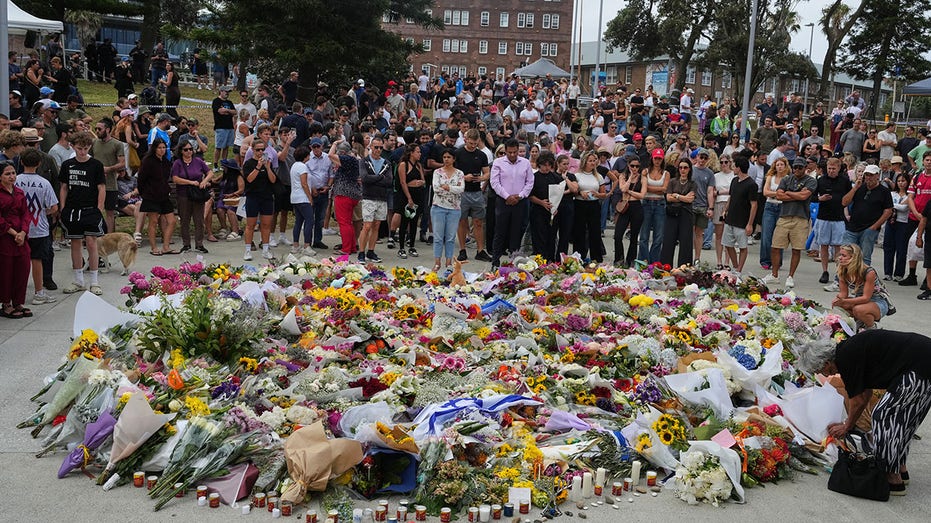
Israeli intelligence officials are signaling something bigger than a run of bad headlines: they’re describing a structural shift in global terrorism. The Bondi Beach Hanukkah attack in Sydney is being presented not as an isolated tragedy, but as one data point in a larger pattern of low-tech, fast-moving plots aimed at soft targets across the West — Jews, Christians, and crowded public spaces, especially around religious holidays.
That matters for three reasons. First, it suggests we are returning to an era of chronic, diffuse terror risk rather than episodic spectacular attacks. Second, it highlights the growing role of state-linked actors (notably Iran) operating through deniable intermediaries. Third, it exposes a dangerous gap between what intelligence services say they are seeing and what democratic societies are prepared — politically and psychologically — to accept and respond to.
A New Terror Ecosystem, Not Just a New Wave
To understand what’s changing, it helps to compare the current landscape to previous terror eras:
- Al Qaeda 1.0 (late 1990s–mid-2000s): Hierarchical, centralized networks planning large-scale, complex operations (e.g., 9/11, embassy bombings). Detection focused on financial trails, training camps, and communications.
- ISIS 1.0 (2013–2019): Territorial caliphate in Syria/Iraq, combining state-like control with global recruitment. Attacks ranged from centrally directed (Paris 2015) to inspired lone actors (Nice truck attack, Berlin market attack).
- Current phase (post-ISIS territorial collapse, intensified by Gaza war and regional instability): A hybrid model where jihadist ideology, lone-actor radicalization, and state-linked operations overlap in the same ecosystem.
Israeli officials describe a world in which Iran-backed networks, jihadist remnants, criminal groups, and self-radicalized individuals share digital spaces, narratives, and sometimes facilitators. That’s different from the more distinct silos of the past. The same encrypted channels, propaganda videos, and fundraising methods can service both a lone attacker with a knife and a state-directed plot using trained operatives.
Critically, most plots described here are low-tech and rapidly mobilized: knives, vehicles, improvised explosives, small arms, sometimes obtained with little planning and minimal logistics. This is precisely why intelligence officials talk about “ticking bombs” that can emerge from seemingly ordinary environments — a refugee community, a petty criminal network, or an online chat group.
From Tehran to Sydney: How Plausible Deniability Works
One of the most consequential claims in the Israeli account is the description of networks that “frequently rely on non-Iranian nationals” for logistics, intelligence gathering, financing, and execution. This mirrors a pattern documented in multiple public cases over the past decade:
- Foiled plots in Europe: Western intelligence services have repeatedly accused Iranian-linked entities — including the Islamic Revolutionary Guard Corps (IRGC) and Hezbollah — of plotting attacks or assassinations in Germany, France, Denmark, and the Netherlands, often using dual nationals or local intermediaries.
- Latin America and Asia: Arrests in countries like Thailand, India, and South American states have revealed alleged Hezbollah or Iranian-linked operatives scouting Israeli or Jewish targets, sometimes using local crime networks for logistics.
The method is consistent: states outsource the most visible and legally risky stages of an operation to non-Iranian actors. That gives regimes plausible deniability. If the plot fails, they deny involvement and hide behind the complexity of global diasporas and migration flows. If it succeeds, the attack can be framed as homegrown extremism or random violence.
For Western governments, this blurring forces a strategic choice: treat plots as purely domestic radicalization issues, or call them part of a broader geopolitical confrontation involving state-backed terror infrastructure. How they categorize them determines everything from legal tools and sanctions to intelligence-sharing priorities.
Holiday Crowds as Strategic Targets
The focus on Hanukkah celebrations, Christmas markets, and New Year’s Eve gatherings is not accidental. These events combine three features that terrorists value:
- Symbolism: Religious holidays and civic celebrations carry cultural and political weight. Attacking them is a strike at identity, not just bodies.
- Density: Large crowds in confined areas allow for high casualty counts with low-tech methods — a knife, a vehicle, or a small homemade explosive can cause outsized harm.
- Predictability: Publicized schedules and locations reduce the need for sophisticated reconnaissance.
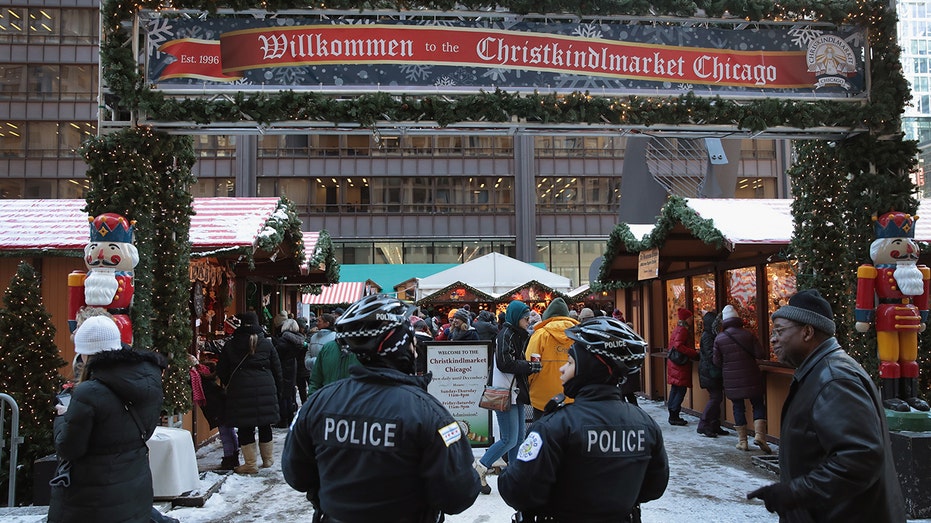
Europe’s response — beefed-up security at Christmas markets, barriers, armed patrols, and surveillance — reflects hard-earned lessons from attacks like Berlin (2016) and Strasbourg (2018). But what’s emerging now is a semi-permanent elevated security posture around religious and civic festivals. That has long-term implications for civil liberties and social cohesion: a holiday season increasingly defined by metal detectors and assault rifles.
The Contagion Effect: How One Attack Becomes Many
Israeli and foreign diplomatic sources both emphasize a “contagion effect” — attacks amplified online, celebrated, and rapidly imitated. This is not a metaphor; it’s a documented dynamic:
- Post-ISIS media ecosystems: Even without a central caliphate, pro-ISIS channels, jihadist forums, and extremist Telegram groups still circulate attack manuals, ideological justifications, and real-time praise for attackers.
- Copycat psychology: Research after major attacks (e.g., Christchurch, Halle, Buffalo) has shown attackers explicitly referencing previous incidents, sometimes treating manifestos and live-streamed attacks as templates for their own “contribution.”
Importantly, Israeli officials suggest that this contagion is now politically cross-pollinating with other radical currents: extreme anti-Israel rhetoric, broader anti-Western narratives, and general grievance cultures. The convergence doesn’t mean every radical slogan leads to violence; but it does mean that ideological ecosystems are increasingly shared, even when they appear unrelated on the surface.
Why You’re Hearing About So Little of This
“Your jaw would drop” at the number of prevented attacks, an Israeli official claims. That’s not just rhetoric; it reflects a deeper tension between intelligence practice and democratic transparency.
Many plots are stopped in early stages — a suspicious money transfer, a cryptic conversation, a weapons purchase. Often:
- Suspects are deported rather than prosecuted, to protect intelligence sources.
- Charges are filed under non-terror laws (weapons, immigration, organized crime) to avoid revealing methods in open court.
- Allies share information under strict confidentiality clauses.
The result: the public sees a handful of spectacular cases but very little of the daily grind of disruption. That can feed both complacency (“the threat is exaggerated”) and panic (“sudden” attacks feel like lightning from a clear blue sky).
The Bondi Beach case illustrates this gap. Jewish leaders say they “warned” authorities amid rising antisemitism; Israeli services say they issued alerts; Australian authorities deny direct foreign direction in the attack. The truth could be that the incident sits in an ambiguous grey zone — a lone or small-cell attack, ideologically connected to a global ecosystem but not operationally commanded by a foreign service. Democracies are still struggling to explain that nuance to their citizens.
Syria, ISIS, and the Risk of Strategic Amnesia
When Israeli officials say they “worry about Syria and that ISIS will return,” they are pointing to an old pattern: jihadist groups thrive in ungoverned or weakly governed spaces. Syria remains fractured — with regime forces, rebels, Kurdish-led formations, Turkish-backed militias, Iranian proxies, and Russian influence all in play.
Historically, we’ve seen:
- Afghanistan in the 1990s: Al Qaeda built training infrastructure amid civil war and state fragility.
- Iraq (post-2003) and Syria (post-2011): Power vacuums and sectarian conflict enabled ISIS to evolve from a local insurgency into a transnational terror brand.
The concern now is less about a fully reconstituted ISIS caliphate and more about a steady stream of trained, ideologically hardened operatives able to project influence back into the West, either directly or via online networks. If Western publics have mentally “moved on” from the ISIS era, security services haven’t — and the warnings from Israeli officials suggest they see Syria once again as a risk multiplier.
What Western Governments Are Missing
Mainstream coverage tends to focus on individual tragedies, official condemnations, and the immediate political blame game. What tends to be underexplored are the structural weaknesses terrorists and their enablers are exploiting:
- Fragmented threat governance: Counterterror, migration, organized crime, cybercrime, and foreign interference are still often treated as distinct policy silos, even as adversaries blend them seamlessly.
- Online regulation lag: Encrypted apps and closed extremist channels remain hard to penetrate at scale without raising civil liberties concerns. Democracies have yet to agree on where to draw that line.
- Politicization of intelligence: Warnings about antisemitic or jihadist threats can become entangled in domestic political debates, making it harder to build cross-party consensus on protective measures.
Australia’s situation is emblematic: rising antisemitic incidents, community warnings, prior terror concerns, and a political class wary of being seen as overreacting or stoking social division. That reluctance can itself become a vulnerability when adversaries calculate that Western leaders are constrained by fear of backlash from civil liberties advocates or certain constituencies.
Expert Perspectives
Counterterror and security scholars point to three particularly significant aspects of the Israeli warnings:
- Decentralization of violence: The shift from centralized command to semi-autonomous cells and inspired actors complicates the traditional “decapitation” approach of targeting leaders.
- State-terror-crime convergence: The mixing of intelligence services, militant proxies, and transnational organized crime networks makes attribution legally and diplomatically difficult.
- Resilience deficit: Western societies remain psychologically unprepared for the idea that low-level but persistent terror risk might be a semi-permanent feature of life, not an anomaly.
Those perspectives underline a core tension: we want absolute safety in open, pluralistic societies, while adversaries are deliberately choosing attack methods that weaponize that openness.
Looking Ahead: What to Watch
Based on the patterns Israeli officials describe, several indicators will show whether this is a temporary spike or a more enduring structural shift:
- Frequency of disclosed foiled plots: Agencies may start publicizing more disrupted attacks to build public support for tougher measures — or to justify existing surveillance powers.
- Legal reforms: Expect more debates over encrypted communications, foreign influence laws, and the classification of state-linked terror proxies.
- Holiday security normalization: If heavy security around religious and civic events becomes routine for several years, it will signal that governments see the risk as chronic.
- Syria and Iraq indicators: Any clear resurgence of ISIS in those theaters — prison breaks, territorial control, or coordinated international attacks — would validate the concerns raised by Israeli officials.
The Bottom Line
The warnings out of Israel are not just about one attack in Sydney or one foiled New Year’s Eve plot. They point to an evolving global threat architecture: low-tech, fast-moving, ideologically hybrid, and increasingly intertwined with state agendas and criminal networks. For citizens, that means two uncomfortable truths: a hidden war of daily disruptions is already underway, and the trade-offs between liberty, openness, and security are going to get sharper, not softer, in the years ahead.
Topics
Editor's Comments
What’s striking in these Israeli warnings is less the claim that many plots are being foiled — that has been true in some form since 9/11 — and more the description of a converging threat architecture. We’re no longer dealing with neatly separable categories like ‘foreign-directed terror’ versus ‘homegrown extremism.’ Instead, the same digital spaces, narratives, and facilitators serve very different actors with overlapping grievances. That blurring suits both terrorists and their state sponsors, because it muddies public understanding and complicates political accountability. Western democracies have yet to articulate a coherent doctrine for this environment. Are we primarily in a law-enforcement paradigm, a counterinsurgency-like struggle, or a protracted confrontation with hostile states using terror as one of many tools? Until governments level with citizens about the likely persistence of low-level risk — and the real trade-offs around surveillance, borders, and online regulation — policy will lurch from outrage after each attack to complacency in the lulls, which is exactly the cycle adversaries are counting on.
Like this article? Share it with your friends!
If you find this article interesting, feel free to share it with your friends!
Thank you for your support! Sharing is the greatest encouragement for us.