From Warnings to Bloodshed: How Australia’s Hanukkah Massacre Exposed a Global Failure on Antisemitism

Sarah Johnson
December 18, 2025
Brief
An in-depth analysis of the Sydney Hanukkah massacre, tracing how years of rising antisemitism, weak enforcement, and polarized Israel politics converged to make violent extremism in Australia tragically predictable.
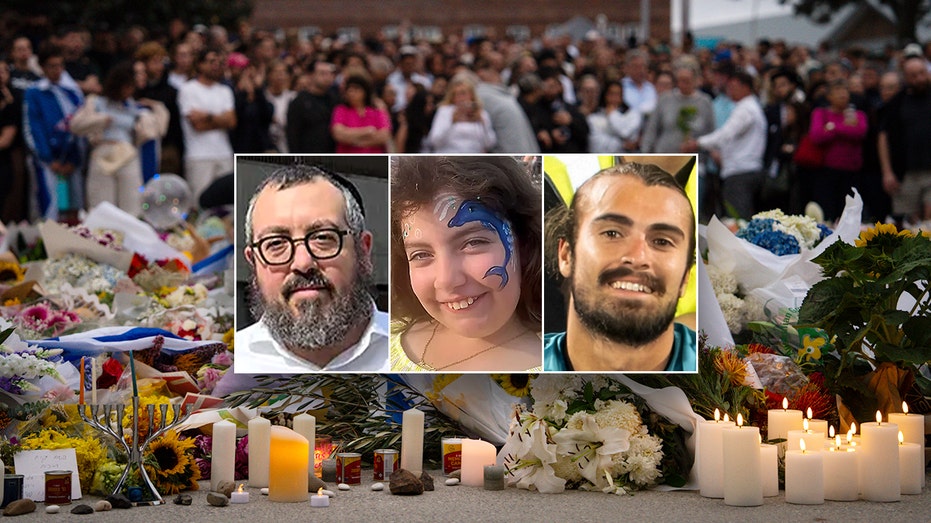
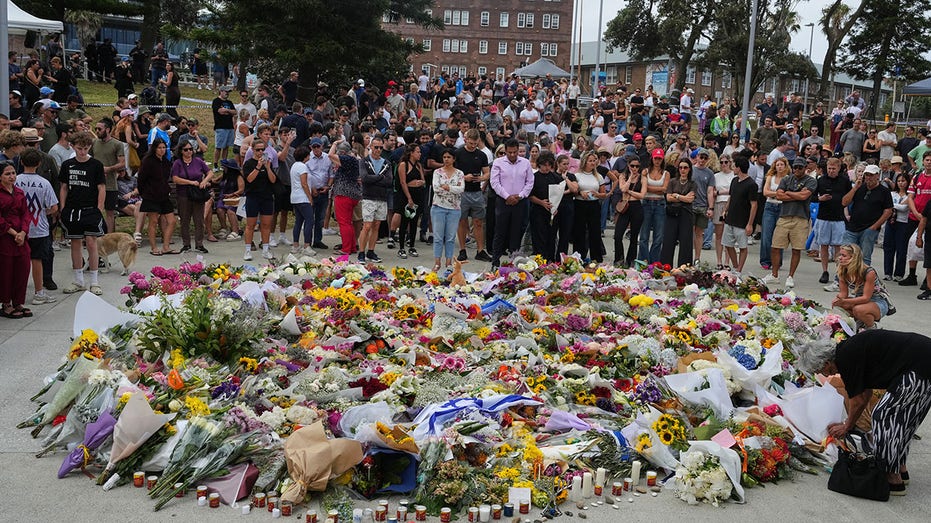
Australia’s Hanukkah Massacre: How a ‘Low-Risk’ Country Sleepwalked Into a New Era of Violent Antisemitism
The Hanukkah terror attack at Sydney’s Bondi Beach is not just an Australian tragedy or a Jewish community story. It is a stress test of how liberal democracies handle rising extremism, imported conflicts, and the increasingly blurred line between political protest and hate-fueled violence. What happened in Sydney sits at the intersection of three global trends: the sharp post–October 7 spike in antisemitism, a long-standing reluctance to confront homegrown extremism, and deepening polarization around Israel–Palestine that is reshaping politics from Canberra to Washington to New York campuses.
More than a decade of data and policy decisions suggest this massacre was less an unforeseeable shock and more the culmination of a trajectory that Jewish leaders, security experts, and some politicians had been warning about. To understand why, we need to look beyond the crime scene and into the structures—legal, political, cultural—that allowed a climate of menace to harden into mass violence.
How Australia Came to See Itself as Immune to This Threat
For years, Australia was often described in security circles as a “low-incidence, high-capacity” country: relatively few terror attacks, but strong law enforcement and intelligence capabilities built after the Bali bombings (2002) and a series of foiled jihadist plots in the 2000s and 2010s.
Against that backdrop, officials frequently framed extremist risks as either Islamist-inspired lone actors or far-right white nationalists, mirroring trends in North America and Europe. Antisemitism was widely recognized as a problem—monitored by groups like the Executive Council of Australian Jewry—but it was often treated as a subset of broader racism, rather than a uniquely persistent and adaptable form of hatred.
That framing mattered. When antisemitic incidents surged after flashpoints in the Middle East—whether during the Second Intifada, the 2014 Gaza war, or the May 2021 Israel–Hamas escalation—they were often categorized as “overseas conflict spillover,” expected to fade once the news cycle moved on. The post–October 7 period broke that pattern.
According to Jewish community monitoring, antisemitic incidents in Australia more than doubled in the months after Hamas’ massacre in Israel on October 7, 2023. These weren’t just slurs or graffiti. Reports included arson attempts against Jewish institutions, threats against individuals, and harassment that made some families remove mezuzot from doorposts and hide Jewish symbols in public.
Yet critics argue the Albanese government largely defaulted to a familiar playbook: condemn “all forms of racism,” call for calm on both “sides,” and prioritize social cohesion messaging over visible crackdowns on those who crossed the line into incitement or intimidation. That approach, they say, signaled to extremists that enforcement would remain cautious and rare.
The October 7 Shockwave and the Normalization of Extremes
What distinguishes the period after October 7, 2023, from previous flare-ups is not just the volume of incidents, but the normalization of language that would once have been politically taboo. The rallying slogans, campus encampments, and social media campaigns that exploded globally did not all cross into antisemitism, but some clearly did—and authorities often struggled or hesitated to draw lines.
In major Western cities, including Sydney, Melbourne, London, and New York, we saw three overlapping phenomena:
- Legitimate protest against civilian deaths in Gaza and longstanding grievances about Palestinian statelessness.
- Radical anti-Zionism that denies Israel’s right to exist, often coupled with calls to "globalize the intifada" or praise attacks on Israelis.
- Blatant antisemitism—threats, chants about Jews, targeting of synagogues, schools, and visibly Jewish individuals far removed from any Israeli policy.
Governments, universities, and political parties often conflated these categories—either by treating them all as protected political expression or, conversely, trying to brand all harsh criticism of Israel as antisemitic. In that muddle, the most dangerous actors benefited.
Australia was no exception. Jewish leaders there had warned for months that the combination of heated rhetoric, weak enforcement, and highly visible anti-Israel mobilization was creating a permissive environment for more serious violence. The Hanukkah massacre felt, to many in the community, like confirmation that those warnings had been dismissed until it was too late.
Appeasement vs. Civil Liberties: Where Did the System Fail?
The charge that authorities “coddled” extremists is as much about what wasn’t done as what was. It speaks to three recurring gaps:
- Enforcement Gap: Laws against hate speech, incitement, and terrorism support exist on the books, but are enforced inconsistently. Prosecutors often set a high bar, preferring to avoid cases that could fail or be framed as attacks on free expression.
- Political Will Gap: Elected officials frequently condemn antisemitism in principle while avoiding concrete actions—such as banning groups, pulling visas, or cutting funding to organizations that platform open glorification of terror—because those steps risk backlash from activist bases.
- Analytical Gap: Security agencies historically prioritized organized jihadist networks and far-right cells. The kind of hybrid environment that has emerged post–October 7—where lone actors self-radicalize amid a flood of online propaganda and local activism—sits awkwardly in that paradigm.
In Australia’s case, critics of the Albanese government argue all three gaps were visible. Repeated incidents—arson attempts against Jewish sites, threats, and intimidation—were treated as isolated law-and-order issues rather than components of a deteriorating security environment for a minority community. The message absorbed by would-be attackers: the risk of serious consequences remained low.
From Sydney to Washington: Why Senator Fetterman’s Warning Matters
Sen. John Fetterman’s reaction in the U.S., warning that Democrats’ years of anti-Israel rhetoric clash with their condemnation of the Sydney attack, points to a second layer of this story: how domestic political narratives about Israel shape the climate in which antisemitism can grow.
Within parts of the progressive left in the U.S., U.K., and Australia, Israel has come to be framed not just as a controversial state, but as a symbol of global oppression—a shorthand for colonialism, racism, and capitalist militarism. In that framework, opposing Israel becomes a moral litmus test, and nuance or empathy for Israeli civilians—or for Jews who feel connected to Israel—is often dismissed as complicity.
That moral absolutism can have two dangerous side effects:
- It desensitizes people to violence against Israelis and, by extension, Jews worldwide who are treated as stand-ins for Israel.
- It discourages mainstream leaders from forcefully confronting antisemitic expressions within their own political coalitions, for fear of being branded pro-genocide or traitorous.
Fetterman’s critique is essentially that you cannot spend years normalizing rhetoric that frames Israel as uniquely evil, or praising groups aligned with Hamas, and then be surprised when some individuals interpret that moral narrative as a justification for violence—even if most activists never cross that line themselves.
Australia’s situation is different in scale but similar in pattern: political parties that sought to maintain unity and avoid alienating vocal pro-Palestinian constituencies often chose lowest-common-denominator language. That left antisemitic currents insufficiently challenged within broader activist spaces, particularly on campuses and in some local councils.
Campuses and the Columbia Parallel: Who Feels “Terrified” and Why
The newsletter’s reference to Columbia University—and Mahmood Mamdani’s claim that anti-Israel activists feel "terrified" by the university’s crackdown—reveals another crucial front: the battle over who is seen as the primary victim of intimidation.
Columbia’s own antisemitism task force reported that Jewish and Israeli students were being harassed in class, accused of “murder,” and told they benefited from “blood money.” That mirrors testimony from Jewish students across U.S. and Australian campuses, where some say they avoid certain classes, hide their identity, or steer clear of particular buildings when protests erupt.
Yet, as Mamdani’s remarks highlight, activists on the other side argue they are the ones being targeted—by disciplinary proceedings, police presence on campus, and reputational attacks in the media. The result is a competing-victimhood narrative in which both groups claim to be "terrified." Universities, already risk-averse and reputation-conscious, are caught between accusations of suppressing dissent and accusations of enabling hate.
This is not an academic sideshow; campuses are incubators of future elites and ideological frames. The way institutions draw boundaries between protest and hate now will shape political cultures for decades. If intimidation of Jews becomes normalized in those spaces, the Sydney-style escalation becomes more likely elsewhere.
What Mainstream Coverage Often Misses
Most reporting on the Hanukkah massacre rightly focuses on the horror of the attack and the failures leading up to it. Less attention is paid to deeper, structural questions:
- Policy consistency: Why are some forms of extremism met with aggressive counter-terror measures while others are treated as overzealous activism?
- Online ecosystems: How much did global digital propaganda and TikTok-era narratives about Israel and Jews prime susceptible individuals in Australia, far from the conflict zone?
- Minority security as a bellwether: Historically, early spikes in antisemitic violence have often foreshadowed broader social instability. Are governments treating attacks on Jews as a warning sign for democracy at large, or as a niche communal issue?
- Immigration and integration policy: Are vetting and integration systems equipped to detect and address imported extremist ideologies—whether Islamism, far-right nationalism, or conspiracy-laden antisemitism—without criminalizing entire communities?
These questions are uncomfortable because they force a rethinking of policies across policing, education, immigration, and political communication. But without that, each new attack risks being treated as an isolated aberration rather than a data point in a larger pattern.
Data Points: Antisemitism’s Post–October 7 Spike
Globally, the Sydney attack fits a quantifiable surge in antisemitic activity:
- In the U.S., the Anti-Defamation League reported a several-hundred-percent increase in antisemitic incidents in the months after October 7, including threats, vandalism, and assaults.
- U.K. monitoring recorded record-high antisemitic incidents in late 2023 and 2024, heavily clustered around pro-Palestinian marches.
- Jewish security organizations in Australia reported record complaint levels after October 7, encompassing physical attacks, harassment, and online hate.
These are not minor fluctuations; they represent structural shifts in what is considered expressible in public. Social media has reduced the cost of broadcasting extremist ideas to near zero, while the Israel–Hamas conflict has provided a morally charged frame in which bigotry can be repackaged as justice.
Looking Ahead: What Needs to Change
For Australia—and other democracies watching—three shifts are critical:
- Sharper Legal Lines: Governments need clearer guidance on where protest ends and criminal hate begins. That means enforcing existing laws against incitement and threats, even when perpetrators cloak themselves in political causes.
- Political Accountability Within Parties: It is no longer enough for party leaders to condemn antisemitism abstractly while tolerating antisemitic rhetoric or alliances in their own ranks. Internal discipline—candidate vetting, whip action, and public red lines—will be essential.
- Community-Centric Security: Jewish communities have long been forced to harden synagogues and schools at their own expense. States that claim to protect minority rights must treat attacks on these institutions as attacks on the nation’s democratic fabric, not private security issues.
Universities, meanwhile, will have to decide whether they are neutral platforms or values-based institutions. If harassment of Jewish students is tolerated under the banner of activism, other minorities will eventually find themselves exposed to similar campaigns.
The Bottom Line
The Sydney Hanukkah massacre is not an isolated eruption of hatred; it is the grim convergence of global ideological currents and local policy failures. Treating it as a one-time horror rather than a symptom of deeper problems is the surest way to guarantee it will not be the last.
The challenge for Australia, the U.S., and other democracies is to build a coherent response that simultaneously protects free expression, confronts genuine extremism, and ensures that Jews—and all minorities—do not have to wait for bloodshed before their warnings are taken seriously.
Topics
Editor's Comments
One unresolved tension in the post–October 7 landscape is the asymmetry of political risk around antisemitism and other forms of bigotry. Politicians know that explicit racism toward Black, Muslim, or LGBTQ communities carries immediate reputational costs and often rapid institutional response. Antisemitism, by contrast, is more frequently embedded in the rhetoric of anti-imperialism, anti-capitalism, or anti-globalism, making it easier to excuse as clumsy activism or misdirected anger at Israel. That doesn’t mean antisemitism is uniquely worse than other hatreds, but it does mean it often slips under the radar in spaces that see themselves as progressive. The Sydney massacre forces a hard question: if Jewish institutions and individuals require a higher threshold of suffering before the state responds decisively, what does that say about who is seen as fully part of the national ‘we’? Until governments and parties confront that double standard directly—within their own movements as much as among opponents—policy tweaks will only partially address a deeper hierarchy of empathy.
Like this article? Share it with your friends!
If you find this article interesting, feel free to share it with your friends!
Thank you for your support! Sharing is the greatest encouragement for us.