From Davao to Bondi: How a Father-Son Cell Exposes the New Geography of Terror

Sarah Johnson
December 18, 2025
Brief
The Bondi Beach Hanukkah attack and the suspects’ month in Davao reveal how modern terrorism has shifted from training camps to hotel rooms, family cells, and online networks with global reach.
Bondi Beach Attack and the Philippines Connection: What the Hotel Room Clue Really Tells Us About Modern Terror Networks
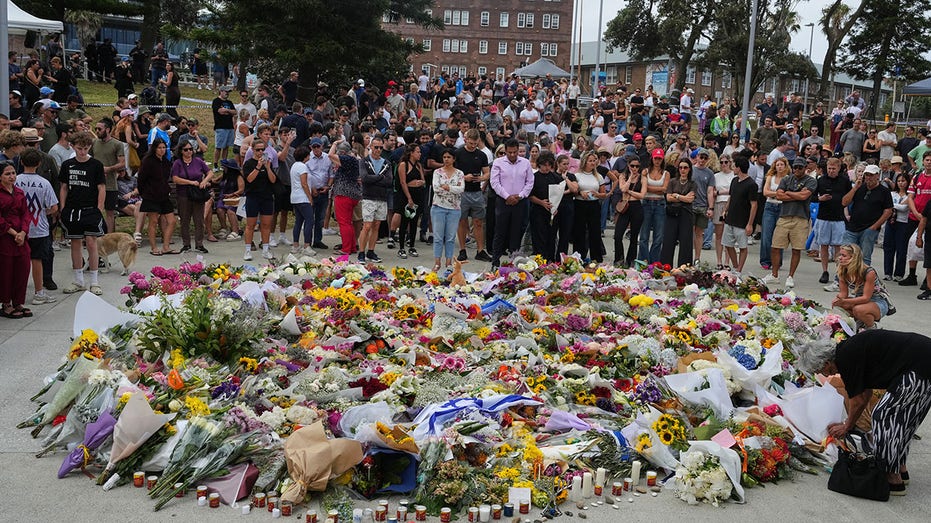
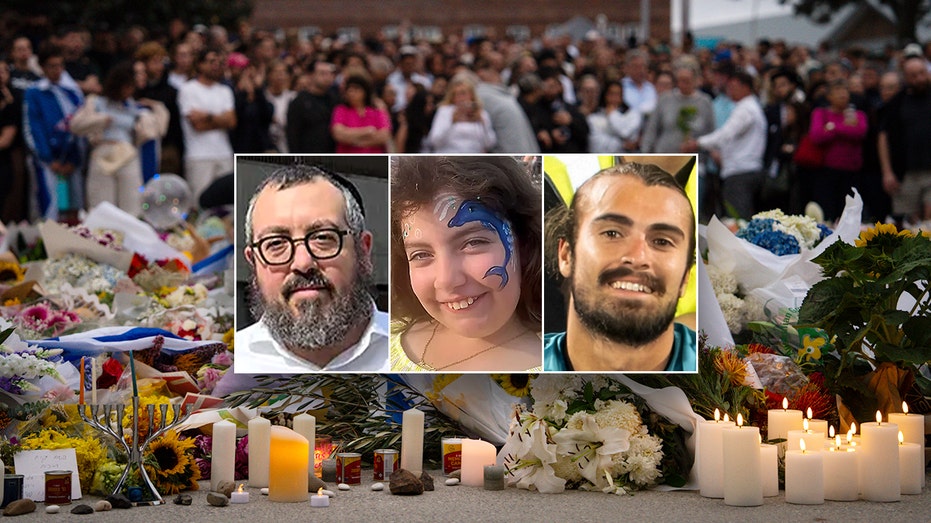
The detail that has dominated headlines in the wake of the Bondi Beach Hanukkah attack is deceptively simple: a father and son spent nearly a month in Davao City, Philippines, rarely left their hotel room, spoke to no one, and then allegedly carried out a mass shooting in Sydney weeks later. That single fact has fueled instant speculation about overseas terror training, Islamic State links, and a revived terrorist sanctuary in the southern Philippines.
But when you pull back from the breaking-news narrative, the Davao trip reveals something more complicated about how terrorism actually works in 2025. It exposes the persistent gap between public imagination and operational reality, the limits of state control even after years of counterterror campaigns, and the growing challenge of detecting small, family-based cells that may not fit the classic mold of transnational jihadist networks.
The overlooked context: Mindanao’s long shadow and Davao’s exception status
On paper, the story writes itself: two alleged attackers in an ISIS-flag-linked incident travel to the southern Philippines, a region historically associated with Islamist militancy, and then engage in a deadly assault on Jewish worshippers.
The geographic detail matters. Mindanao has been synonymous with insurgency and terrorism for decades. Groups like Abu Sayyaf, factions of the Bangsamoro Islamic Freedom Fighters (BIFF), and various local outfits pledging allegiance to ISIS have turned parts of the island into a low-grade conflict zone. The 2017 siege of Marawi — where ISIS-inspired militants occupied the city for five months, displaced roughly 350,000 residents, and left more than 1,100 people dead — cemented Mindanao’s image as Southeast Asia’s primary ISIS theater.
That legacy underpins the U.S. State Department’s continuing “Level 3: Reconsider Travel” advisory for most of Mindanao and “Level 4: Do Not Travel” for Marawi. For Western audiences, the association is straightforward: Mindanao equals terrorism risk.
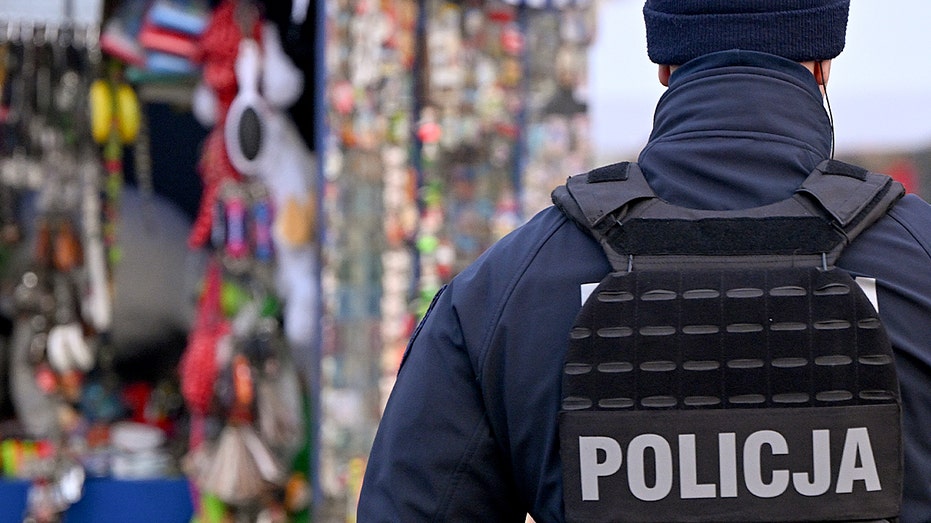
Davao City, though, is the outlier. It has been specifically listed as an exception to the broader travel warning, reflecting years of heavy securitization and political messaging that it is safe, modern, and tightly controlled. This isn’t incidental. Davao is the political base of former President Rodrigo Duterte, whose tough-on-crime brand was built there. Local authorities have long marketed Davao as the counter-narrative to the rest of Mindanao: a place where order has been forcibly imposed on chaos.
That’s what makes the current investigation so sensitive. If two alleged terrorists could quietly stage in a city presented as a security success story, it raises uncomfortable questions about how far state control actually extends — not only in the Philippines, but in any supposedly “hardened” urban space.
Why the ‘training camp’ narrative doesn’t quite add up
Philippine authorities have been explicit in downplaying speculation that the pair came for intensive training with Islamist militants. At first glance, the known behavior pattern supports that caution: hotel staff and police say the men rarely left their room for more than an hour, spoke to no one, and had no visitors.
That profile conflicts with classic images of terrorist training: wooded camps, weapons drills, group indoctrination sessions. It looks more like isolation than integration into a network.
There are several plausible readings of that isolation, and none fit neatly into the simplistic “they trained in the jungle” narrative:
- Remote radicalization and online training: In recent years, ISIS and its affiliates have moved a substantial portion of their training and indoctrination online. Instructional manuals, encrypted chat groups, and video modules have replaced many physical camps. A hotel room with stable internet access can be as operationally useful as a remote training ground — and far less detectable. That is exactly how many European lone-actor plots developed between 2015 and 2020.
- Operational planning and testing security: A foreign environment away from home offers a space to plan, rehearse, and acquire small items without attracting local community attention. Even short forays outside could correspond to testing routes, communication tools, or meeting a facilitator briefly in public spaces.
- Psychological preparation: Several case studies suggest that attackers sometimes undertake isolating trips before an operation, reinforcing commitment and cutting off moderating influences from extended family, friends, or religious authorities whose views might be more mainstream.
In other words, their behavior is not inconsistent with terrorist preparation — but it points toward a decentralized, technology-mediated modus operandi rather than the classic training-camp model. That shift matters because it changes what law enforcement should be looking for: not just rural encampments, but suspicious patterns of digital activity and unexplained overseas stays characterized by isolation and heavy device use.
A father-son cell: intergenerational radicalization as a blind spot
The family dimension is more than a grim detail; it’s a strategic challenge. A father-son operational duo collapses roles that in past jihadist networks were distributed across peers and mentors. Here, the ideological authority, emotional bond, and operational trust are nested in a single relationship.
Historically, authorities have focused on peer radicalization, prison networks, and online communities as core vectors. Familial cells are harder to penetrate. The trust barrier is almost absolute, and internal debate about violence is resolved within an intimate unit, invisible to wider community surveillance.
This pattern isn’t entirely new — from the Tsarnaev brothers in Boston to certain European family-linked plots — but the alleged Bondi attackers add a layer: transnational movement, suspected ISIS symbolism, and a clear generational hierarchy. If confirmed, it would underscore how radicalization can now be multi-generational, with older family members no longer acting as brakes on extremism but as accelerators.
Why Jewish targets, why now?
The choice of a Hanukkah celebration in Sydney fits into a broader global escalation of antisemitic violence, where local attackers increasingly justify their actions through a mixture of online propaganda, Middle East conflicts, and longstanding conspiratorial narratives about Jews.
Over the past decade, we’ve seen a recurring pattern: Jewish schools, synagogues, and community centers attacked not only in Europe and the United States but also in Latin America and parts of Asia-Pacific. In each case, attackers draw ideological legitimacy from transnational narratives, even when they have no direct organizational link to groups like ISIS or al-Qaeda.
In this environment, Jewish communities become high-salience symbolic targets for individuals seeking maximum ideological impact. If ISIS flags and symbols were indeed found with the suspects, it suggests they wanted their act to be read within a global jihadist frame, regardless of whether they ever interacted with a formal ISIS command structure.
Philippines under pressure: balancing tourism, sovereignty, and security
Philippine officials’ pushback against the idea of in-country terror training is not just about accuracy; it’s also about politics and economics. Mindanao’s security narrative directly affects foreign investment, tourism, and the fragile peace process with Moro groups.
Several competing pressures are visible:
- Economic image: Davao and other urban centers in Mindanao are trying to position themselves as safe destinations and business hubs. Renewed association with ISIS-linked activity risks re-stigmatizing the entire region.
- Security credibility: The Philippine military has spent years claiming it has degraded ISIS-aligned groups after Marawi, pointing to declining attack frequency. A high-profile link to an international terrorist incident undermines that message and invites external scrutiny.
- Sovereignty and foreign pressure: International headlines about “Philippines as a training hub” can lead to quiet pressure from allies for more intrusive intelligence-sharing or joint operations. Manila is keen to avoid being seen as either negligent or dependent.
So when authorities emphasize that the suspects mostly stayed inside a hotel, they are not just describing behavior; they are implicitly arguing that any radicalization or training happened elsewhere — online, in Australia, or in transnational spaces beyond Philippine control.
Data points in a larger pattern: shrinking ISIS core, dispersed threat
The ABC reporting that ISIS-aligned groups in the Philippines have weakened is broadly consistent with trends across Southeast Asia. After the peak of ISIS influence around 2015–2018, most regional affiliates have suffered leadership decapitations, financial disruption, and local backlash.
Yet the threat has not disappeared; it has mutated. Rather than large-scale operations like Marawi, we now see:
- Smaller, sporadic clashes between security forces and militant remnants
- Attempts to inspire or remotely assist attacks abroad, leveraging diaspora communities and digital networks
- Increased difficulty for authorities in distinguishing between ideologically driven militants and criminal groups using ISIS branding for leverage
The suspected Bondi attackers’ reported possession of ISIS flags fits this new pattern: symbolic affiliation over formal membership. In practical terms, that makes prevention harder. You don’t need to belong to a structured cell to claim ISIS; you just need a printer, a flag seller, or a file downloaded from an extremist channel.
What this means for Australia’s security paradigm
For Australia, this case touches multiple vulnerabilities:
- Outbound travel monitoring: The suspects reportedly departed Sydney for Manila on Nov. 1 and returned on Nov. 28. If they were on any watchlists or showed prior indicators of radicalization, the question becomes: were these movements flagged, and if not, why?
- Community intelligence limitations: The fact that a father and son could allegedly move all the way to mass murder without intervention suggests either a sudden, rapid radicalization — which is possible — or a longer trajectory that was not visible or not taken seriously.
- Symbolic target protection: Jewish events, especially during religious holidays, are now high-risk targets globally. The attack will likely trigger a reassessment of security arrangements for religious and ethnic minority gatherings, including the balance between visible police presence and community atmosphere.
In policy terms, we’re likely to see intensified information-sharing with Manila, closer watch on travel to conflict-associated regions, and a renewed debate about how to monitor online extremist content without drifting into mass surveillance.
Looking ahead: the questions investigators most need to answer
The Davao trip is a key puzzle piece, but it’s only meaningful in relation to a broader timeline. The most consequential questions now include:
- What did the suspects do online while in the Philippines? Were they in contact with known extremist accounts or facilitators?
- Did they meet anyone in Davao during their short excursions, even briefly, and are there CCTV or digital payment trails that contradict the “no contacts” narrative?
- What was their ideological trajectory in Australia prior to November? Were there community, mosque, or social media warning signs?
- How did they acquire weapons, explosives, and ISIS paraphernalia, and does that supply chain involve local or international networks?
The answers will determine whether this was a largely self-directed, family-based cell leveraging online propaganda — or the surface of a larger, still-active facilitation network that uses the Philippines as a low-visibility staging ground.
The bottom line
The image of a closed hotel room in Davao City is less about jungle training camps and more about the evolution of modern terrorism itself: decentralized, digitally enabled, family-based, and transnational in both movement and ideology.
For the Philippines, it is a stress test of a narrative that Mindanao has moved beyond its worst years of jihadist insurgency. For Australia, it is a harsh warning that global conflict narratives can weaponize even tightly knit families and turn religious celebrations into targets.
What’s being missed in much of the early coverage is that this case is not primarily about whether the Philippines is “to blame.” It is about how easily small cells can exploit gaps between national security systems, how online ecosystems can substitute for training camps, and how symbolic violence against Jewish communities has become a grim barometer of the international security climate.
Those are trends no border control, no travel advisory, and no single country can tackle alone.
Topics
Editor's Comments
One of the most striking aspects of this case is how quickly public debate has jumped to the question of whether the Philippines is a "training hub" again. That framing is both politically convenient and analytically misleading. It shifts responsibility outward — towards a foreign territory with a long history of insurgency — and away from the harder questions about radicalization pathways within Australia, the adequacy of domestic monitoring, and the vulnerability of Jewish communities to symbolic attack. Even if investigators ultimately find some form of facilitation or contact in Mindanao, the operational blueprint visible so far — a tight family cell, heavy reliance on digital tools, and a short overseas stay centered in a hotel — highlights the declining relevance of the old camp-centric model of terrorism. Policymakers risk fighting the last war: obsessing over physical training grounds while missing how ideology, logistics, and targeting decisions now flow across encrypted platforms and private family spaces. The more uncomfortable debate is not about whether Davao is safe, but about how liberal societies can detect and disrupt violence incubated in places that are, by design, least visible to the state: homes, family relationships, and phones.
Like this article? Share it with your friends!
If you find this article interesting, feel free to share it with your friends!
Thank you for your support! Sharing is the greatest encouragement for us.