Inside the Ghost Fleet: How Trump’s Crackdown on Illicit Oil Tankers Could Reshape Global Power

Sarah Johnson
December 16, 2025
Brief
The seizure of Venezuelan oil tanker ‘Skipper’ is more than a sanctions story. It’s a pivotal move in a larger fight over ghost fleets, energy geopolitics, and the future of U.S. leverage.
Trump’s Crackdown on ‘Ghost Ships’ Isn’t Just About Venezuela — It’s About Who Controls the Shadow Oil Market
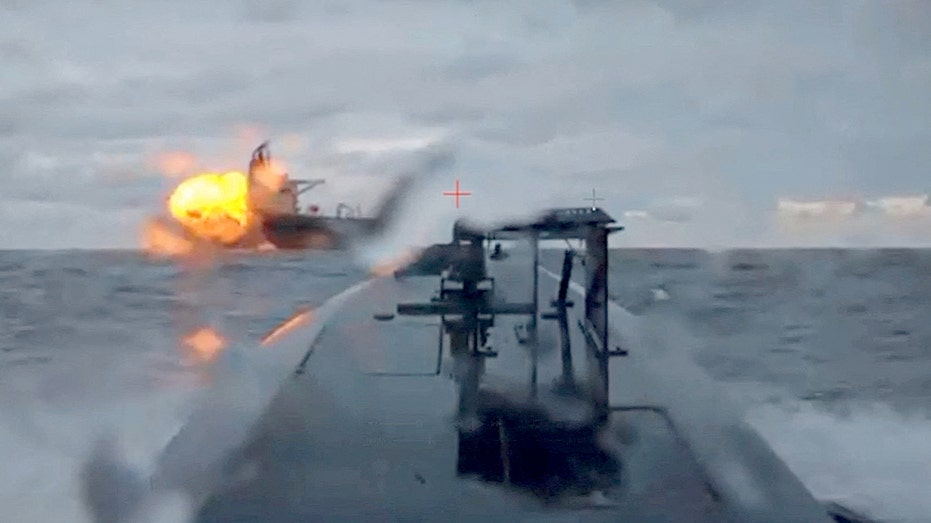
When the U.S. seized the tanker Skipper and its Venezuelan crude, the action was framed as a high-profile enforcement of sanctions. In reality, it marks a deeper struggle over who controls a rapidly expanding, largely invisible system that now moves a meaningful share of the world’s oil outside formal rules, insurance markets, and regulatory oversight.
This is not a story about one ship or even one country. It’s about the emergence of a parallel energy economy — a gray market of roughly 1,000 "ghost" tankers — and the Trump administration’s decision to confront it head-on. That confrontation carries significant implications for global energy prices, maritime safety, financial transparency, and the geopolitical leverage of the United States itself.
The Shadow Fleet: How We Got Here
To understand why the Skipper matters, it helps to recall how sanctions and oil flows have evolved over the last 15 years:
- Iran sanctions intensified after 2010, driving Tehran to build clandestine trading networks: ship-to-ship transfers, transponder shut-offs, and opaque corporate structures.
- Venezuela’s collapse under Nicolás Maduro, especially after U.S. oil sanctions in 2019, pushed Caracas into similar tactics to sustain its regime.
- Russia’s invasion of Ukraine in 2022 and the subsequent G7/EU price cap accelerated the trend, forcing Moscow to reroute exports via non-Western insurers and older, poorly regulated tankers.
Each new wave of sanctions didn’t just restrict exports; it incentivized the creation of an alternative logistics ecosystem. The result is what analysts now call the "shadow fleet" or "ghost fleet": mostly older tankers operating under flags of convenience, changing names and ownership on paper, turning off AIS transponders, and conducting mid-ocean transfers to obscure the origin of cargo.
Industry estimates vary, but a figure of 900–1,200 tankers is commonly cited for this gray network — a significant slice of the global crude and product tanker fleet. These vessels are disproportionately involved in carrying oil from Russia, Iran, and Venezuela, but also increasingly serve as a flexible tool for traders who want to avoid regulatory scrutiny anywhere.
Why the Seizure of the ‘Skipper’ Matters Beyond Venezuela
On the surface, seizing a single tanker carrying tens of millions of dollars of Venezuelan oil looks like standard sanctions enforcement. Yet several aspects are strategically important:
- It publicly signals a shift from tolerance to active disruption. For years, Western governments largely accepted a degree of leakage in sanctions regimes, especially when oil markets were tight. The Trump administration’s messaging around the Skipper suggests a willingness to bear some oil-market risk to reassert control over enforcement.
- It targets the logistics, not just the regime. Hitting a tanker and its owners sends a warning to shipowners, insurers, brokers, and financiers who quietly profit from the gray trade: the risk premium just went up.
- It challenges China’s role as a sanctions safety valve. China is now the leading importer of Iranian oil and a major buyer of discounted Russian and Venezuelan crude. Much of that flows through the ghost fleet. U.S. moves against these ships are an indirect way of increasing the cost and risk of China’s energy strategy without directly sanctioning Beijing.
Benjamin Jensen of the Center for Strategic and International Studies is right to frame this as a “global problem.” Once a parallel fleet exists, it doesn’t just move sanctioned oil; it can also be used for tax evasion, smuggling, and covert financial flows that reach far beyond energy.
Ghost Ships as a Symptom of Sanctions Fatigue
The rise of ghost ships is not merely a clever evasion tactic. It is a structural response to an era of increasingly aggressive sanctions policy.
Over the past two decades, the U.S. has leaned heavily on financial and energy sanctions as tools of statecraft. That strategy worked powerfully at first, largely because the dollar system and Western shipping insurance networks were dominant. But as more actors were targeted — Iran, Venezuela, Russia, and a growing constellation of companies — the incentives to build workarounds multiplied.
Those workarounds include:
- Alternative insurance and classification via non-Western or lightly regulated providers.
- Flags of convenience in jurisdictions with minimal enforcement capacity.
- Layered shell companies across multiple countries to obscure beneficial ownership.
- Technological dodges like AIS spoofing, dark activity, and deliberately incomplete documentation.
The core risk for Washington is that as these networks mature, they gradually erode the power of sanctions and, by extension, U.S. financial leverage. Cracking down on the Skipper is an attempt to reverse that trend — but doing so at scale will be costly and politically complex.
The Overlooked Risk: An Aging, Dangerous Fleet
One aspect widely missed in political coverage is the physical danger posed by the ghost fleet. Many of these vessels are older tankers, often 15–20+ years old, operating with minimal oversight:
- They may operate without reputable classification societies.
- Safety inspections can be sporadic or nonexistent.
- Dark operations and mid-sea transfers increase collision and spill risk.
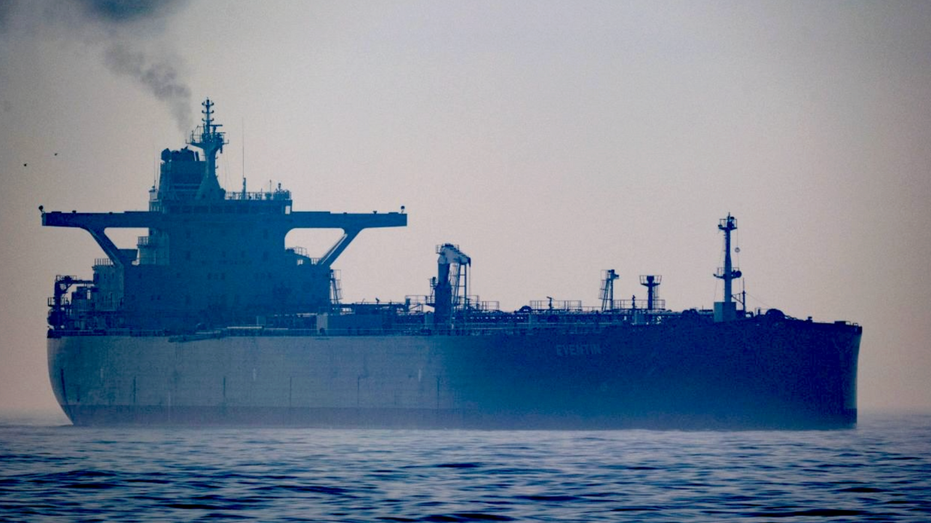
The seizure of the Eventin in the Baltic Sea after engine failure illustrates the point. A Panama-flagged ship with multiple previous names, carrying about 99,000 tons of Russian oil — roughly $45 million — breaks down in sensitive waters. That’s not just a sanctions issue; it’s an environmental and maritime safety hazard waiting to happen.
If a poorly maintained ghost tanker were to cause a major spill in a chokepoint like the Bosporus, the Strait of Malacca, or near European coasts, the cleanup and political fallout would be enormous. Ironically, such an incident might succeed where policy arguments have failed, forcing a crackdown on the shadow fleet driven by safety rather than sanctions policy alone.
Can Seizing a Few Ships Really Hurt Regimes?
Jensen notes that because Venezuela’s economy is overwhelmingly dependent on oil, even one interdiction can have outsized impact. That’s both true and incomplete.
In Venezuela’s case:
- Oil once made up more than 90% of export earnings; even now, it remains the regime’s lifeline.
- Sanctions and mismanagement have already slashed production from over 2.3 million barrels per day in the 1990s to well under 1 million for most of the 2020s.
- Every seized cargo means fewer dollars for patronage networks, security forces, and imported goods that stabilize the regime.
However, history suggests that targeted regimes often adapt rather than capitulate. Iran endured years of heavy sanctions. Russia, after 2022, rapidly restructured its export routes eastward and built a shadow fleet precisely to blunt Western pressure.
So what the Skipper seizure really does is less about immediate collapse and more about changing the calculus of intermediaries — shipowners in Greece or the Gulf, brokers in Singapore or Dubai, and investors in shadow insurance pools. If those actors decide the reputational and legal risks outweigh the premiums they earn, the regimes will find it harder and more expensive to move their crude.
China’s Quiet Central Role
Another under-discussed dimension is China’s centrality to this story. As the leading importer of Iranian oil and the second-largest buyer of Russian crude, China is the ultimate destination for much of the ghost fleet’s cargo.
From Beijing’s standpoint, the shadow fleet offers three advantages:
- Discounted supply. Sanctioned crude often sells at a meaningful discount, saving China billions annually.
- Strategic diversification. Buying from sanctioned states diversifies away from Middle Eastern suppliers aligned with the U.S.
- Leverage. The more critical China becomes as a buyer, the more influence it gains over those regimes.
U.S. seizures like the Skipper don’t directly confront China, but they indirectly raise costs and risks for Chinese refiners and traders. Over time, Washington could leverage this by offering conditional waivers or alternative supply arrangements in exchange for Beijing limiting its use of the ghost fleet. That would require delicate diplomacy at a time of broader U.S.-China tensions.
What a Real Crackdown Would Look Like
The Trump administration has signaled that the Skipper is an “opening salvo.” Turning this into a sustained campaign would require more than sporadic seizures.
A serious crackdown would likely include:
- Secondary sanctions on shipowners, insurers, and facilitators tied to ghost fleet operations, forcing them out of Western financial systems.
- Coordinated port state control among allied countries to detain or ban high-risk tankers from key ports and shipyards.
- Data-driven enforcement using AIS analytics, satellite imagery, and trade data to identify patterns of dark activity and ship-to-ship transfers.
- Flag state pressure on registries that repeatedly host ghost vessels — potentially including targeted sanctions on flag-of-convenience jurisdictions.
The catch: such a campaign could tighten oil supply at the margins. Even if the world has more capacity today than during the immediate post-Ukraine shock, markets are still sensitive. A perceived assault on Russian or Venezuelan exports can push prices higher — a risk any administration must balance against domestic political pressures over gasoline prices.
Is the U.S. Undermining Its Own Leverage?
There’s a deeper strategic paradox here. Sanctions work best when the target country has few alternatives and when the enforcing coalition is broad. The more Washington uses sanctions, especially without strong multilateral backing, the more it encourages the creation of alternatives — from ghost ships to non-dollar payment systems.
In that sense, the ghost fleet can be read as a barometer of U.S. influence:
- A small, marginal gray trade suggests sanctions are tightly enforced and alternatives are limited.
- A sprawling shadow fleet of nearly 1,000 tankers suggests that a parallel system is reaching scale.
By moving aggressively against ghost ships now, the Trump administration is effectively trying to prevent that parallel system from hardening into a permanent feature of the global economy — one that could undermine U.S. power long after the current crises in Venezuela or Ukraine fade.
What to Watch Next
The Skipper seizure is the visible part of a largely invisible contest. A few key indicators will show whether the U.S. is serious about reshaping the ghost fleet landscape rather than just sending a political message:
- Follow-on seizures targeting Russian and Iranian-linked cargoes, not just Venezuelan oil.
- Changes in insurance patterns, such as Western insurers tightening rules for older tankers or high-risk routes.
- Reaction from major shipping hubs like Greece, Singapore, and the UAE — do they cooperate, or quietly facilitate workarounds?
- China’s behavior, especially whether Chinese refiners adjust import practices or continue to deepen reliance on shadow logistics.
If this is a one-off enforcement spectacle, the ghost fleet will adapt quickly. If it’s the start of a coordinated, multi-year campaign, it could reshape not just sanctions policy but the global shipping and energy landscape.
The Bottom Line
The battle over ghost ships is not simply a cat-and-mouse game at sea. It’s a test of whether U.S.-led sanctions can still meaningfully control global flows of a commodity as fundamental as oil in an era of rising multipolarity, technological evasion, and sanctions fatigue.
The Skipper is one tanker in a fleet of hundreds. But how Washington follows up — or fails to — will tell us whether the shadow oil economy continues to grow in the dark or is finally dragged, ship by ship, back into the regulated daylight.
Topics
Editor's Comments
One of the most underexplored dimensions of the ghost fleet phenomenon is the way it accelerates a broader shift away from Western-centric governance of global trade. For decades, control over financial plumbing (dollar clearing, SWIFT access), insurance (notably through the London market), and shipping standards gave the U.S. and its allies powerful leverage with relatively low visibility. The growth of a parallel system—non-Western insurance providers, flags of convenience willing to look the other way, opaque leasing and ownership chains—chips away at that leverage incrementally. The Trump administration’s decision to publicly target vessels like the ‘Skipper’ can be read as an attempt to reassert that older, rules-based order. But the strategy carries a risk of hardening alternative networks instead of dismantling them, particularly if enforcement is perceived as unilateral or politically selective. A contrarian question that should be asked more often: at what point does aggressive sanctions enforcement stop reinforcing U.S. power and start accelerating the creation of a rival ecosystem beyond Washington’s reach?
Like this article? Share it with your friends!
If you find this article interesting, feel free to share it with your friends!
Thank you for your support! Sharing is the greatest encouragement for us.