Beyond the Punchline: What the Jimmy Kimmel–FCC Clash Reveals About America’s New Speech Wars

Sarah Johnson
December 18, 2025
Brief
Jimmy Kimmel’s clash with FCC Commissioner Brendan Carr reveals how regulators, politicians, and media now battle over speech using soft power—not explicit censorship—and why late-night TV has become political infrastructure.
Jimmy Kimmel, the FCC, and the New Front Line of America’s Speech Wars
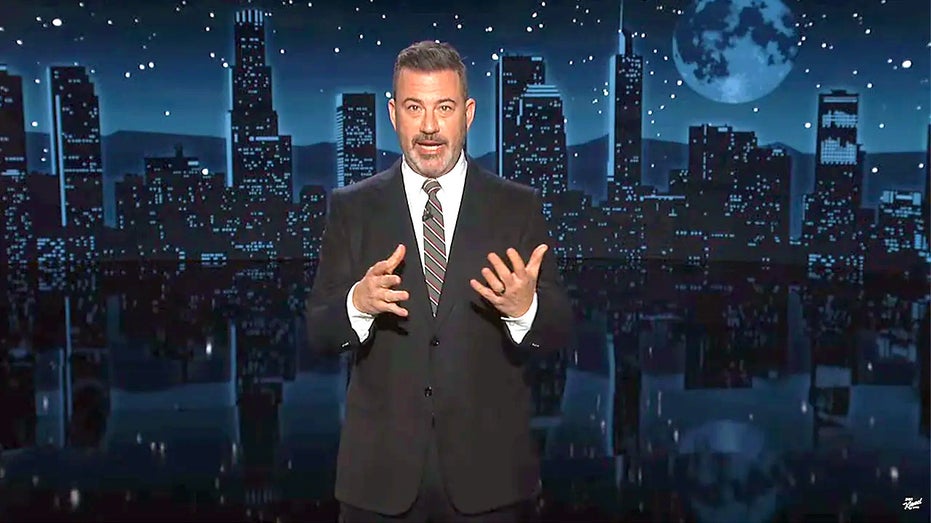
What looks like a late-night comedian shrugging off a boring Senate hearing is, in reality, a vivid snapshot of how fragile and confused the U.S. free-speech ecosystem has become. Jimmy Kimmel’s on-air response to FCC Commissioner Brendan Carr’s grilling isn’t just a celebrity quip about Washington. It exposes deep tensions over who gets to police political speech, how far regulators can go in pressuring media companies, and why both parties now claim to be defending the First Amendment—often while attacking it in practice.
This episode sits at the intersection of three powerful trends: the politicization of independent regulators, the transformation of late-night comedy into explicitly political media, and a bipartisan temptation to use the machinery of government to pressure speech platforms—from broadcast networks to social media—whenever they host speech that powerful people hate.
Kimmel vs. Carr Isn’t Really About Kimmel
On the surface, the story is straightforward: Kimmel made controversial remarks referencing the alleged shooter of conservative activist Charlie Kirk. ABC briefly suspended him. FCC Commissioner Brendan Carr publicly criticized the network’s handling of the controversy and suggested there could be consequences tied to ABC’s broadcast licenses. Carr then faced pointed questioning in a Senate Commerce Committee hearing—his first major appearance since those comments.
Kimmel, characteristically, mocked the whole affair: the low-viewership C‑SPAN3 airing, the lack of pointed confrontation, and the absence of any real accountability. To him, the process looks like Washington theater. But buried in his joke—“your freedom of speech is only guaranteed depending on what you have to say”—is the central anxiety of the current era: many Americans no longer trust that the First Amendment is functionally neutral.
The hearing wasn’t truly about whether Kimmel said something offensive. It was a proxy battle over whether federal regulators should even hint that they might use licensing power as leverage over political content. That’s the real red line—and the reason even some conservatives, including Sen. Ted Cruz, called Carr’s stance “dangerous as hell.”
How We Got Here: From the Fairness Doctrine to Culture War Hearings
To understand why this moment matters, you have to go back several decades. The FCC has always been a lightning rod because it sits at the junction of government power and information flow.
- Mid‑20th century: The FCC enforced the Fairness Doctrine, which required broadcasters to present controversial issues in a “balanced” way. In practice, that gave government leverage over political content. Critics long warned it invited politicization.
- 1987: The Fairness Doctrine was repealed, opening the door for talk radio and the partisan media ecosystem we know today.
- Post‑9/11 and the Iraq War: Complaints poured into the FCC about “indecency,” from wardrobe malfunctions to anti-war performances. Politicians routinely pressured the agency to pursue or ignore complaints based on ideology and outrage cycles.
- 2010s–2020s: Attention shifted from broadcast to social media, but the logic stayed the same: elected officials from both parties began using hearings, letters, and public threats to shape how platforms handle political content.
What’s new is that the pattern has now turned back toward legacy broadcasters—and in a more openly partisan way. Instead of arguing over obscenity or indecency in a narrow sense, we’re seeing efforts to frame political commentary itself as a regulatory matter. A late-night joke is now a trigger for arguments about license renewals and corporate punishment.
Weaponizing ‘Soft Power’ Instead of Passing Censorship Laws
No one in Washington is going to introduce a bill saying, “We ban Jimmy Kimmel from criticizing conservative activists.” The First Amendment would kill that instantly. Instead, the modern tactic is softer: use the public bully pulpit of a regulatory office to signal that certain speech might carry regulatory risk.
Brendan Carr’s earlier comments about ABC—suggesting the network could face consequences over Kimmel’s remarks—didn’t change any statute. But they did something more subtle: they implied that a federal official might view the content of political speech as relevant to licensing. That implication alone can be chilling, especially for risk‑averse media companies that live and die by their licenses.
This is the same “jawboning” strategy we’ve seen in the social media context. Members of Congress, governors, and even White House staffers have lobbied platforms aggressively—sometimes in private—to remove or demote content they claim is harmful, misleading, or dangerous. Courts are now wrestling with whether such pressure crosses the line into unconstitutional state action.
The Kimmel–Carr episode is the broadcast analogue: use public outrage and regulatory signaling, not formal censorship, to shape what gets said on air. That’s precisely why a conservative like Ted Cruz could find himself defending Kimmel on principle while clearly disliking Kimmel’s politics.
Late-Night TV Has Become a Political Institution
There’s another reason this hearing happened at all: late‑night comedy is no longer just entertainment. Over the past decade, shows like Jimmy Kimmel Live!, The Daily Show, and late‑night monologues more broadly have become core vehicles for political messaging and opinion shaping.
Research from the Pew Research Center has repeatedly found that millions of Americans, especially younger viewers, get political cues and basic news framing from late-night and comedy‑news programs. In one Pew survey, roughly 20–25% of younger adults cited comedy shows as a significant source of political information. That gives hosts like Kimmel real agenda‑setting power.
So when Kimmel comments on a polarizing conservative figure like Charlie Kirk, it’s not just a joke—it’s an intervention in a partisan ecosystem where influencers, donors, and media outlets are watching. The outrage and counter‑outrage that followed his remarks weren’t just about taste; they were about which side gets to frame political violence, victimhood, and legitimacy.
Viewed that way, Kimmel’s surprise that the Senate is holding a hearing “about me” is only half true. Yes, it’s absurd at one level. But at another, this is what happens when entertainers evolve into quasi‑political actors. Congressional scrutiny may be disproportionate, but it’s not random.
Why Both Sides Claim the Free Speech Mantle—and Both Are Nervous
Kimmel’s line—“your freedom of speech is only guaranteed depending on what you have to say”—speaks to a bipartisan fear. Conservatives increasingly see liberal cultural institutions (universities, Hollywood, big media) as de‑facto gatekeepers who punish right‑leaning speech through professional and social sanctions. Liberals, meanwhile, see conservative governments and regulators using state tools to punish or chill speech from corporations and media they dislike.
In the Kimmel–Carr saga, you can see both narratives operating:
- From the right: Kimmel’s remarks about the alleged shooter are cast as evidence of elite contempt toward conservatives and normalization of violence against them.
- From the left/liberal center: Carr’s comments are seen as a government official threatening a media company over political content, effectively putting the First Amendment at risk.
The irony is that many of the same politicians who rail against “cancel culture” on campuses have cheered corporate or state punishment when the speech flows the other way—and vice versa. What’s different here is that Carr ran into resistance from within his own ideological camp, precisely because the use of regulatory leverage is a step too far for free‑speech absolutists on the right.
The Missing Conversation: Corporate Power, Not Just Government Power
What went largely unspoken in the hearing—and in Kimmel’s monologue—is the role of corporate decision‑making. ABC suspended Kimmel briefly and then brought him back. That was a business and brand decision, not a government mandate.
We’re living in a world where corporations are both responsive to political pressure and increasingly active political actors themselves. Large media companies face four overlapping pressures:
- Advertisers who don’t want to be adjacent to controversy.
- Audiences who now organize outrage campaigns in real time on social platforms.
- Employees and talent who have strong political views and internal leverage.
- Regulators and lawmakers who can make life difficult even without changing laws.
ABC’s handling of Kimmel sits at the intersection of these forces. The company had to calibrate: suspend him long enough to signal seriousness, but not so long that it alienates its core audience or star talent. That’s not censorship in the classic constitutional sense. It’s reputation management in a highly politicized market. Yet for viewers, the distinction between corporate and governmental pressure is increasingly blurry—especially when regulators weigh in from the sidelines.
What This Means for Future Speech Fights
If this were just about one late‑night host, it wouldn’t merit a Senate hearing or sustained public attention. The reason it matters is that it foreshadows how the next decade of speech fights are likely to play out:
- More ‘informal’ pressure, fewer overt bans. Expect regulators and politicians to keep using hearings, public letters, and high‑profile threats rather than direct censorship. This maintains plausible deniability while still sending a message.
- Entertainment content treated as political infrastructure. Comedians, podcasters, and influencers will increasingly find themselves pulled into hearings, regulatory debates, and campaigns—as de‑facto proxies for voter blocs.
- Intra‑party splits over how far to go. The Cruz–Carr tension illustrates a coming divide inside both parties between those willing to weaponize state power against hostile media and those who see that as a line that can’t be crossed.
- First Amendment litigation around ‘jawboning’ will intensify. Courts are already grappling with whether government persuasion of platforms becomes coercion. Broadcast cases like this give them a new arena to apply those principles.
Each time a regulator hints that a license, merger, or investigation might be influenced by a company’s political content, it strengthens legal arguments that the state is engaging in unconstitutional viewpoint discrimination—even if no explicit order is ever given.
Numbers That Explain the Stakes
To appreciate why both politicians and regulators care so much about a late-night host, consider a few data points:
- Audience reach: Even in a fragmented media market, top late‑night shows draw audiences in the low millions per night and tens of millions of impressions through clips on YouTube, TikTok, and social media.
- Trust gap: Surveys from organizations like Gallup and Pew consistently show dramatically reduced trust in traditional news outlets. For some demographics, comedic or opinionated hosts are more trusted than straight-news anchors.
- Polarization metrics: Political scientists have documented a steady rise in “affective polarization”—dislike of the other party—as Americans consume more ideologically aligned media. Late‑night shows are part of that alignment, especially for liberal audiences.
Viewed through this lens, the fuss over Kimmel is not about one monologue—it’s about a contested set of megaphones in a deeply polarized democracy.
What to Watch Next
Several developments will determine whether this case becomes a cautionary footnote or a precedent.
- Formal FCC follow‑up: If the FCC, as a body, distances itself from Carr’s earlier rhetoric and reiterates a clear firewall between content and licensing, that will lower the temperature. If not, broadcasters will quietly factor political content risk into programming.
- Future hearings targeting entertainers. If Congress continues to summon entertainment figures or use them as foils in regulatory grilling, it will signal that the line between cultural and political oversight is eroding.
- Legal challenges. Advocacy groups on both the left and right are increasingly ready to litigate cases of alleged government pressure on speech, whether aimed at platforms or broadcasters.
- Network behavior. How ABC and other networks respond to the next political speech controversy—especially when regulators are vocal—will show whether these threats are shaping decisions behind the scenes.
The Bottom Line
Kimmel’s jokey dismissal of a Senate hearing masks a serious underlying reality: we’re in a moment when both political parties claim to be guardians of free speech while flirting with using state leverage to discipline media they dislike. Brendan Carr’s posture toward ABC is a textbook example of how regulatory “soft power” can chill speech without a single law being passed.
If there’s one lesson in this episode, it’s that the real First Amendment fight is no longer about explicit bans. It’s about what happens when regulators, politicians, corporations, and audiences all learn to weaponize pressure—and when a late‑night joke can become Exhibit A in a battle over who gets to speak without fear of official retribution.
Topics
Editor's Comments
One underappreciated dimension in this story is how much it reveals about the strategic ambiguity regulators now rely on. Brendan Carr never had to say, “I will move to revoke ABC’s license,” to send a message. Simply invoking the possibility of regulatory scrutiny in the context of a specific piece of political speech is enough to make corporate lawyers sit up straight. That ambiguity is a feature, not a bug: it allows officials to influence media behavior while maintaining plausible deniability that they ordered anything. The risk is that, over time, media firms internalize the most restrictive interpretation of these signals to minimize risk, leading to a de facto narrowing of permissible discourse. A crucial question going forward is whether Congress or the courts will articulate clear limits on when and how regulators can comment on specific content without crossing into unconstitutional territory. Until that line is sharper, episodes like this one are likely to multiply—and each will push the boundaries of what kind of speech feels truly safe in a highly polarized democracy.
Like this article? Share it with your friends!
If you find this article interesting, feel free to share it with your friends!
Thank you for your support! Sharing is the greatest encouragement for us.