Beyond the Headlines: What the Killing of Two U.S. Soldiers in Syria Reveals About America’s Shadow Wars

Sarah Johnson
December 16, 2025
Brief
Two U.S. soldiers killed in Syria expose a deeper story: America’s quiet, open-ended deployments, blurred mission goals, and a widening gap between military risk and public understanding.
Two U.S. Soldiers Killed in Syria: What a Single Attack Reveals About America’s Shadow Wars
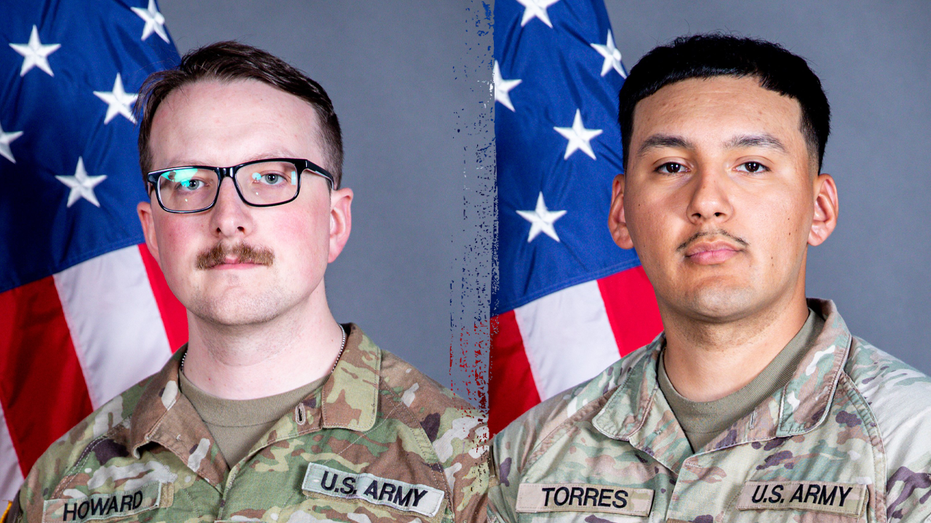
Two U.S. Army soldiers, Sgt. Edgar Brian Torres Tovar and Sgt. William Nathaniel Howard, were killed in Syria in an attack attributed to Islamic militants. The public response so far has centered on grief, calls for prayer, and a vow from War Secretary Pete Hegseth that the United States will respond with force. What’s missing from much of the immediate coverage is any serious examination of why Americans are still dying in Syria, what strategic purpose this mission serves, and how these small but deadly incidents fit into a much larger pattern of U.S. “forever presence” in the Middle East.
This story matters because it encapsulates three converging dynamics shaping U.S. power today: the normalization of semi-permanent, low-visibility deployments; the blurring of military policy with partisan political messaging; and the growing disconnect between the risks borne by a small slice of Americans and the broader public’s understanding of what those risks are for.
Why U.S. Troops Are Still in Syria
To understand the significance of this attack, you have to go back to how U.S. forces ended up in Syria in the first place. The United States initially entered the Syrian theater under the Obama administration, framing the mission around the fight against ISIS after the group declared a “caliphate” across parts of Iraq and Syria in 2014. The legal and political justification leaned on post-9/11 authorizations for the use of military force (AUMF) rather than a new, Syria-specific mandate.
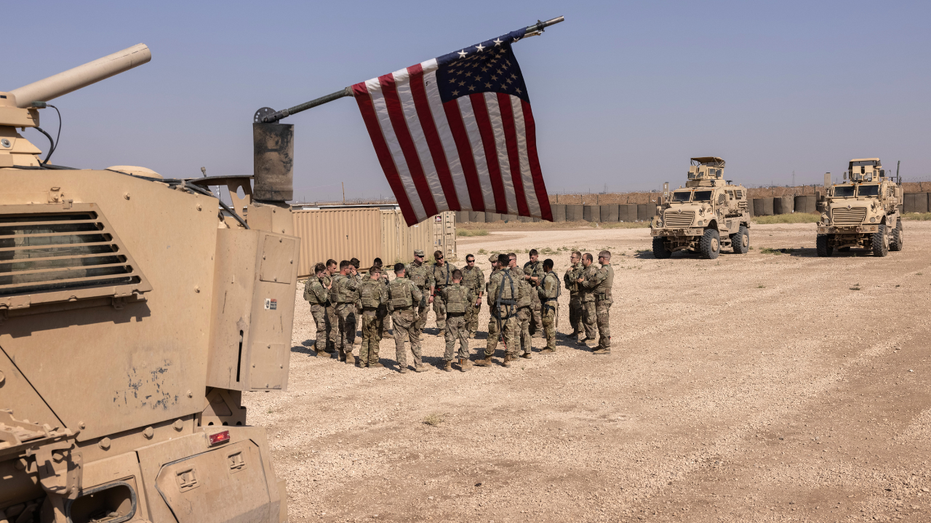
Over time, that mission morphed. The large-scale anti-ISIS campaign has largely receded, yet a few hundred to a couple thousand U.S. troops (figures have fluctuated; public reports often refer to roughly 900 service members) remain in eastern Syria. Officially, they are there to prevent ISIS from resurging by working with local partners and controlling strategic territory and oil fields.
In practice, those troops now sit at the intersection of multiple conflicts: the remnants of ISIS, Iranian-linked militias, Syrian regime forces, Turkish operations against Kurdish groups, and shifting Russian involvement. When U.S. forces are attacked, the line between counterterrorism, regional deterrence, and proxy conflict becomes blurry.
The Unseen Costs of “Low-Level” War
Because the U.S. footprint in Syria is comparatively small and casualty numbers are low relative to Iraq or Afghanistan at their peak, Syria often disappears from front-page attention. Yet the deaths of Sgt. Torres Tovar and Sgt. Howard highlight a reality military planners understand well: even a small mission carries strategic and moral costs.
Data from the Costs of War project at Brown University shows that post-9/11 counterterrorism operations have extended into more than 80 countries through direct deployments, training, or support. Syria is one node in a global network of often under-the-radar missions. Individual incidents—like this attack—are not isolated tragedies; they are the predictable outcome of a policy choice to maintain an open-ended, forward-deployed posture against terrorism and regional rivals.
Politically, those costs are easier to sustain when they are dispersed and low-profile. There is no draft, and less than 1% of Americans serve in the armed forces. That gap makes it possible for leaders to speak in sweeping, moral terms about sacrifice and resolve, while the public rarely sees the day-to-day reality or wrestles with the strategic endgame.
Prayer, Force, and the Politics of Messaging
Hegseth’s statement asking Americans to pray for the soldiers and their families, coupled with a promise that the U.S. will respond “with force,” follows a familiar pattern in U.S. political life: ritualized mourning paired with an assertion of strength. The language is designed to do multiple things at once—validate grief, project resolve to adversaries, and reassure domestic audiences that the government is not passive.
But the choice of what officials emphasize—and what they omit—is telling. Calls for prayer and vows of retaliation are explicit; explanations of strategic objectives and exit conditions are not. There is no discussion in the statement of how long U.S. forces are expected to remain in Syria, how success is defined, or what risks policymakers are prepared to accept.
This is where the coverage often stops short. In focusing on the emotional and symbolic dimensions—flags, prayers, promises of justice—media and officials together can obscure the policy debate that should follow. The question is not whether the soldiers’ sacrifice is honorable; it is. The question is whether the mission that put them in harm’s way is transparent, necessary, and properly debated.
A Broader Pattern: Quiet Deployments, Loud Domestic Politics
The newsletter that mentions this attack also weaves it into a broader tapestry of domestic political headlines: Afghan refugee policies after a guardsmen shooting, disputes over redistricting, 2028 presidential speculation, regulatory rollbacks. That editorial framing highlights another dynamic: foreign policy and military risk are increasingly pulled into partisan narratives.
When casualties occur, they can be used to reinforce pre-existing political arguments: that an administration is weak or strong, that border or refugee policies are dangerous or necessary, that certain ideological enemies are to blame. What gets crowded out is a sustained, bipartisan reckoning with the underlying strategic question: what is the long-term U.S. role in Syria and similar theaters, and how should it be governed and overseen?
Historically, this isn’t new. During the Iraq War, casualty spikes often coincided with waves of partisan messaging. But today, the scale is smaller and the missions are more diffuse, making it even easier for them to be instrumentalized in domestic debates while remaining structurally unexamined.
Expert Perspectives: Mission Creep and Strategic Ambiguity
Security analysts have warned for years that U.S. operations in Syria risk sliding from narrow counter-ISIS missions into a broader containment strategy against Iran and its proxies. That shift, often subtle and incremental, increases the likelihood of attacks like the one that killed these soldiers.
Military scholars also point to the legal gray zones. The same post-9/11 authorizations used for Afghanistan have been stretched to cover operations in Syria, Yemen, Somalia, and beyond. Congress has repeatedly debated revising or repealing these authorizations but has struggled to reach consensus. The result is a set of missions that are de facto permanent but politically framed as temporary, limited, or “conditions-based.”
The moral hazard is clear: if policymakers can sustain open-ended operations with small, professional forces and limited visibility, the threshold for using force may effectively lower. Families like those of Sgt. Torres Tovar and Sgt. Howard bear the direct cost of that choice.
What This Attack Signals Going Forward
In purely military terms, a vow to respond with force likely means targeted strikes, increased force protection, or messaging designed to deter future attacks. But the larger implication is that the Syria deployment has quietly normalized into a long-term commitment with constant background risk.
There are several likely consequences:
- Cycle of retaliation: Retaliatory strikes may temporarily degrade specific militant groups but can also fuel further attacks, especially in a fragmented environment where multiple actors operate in close proximity.
- Policy drift: Without clear, publicly articulated objectives, the mission risks becoming a default setting—something done because it’s already being done, rather than because it has been freshly justified.
- Domestic fatigue without awareness: Public opinion polls show Americans are wary of major new wars, yet many are unaware of the extent of ongoing deployments. That combination breeds quiet fatigue rather than informed engagement.
- Precedent for future theaters: The Syria model—small, persistent deployments in unstable regions—may be replicated as the U.S. tries to balance great-power competition with ongoing counterterrorism commitments.
What’s Being Overlooked
Several crucial questions receive little attention amid the immediate reactions:
- What intelligence assessments preceded this attack? Were there known risks that commanders and policymakers accepted as part of the mission profile?
- How transparent is the Syria mission to the public and Congress, beyond broad statements about counterterrorism?
- Are local partners in Syria—often Kurdish-led forces—aligned with U.S. strategic goals, or are American troops effectively stabilizing a complex local conflict over which Washington has limited long-term influence?
- Most fundamentally: what conditions would need to be met for the U.S. to declare the mission complete or shift to a different strategy?
These are not abstract debates. They directly shape whether more families will receive the same devastating notification that reached the loved ones of Sgt. Torres Tovar and Sgt. Howard.
Looking Ahead: What to Watch
The aftermath of this attack will reveal whether the United States is willing to reassess its Syria posture or whether this will be treated as another tragic but routine incident.
Key indicators include:
- Congressional hearings or briefings: Do lawmakers demand detailed explanations of the mission’s scope, risks, and objectives, or do they largely accept executive branch framing?
- Changes in troop levels or basing: Any announced drawdowns, consolidations, or expansions would signal a shift in strategic thinking.
- Public messaging from the administration: Beyond promises of retaliation, does the administration offer a coherent narrative about what success in Syria looks like in 2025 and beyond?
- Regional reactions: How Iran-linked militias, ISIS remnants, Turkey, and Russia respond will shape the risk environment for remaining U.S. forces.
The Bottom Line
The deaths of two U.S. soldiers in Syria are not just a somber headline in a political newsletter; they are a window into how the United States now wages war—incrementally, often quietly, in places most Americans rarely think about. Behind the calls for prayer and promises of force lies a bigger, unresolved question: how long will America accept a model of permanent, low-level conflict without insisting on a clear, democratically debated strategy for why its troops are there in the first place?
Topics
Editor's Comments
What stands out in this episode is not just the tragedy of two lives lost, but the silence around the larger structure that made their deaths possible. We hear, correctly, about bravery and sacrifice; we hear about prayers and promised retaliation. We almost never hear a frank accounting of why, in the third decade after 9/11, U.S. troops are still exposed to lethal risk in a Syrian battlespace with no clear political settlement in sight. One uncomfortable truth is that the current model of small, professional deployments is politically convenient. It avoids the domestic upheaval of large-scale wars while maintaining a visible American stake in volatile regions. That convenience, however, carries its own moral price. If the nation is going to continue asking a tiny fraction of its citizens to face these dangers, it owes them—and their families—more than reactive statements after attacks. It owes them an honest, recurring national debate about the purpose, duration, and legal foundation of these missions. Without that, each new casualty risks becoming just another data point in a conflict we no longer bother to fully name.
Like this article? Share it with your friends!
If you find this article interesting, feel free to share it with your friends!
Thank you for your support! Sharing is the greatest encouragement for us.