Puka Nacua’s Ref Rant Exposes the NFL’s Growing Officiating Credibility Crisis

Sarah Johnson
December 18, 2025
Brief
Puka Nacua’s viral blast at NFL referees reveals a deeper officiating credibility crisis in a betting-driven, streaming-first era. This analysis unpacks the structural forces fueling player distrust and fan skepticism.
Puka Nacua vs. NFL Refs: A Viral Rant That Exposes a Much Deeper Crisis for the League
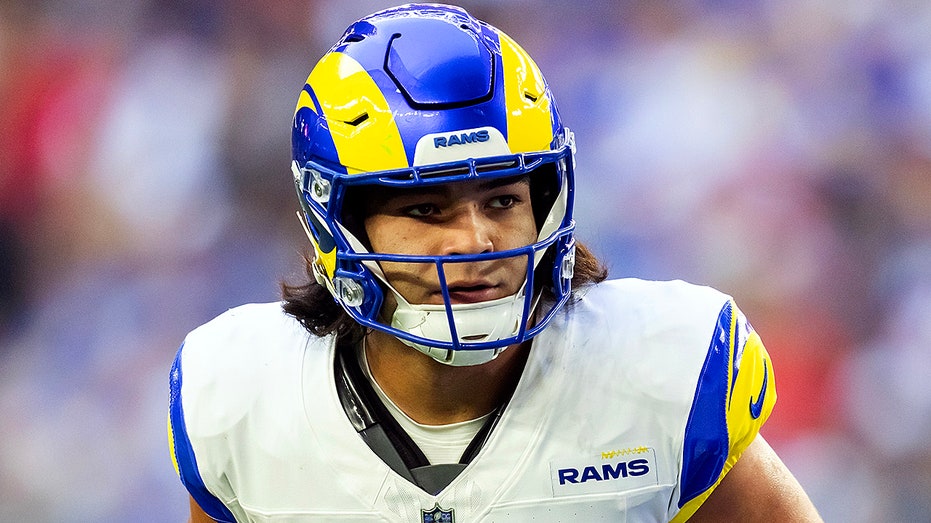
Los Angeles Rams star Puka Nacua didn’t just take a swipe at NFL referees on a livestream; he tapped into a long‑simmering credibility crisis for the league. His accusation that refs "make up calls" to get on TV may sound like a young star venting, but it also reflects a deeper shift: players increasingly see officiating not as a neutral force, but as a performative, media-aware part of the entertainment product.
For a league whose entire business model rests on the public believing games are fair, that’s a warning flare the NFL can’t afford to ignore.
Why this matters beyond one rant
Nacua’s comments didn’t come at a press conference or through a team channel; they came on a livestream with internet personalities Adin Ross and N3on – exactly where younger fans spend their time. That alone is significant. The NFL’s official discipline mechanisms were built for podiums and locker-room scrums, not for an ecosystem where star players casually criticize officiating in front of hundreds of thousands of viewers outside league control.
His rant landed days after his Rams benefited from a controversial replay-reviewed touchdown against the Detroit Lions – a moment that already had social media arguing about whether replay use and officiating are tilting games. So when a Pro Bowl receiver who’s having a breakout season calls referees "the worst" and suggests they chase TV face time, it reinforces a perception that’s been building for years: officiating is no longer just fallible; it’s potentially self-interested and too central to outcomes.
How we got here: a history of eroding trust in NFL officiating
Distrust of NFL officiating isn’t new, but its character has changed:
- 1970s–1990s: Human error accepted as part of the game. Before widespread replay, blown calls were frustrating but mostly framed as human mistakes. Fans might grumble, but there wasn’t a pervasive narrative of “the fix is in.”
- 2000s: Replay meant to solve problems, but also highlighted them. As instant replay expanded, TV audiences could see super-slow-motion angles that often contradicted calls on the field. The idea that technology would “get it right” clashed with calls that still went the other way.
- 2010s: Signature controversies dent credibility. The 2012 “Fail Mary” replacement-ref fiasco, the 2018 NFC Championship no-call against the Saints, and high-profile roughing-the-passer flags on stars like Tom Brady helped solidify a belief that rules were inconsistently and sometimes protectively applied.
- Late 2010s–2020s: Betting boom raises the stakes. With the legalization of sports betting and the league’s embrace of gambling partners, every borderline call now has a financial shadow. When officiating looks arbitrary, it no longer just affects wins and losses – it affects money.
Historically, players would sometimes publicly criticize refs, take the fine, and move on. But the tone now is different. Nacua is not just saying refs are bad at their jobs; he’s suggesting they’re quasi-celebrities who enjoy being part of the show. That hits at the core of the NFL’s claim that officiating is impartial and unemotional.
What Nacua is really implying about NFL culture
Nacua’s line about refs texting their friends – "Yo, you guys just saw me on Sunday Night Football" – sounds anecdotal, but it reflects a wider concern among players: that officiating has become performative.
There are three underlying issues embedded in his comments:
- Referees as personalities, not invisible arbiters. TV broadcasts now show refs more than ever, mic their explanations, isolate them on camera, and break down their mechanics. The league wants clarity and transparency, but the side effect is that referees are increasingly recognizable characters in the NFL narrative.
- Ambiguous, hyper-subjective rules. Pass interference, roughing the passer, and defensive holding are inherently judgment calls. As rules have expanded to "protect" offensive production and quarterbacks, refs are asked to make split-second interpretations that can swing entire games. That subjectivity makes it much easier for players and fans to imagine personal motives behind calls.
- A culture of fines that looks like speech control. The fact that Nacua and the streamers immediately mention fines for criticizing refs highlights another tension: players feel there’s no safe channel to question officiating without financial punishment.
The NFL’s official position is that public criticism undermines credibility and opens the door to conspiracy narratives. But the unintended effect is that star players increasingly take these grievances to unregulated spaces: private podcasts, livestreams, and group chats that inevitably leak into public view.
Data points: how big is the officiating problem?
There’s no single definitive metric for “bad officiating,” but several trends illuminate why tensions are so high:
- Penalty volume and variability. In recent seasons, total penalties per game have fluctuated significantly year to year, especially for subjective calls like defensive pass interference and illegal contact. Fans and players experience that as inconsistency rather than adjustment.
- Replay overturn rates. The percentage of calls reversed on replay has hovered roughly in the 40–50% range in some recent seasons. Every overturned call is a reminder to players that what they experience on the field and what is ultimately ruled from a booth or headquarters can diverge dramatically.
- Public sentiment. In fan surveys conducted by various sports analytics groups over the past decade, "officiating" routinely ranks among the top three frustrations with the NFL product, alongside game length and commercial load.
Against this backdrop, Nacua’s criticism doesn’t sound like isolated frustration. It sounds like a star giving voice – in blunt, unpolished language – to what a lot of players and fans already believe.
The Lions-Rams call: one play, bigger symbolism
The irony is hard to miss: Nacua’s comments surfaced shortly after his own team benefited from a controversial replay-reviewed touchdown against the Detroit Lions. To Lions fans, the decision to rule Colby Parkinson’s catch a touchdown felt like the latest in a long history of critical calls going against them. Social media was quick to revive past incidents involving Detroit and officiating.
That play encapsulates two broader issues:
- Replay’s double-edged sword. The league introduced replay to give fans confidence that key calls would be corrected. Instead, debates have shifted from whether the referee saw the play correctly to whether replay officials are applying standards consistently.
- The narrative of "certain teams" getting breaks. When calls in critical moments appear to favor certain franchises or star quarterbacks repeatedly, it feeds the belief that the product is not purely competitive, but subtly curated.
Nacua’s rant, in that context, isn’t just a complaint about refs in the abstract; it’s a live question about whether the system itself is structurally tilted – even if unintentionally – by incentives, visibility, and entertainment pressure.
Expert perspectives: what’s really driving the tension?
Sports law and ethics experts have been warning for years that the NFL’s officiating model is mismatched with the modern media and betting environment.
Dr. Mark Conrad, a sports law professor who has written extensively on officiating integrity, has argued that as long as referees remain part-time in a multi-billion-dollar ecosystem, suspicion is inevitable. Meanwhile, former officials like Gene Steratore and John Parry, now TV analysts, routinely emphasize how complex and subjective the rulebook has become, making consistency almost impossible.
Media and fan behavior add another layer. Every controversial call is clipped, slowed down, annotated, and shared across platforms within minutes. Star players like Nacua exist in that same ecosystem; they are not just watching tape – they’re watching how the internet reacts to calls that impact their livelihoods.
What mainstream coverage is missing
Most coverage of Nacua’s comments focuses on whether he’ll be fined and how “hypocritical” it is to bash refs after benefiting from a call. That misses three important structural issues:
- The speech gap between players and the league. The NFL loudly promotes player personality when it drives fan engagement but clamps down when players criticize the league’s own infrastructure, particularly officiating and scheduling. That selective embrace of authenticity creates resentment.
- The impact of streaming culture on league control. The NFL’s disciplinary system was designed for traditional media. It has no real answer for spontaneous, hours-long livestreams where players talk casually and forget they’re still subject to league rules.
- The looming integrity question in a betting-driven era. With legal sports betting now deeply intertwined with broadcasts, any suggestion that referees are motivated by anything other than neutral rule enforcement is dangerous for the league’s perceived integrity.
Looking ahead: how the NFL might respond
Several potential responses are already on the table in league circles, and Nacua’s comments only increase the urgency:
- Increased transparency. The NFL could move toward making more referee communications public, expanding postgame pool reports, or releasing more detailed officiating evaluations. The risk: more transparency could actually amplify controversy if inconsistencies are laid bare.
- Officiating modernization. There have long been calls to make officials full-time, deepen their tech support, and simplify the rulebook. Nacua’s comments may add player momentum to those efforts, especially around subjective fouls like pass interference.
- Updated media policies. The league will likely feel pressure to clarify how criticism on non-traditional platforms – from player podcasts to Twitch streams – will be treated. Selective enforcement will only fuel the narrative that they’re trying to control the story rather than confront the problem.
- Player-ref relationship reset. Quietly, some teams and the league office may seek more structured dialogue between players and officials in the offseason, to rebuild trust and better explain how calls are made.
If the NFL responds primarily with fines and statements, it risks confirming Nacua’s underlying point: that the system is more interested in appearances than fairness.
The bottom line
Puka Nacua’s off-the-cuff rant about referees isn’t just a viral moment or a young star being reckless on a livestream. It’s a window into a shifting power dynamic in the NFL, where players have more direct access to fans than ever, officiating is under historic scrutiny, and the league’s integrity narrative is colliding with its entertainment ambitions.
As sports betting grows and streaming replaces traditional press conferences, the question isn’t whether players will keep criticizing officiating – it’s whether the NFL is willing to reform the system enough that they don’t feel the need to.
Topics
Editor's Comments
What stands out in Puka Nacua’s comments isn’t just the content, but the medium. The NFL has spent years fine-tuning how it manages dissent within controlled spaces—press conferences, official interviews, team-run content. Livestream culture blows that model apart. When players sit for hours with streamers whose incentives revolve around provocation and virality, league discipline becomes both less effective and more politically fraught. If the NFL responds with a fine, it reinforces the perception that it polices speech harder than it polices officiating quality. If it ignores the comments, it risks signaling to other players that refs are fair game. The deeper question is whether the league is prepared to share narrative power with its stars in unscripted environments. Until the NFL treats officiating reform with the same urgency it brings to brand management, these flashpoints will keep recurring—and each one will land harder in a betting-driven, trust-fragile ecosystem.
Like this article? Share it with your friends!
If you find this article interesting, feel free to share it with your friends!
Thank you for your support! Sharing is the greatest encouragement for us.