Beyond the Headlines: What the Reiner Family Tragedy Reveals About Addiction, Violence, and a Broken Safety Net

Sarah Johnson
December 17, 2025
Brief
The alleged murders of Rob and Michele Reiner by their son Nick expose deep failures in America’s addiction, mental health, and domestic-violence systems that even wealthy, high-profile families cannot escape.
Behind the Reiner Tragedy: What a Hollywood Double Homicide Reveals About Addiction, Family Violence, and a Failing Safety Net
The charging of 32-year-old Nick Reiner with the alleged stabbing deaths of his parents, filmmaker and actor Rob Reiner and his wife Michele, is being covered as a shocking Hollywood crime. But once you strip away the celebrity names, this case sits squarely at the intersection of three long-running American failures: how we deal with addiction, how we respond to domestic volatility before it turns lethal, and how the justice system handles severely unstable defendants when it’s already too late.
What makes this story matter is not only the loss of an influential cultural figure and his partner, but the pattern it appears to fit. If early reporting about Nick’s longstanding struggle with addiction and volatility is accurate, this is not an inexplicable act of sudden madness. It looks more like the tragic endpoint of a system that consistently intervenes too late and too weakly—especially when the family, not the public, is at risk.
From Hollywood Royalty to a Familiar American Story
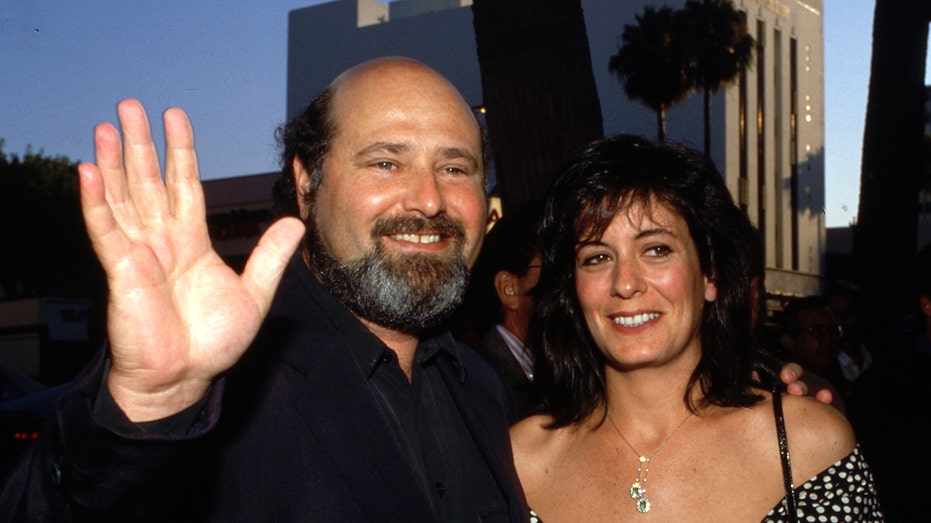
Rob Reiner’s career spans half a century—from his turn as Michael “Meathead” Stivic on “All in the Family” to directing films like “When Harry Met Sally,” “A Few Good Men,” and “The Princess Bride.” For decades, the Reiner family has been part of Hollywood’s creative and political fabric: outspoken, liberal, and unusually open about social issues.
That public profile is why this case is drawing intense attention. But in structural terms, it echoes a disturbing trend. In recent years, there has been a steady increase in cases where adult children—often with documented histories of mental health or substance-use struggles—kill parents or other family members. Criminologists refer to this as parricide, and while it is rare in absolute terms, it is far from unheard of.
Data compiled by the Bureau of Justice Statistics show that family homicides represent about 1 in 6 murders in the United States. Within that category, the National Institute of Justice has reported that a significant share of parricide cases involve offenders with serious mental illness, personality disorders, or long-term substance use. Wealth, status, or fame rarely insulate families from these dynamics. What they sometimes do is obscure the severity of the problem until it explodes into public view.
The Anatomy of a Systemic Failure
Although the full case file is not public, several elements already stand out:
- Documented volatility and addiction: Prior coverage has described Nick’s long history of addiction and behavioral instability. That combination—substance use plus volatility—is a well-established predictor of heightened risk for family violence.
- High-profile but private struggle: Families with resources often cobble together private solutions—rehab stays, therapists, security upgrades—rather than engaging with fragmented public systems that are difficult even for insiders to navigate.
- Late-stage criminal intervention: Prosecutors are now seeking the harshest penalties possible—life without parole or the death penalty—only after two deaths, which raises the familiar question: what tools existed before this moment, and why weren’t they effective?
This pattern recurs across socioeconomic lines. Families see warning signs, attempt to get help, encounter legal and bureaucratic barriers, and then find the full force of the criminal justice system bearing down only after an irreversible act of violence.
Why Addiction Plus Domestic Volatility Is So Dangerous
Substance use alone does not cause violence. Many people with severe addiction never harm anyone. But research consistently shows that when repeated substance use, untreated mental illness, and prior domestic volatility overlap, the risk of serious harm rises.
Studies in The Lancet Psychiatry and other journals have found that people with severe substance use disorders are significantly more likely to be involved in violent incidents, especially when combined with co-occurring psychiatric conditions and unstable family relationships. Add a household with financial resources, complicated family dynamics, and a reluctance to resort to the criminal system on a loved one, and you have a setup where danger escalates in private.
In that respect, the Reiner case mirrors the deaths of other parents killed by adult children in recent years—cases the public rarely hears about because they don’t involve famous names. The details differ, but the through-lines are grimly consistent: years of warning signs, episodic treatment, and escalating family fear that doesn’t translate into sustained, mandated care.
The Criminal Charges: Justice or a Blunt Instrument?
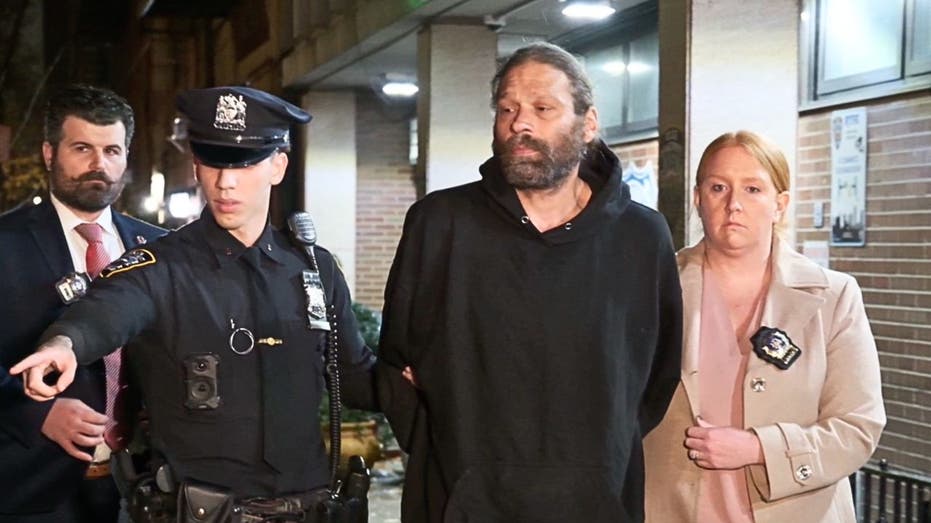
Los Angeles County District Attorney Nathan Hochman announced two counts of first-degree murder with a special circumstance allegation for multiple murders, and a special allegation that Nick personally used a knife. Legally, that’s classic setup for the harshest punishments California still allows: life without parole or the death penalty.
Those charging decisions send a clear message: the state views this as a premeditated, exceptionally grave crime. But they also highlight the limits of how the legal system can respond after the fact. Homicide charges and a possible death penalty do not address any of the upstream failures that likely preceded the crime: inadequate crisis intervention, gaps in long-term treatment, and the legal constraints families face if an adult child refuses help.
The fact that Nick was “not medically cleared” for his first court appearance hints at serious physical or mental health issues in custody—possibly self-harm risk, detox complications, or psychiatric instability. Whatever the cause, it underscores the paradox of how the system intervenes: it often takes a double homicide to trigger intensive state control of someone whose deterioration may have been obvious for years.
What Mainstream Coverage Is Overlooking
Most coverage so far focuses on three elements: the shock of a beloved Hollywood figure’s death, the gruesomeness of alleged stabbing, and Nick’s addiction history. What’s largely missing is the structural analysis:
- The failure of preventive mechanisms: Did the family ever seek restraining orders, psychiatric holds, or court-ordered treatment? If not, why? If so, what happened?
- Legal constraints on families: In California, it is notoriously difficult to compel treatment for an adult unless they meet strict criteria for immediate danger to self or others—criteria that often reset once a crisis passes.
- Resource gaps even for wealthy families: Money can buy private care, but it cannot easily buy legal authority. Even high-profile families struggle with the same guardianship, conservatorship, and civil liberties boundaries that constrain everyone else.
- The broader parricide trend: This case fits into a small but important subset of family homicides that should be driving policy conversations about risk assessment, red-flag laws in domestic contexts, and long-term supervision for high-risk individuals.
Expert Perspectives: Addiction, Family Violence, and the Law
Forensic psychiatrists often stress that parricide cases almost never come “out of nowhere.” They tend to be the culmination of long, troubled histories. Dr. Phillip Resnick, a leading expert on family homicide, has written that in many parricide cases, the offender has “a chronic pattern of conflict, dependency, mental illness or substance abuse that erodes the family’s capacity to respond effectively.”
From a legal standpoint, prosecutors face a difficult optics problem in such cases. If they emphasize addiction or mental instability too strongly, they risk public perception that they are “excusing” the crime. If they ignore it, they risk glossing over critical factors that should inform sentencing and policy. The decision to pursue special-circumstance murder charges indicates a strategic choice to foreground the gravity of the act, even as the underlying pathology remains largely unaddressed in public statements.
Domestic violence experts, meanwhile, have long argued that the systems built to protect intimate partners and children are ill-suited to complex situations involving adult children with severe behavioral issues. The default options—call the police, seek a restraining order, push for short-term hospitalization—are blunt tools that can inflame family tensions without creating durable safety.
Numbers That Put the Case in Context
- According to the Bureau of Justice Statistics, about 16% of homicide victims are killed by family members; a smaller fraction involve children killing parents, but that still translates to dozens of cases annually nationwide.
- The National Survey on Drug Use and Health estimates that around 46 million Americans meet criteria for a substance use disorder. Only a minority receive specialty treatment in any given year.
- Studies of parricide offenders suggest that a high proportion have prior contact with mental health or criminal systems—warning signs that were recognized but not effectively managed.
These numbers matter because they show that while the Reiner case is unusual in its celebrity dimension, the underlying dynamics are widespread: untreated or poorly treated addiction, family desperation, and an intervention apparatus built to react to crises rather than prevent them.
What Comes Next: Legal Pathways and Public Reckoning
Going forward, several developments bear watching:
- Mental competency and insanity issues: Defense attorneys are likely to raise questions about Nick’s mental state at the time of the alleged killings and his current fitness to stand trial. That could shape not only the outcome but also the public narrative about responsibility and illness.
- Evidence of prior interventions: Court records, 911 calls, or prior restraining orders (if any) will be crucial in understanding how many opportunities the system had to step in—and what ultimately failed.
- Family statements and policy impact: Surviving family members, including siblings, may eventually choose to speak publicly. If they link this tragedy to systemic gaps in addiction and mental health care, the case could catalyze legislative debates in California and beyond.
- Media framing: Whether this remains a sensational Hollywood murder story or evolves into a deeper conversation about prevention will depend largely on how journalists, advocates, and policymakers choose to engage with it.
The Bottom Line
The alleged murders of Rob and Michele Reiner by their son are, at one level, an almost unbearable private tragedy. But at another, they are a highly public illustration of a recurring American pattern: we tolerate chronic risk within families until it erupts into irreversible violence, and then respond with the harshest possible criminal penalties.
If this case is treated only as a gruesome celebrity crime, we will have learned very little. The harder, more important conversation is about why, in 2025, a family with financial means, public visibility, and presumably access to care still reached a point where two people ended up dead and a third may spend the rest of his life—or face execution—in a system that only fully engaged after everything was lost.
That is not just Nick Reiner’s story. It is ours.
Topics
Editor's Comments
One of the most unsettling aspects of the Reiner case is how familiar it looks to anyone who has reported on family violence and addiction outside the celebrity spotlight. The names are different, but the structure is the same: years of escalating volatility, intermittent treatment, relatives torn between fear and loyalty, and a legal system that offers only two modes—hands-off or fully punitive. We tend to treat these tragedies as moral failures at the individual level: a son who became a monster, parents who allegedly missed warning signs. That framing is emotionally satisfying but analytically thin. The harder truth is that current law deliberately sets a very high bar for depriving adults of autonomy, even when they are spiraling in ways that terrify those closest to them. Changing that balance—granting families and courts more power to intervene earlier—poses serious civil-liberties questions. Yet the alternative is the status quo: a system that consistently waits for a body on the floor before it can act decisively. The Reiner case should force us to confront that trade-off head-on, not just mourn its latest, high-profile casualties.
Like this article? Share it with your friends!
If you find this article interesting, feel free to share it with your friends!
Thank you for your support! Sharing is the greatest encouragement for us.