Riley Moss and the NFL’s Officiating Problem: Why One Bronco’s Flags Matter Leaguewide

Sarah Johnson
December 18, 2025
Brief
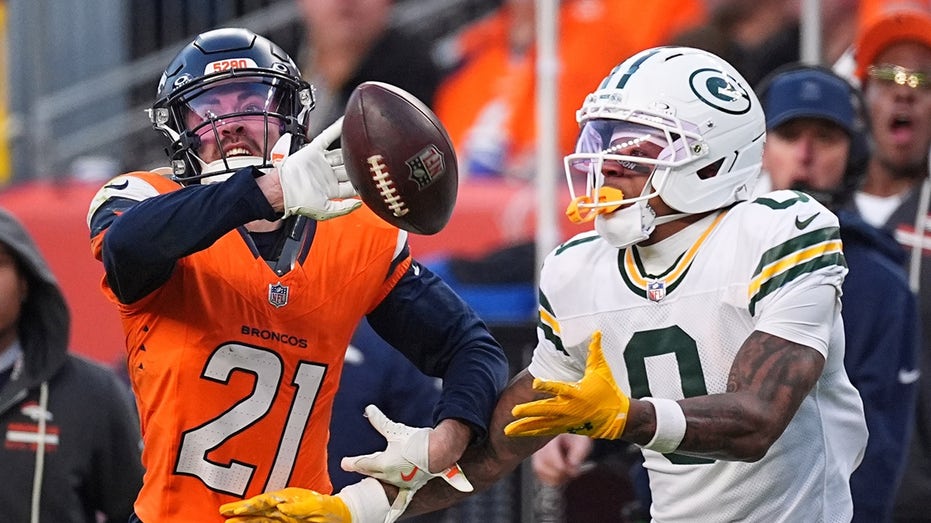
Riley Moss’s string of penalties isn’t just a Broncos storyline—it exposes deeper problems in NFL officiating, defensive strategy, and gambling-era credibility that go far beyond one cornerback’s technique.
Riley Moss, ‘Ticky-Tack’ Flags, and the NFL’s Officiating Crisis: What’s Really Going On?
The headline looks like a local locker-room story: a Denver Broncos star, Patrick Surtain II, publicly defending teammate Riley Moss after yet another controversial penalty. But beneath the surface is a much bigger issue for the NFL: a credibility problem around officiating that’s colliding with modern passing schemes, gambling, race, and the league’s own business interests.
Moss has reportedly drawn nearly a dozen penalties in 2025, costing Denver more than 200 yards. For a single defensive back, that’s not just a bad streak—it’s enough to distort games, shape narratives, and raise uncomfortable questions about how the NFL actually wants defense to be played.
The Bigger Picture: How We Got to Hyper-Flagged Pass Defense
To understand why Moss’s flags resonate beyond Denver, you have to zoom out on how the NFL has reshaped the rules over the past four decades. Since the late 1970s Mel Blount rule, the league has steadily tilted the field toward quarterbacks and receivers:
- 1978: Illegal contact rules start curbing physical play by cornerbacks beyond five yards.
- Early 2000s: After the Patriots’ physical game plans against Peyton Manning’s Colts, the league emphasized illegal contact and defensive holding, tightening enforcement.
- 2010s–2020s: Player safety rules, defenseless receiver protections, and emphasis on offense-driven excitement further narrow the margins for defensive backs.
The result: defensive backs today are asked to do something close to impossible—play tight, physical coverage in an era where any contact at the wrong moment can produce a flag that flips a drive, a game, or a season.
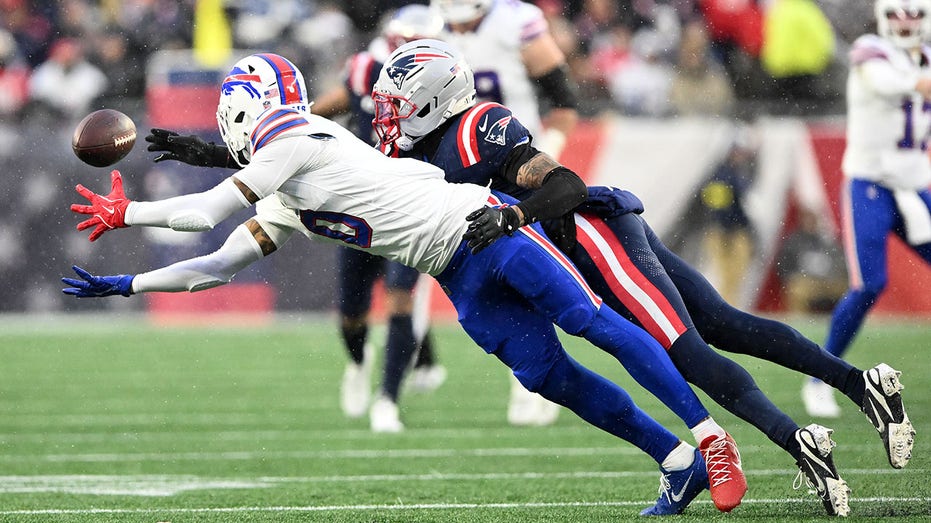
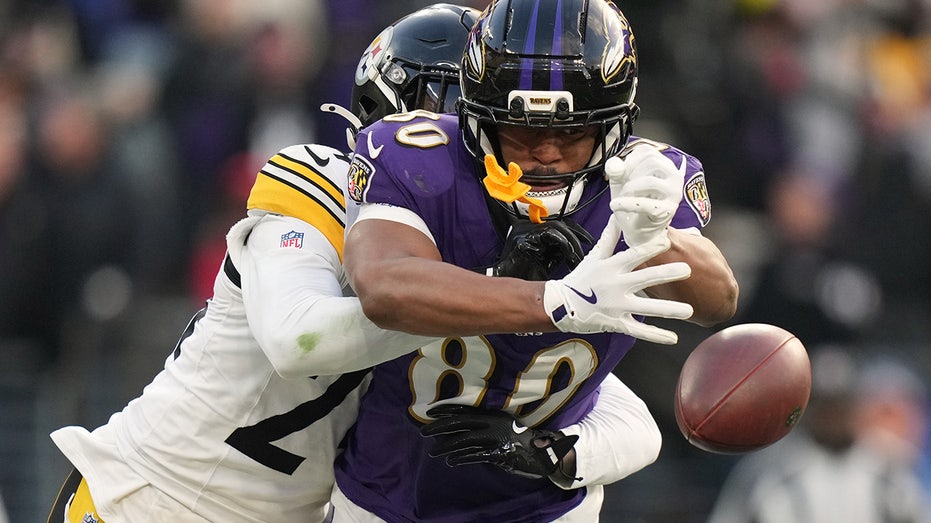
Pass interference (PI) and defensive holding calls have become some of the most high-leverage plays in football. A marginal contact 30 yards downfield can be worth more expected points than a 25-yard completed pass. Add in the rise of legal sports betting and micro-wagers on individual drives, and each flag is no longer just a coaching headache—it’s a business and integrity issue.
What Surtain and Payton Are Really Saying
Publicly, Surtain calls the penalties on Moss “pretty ticky-tacky” and notes that similar contact elsewhere in the league goes uncalled. Coach Sean Payton goes further, essentially calling one flag an expletive without saying the word. Beneath the sanitized quotes, the underlying messages are clear:
- Consistency is broken: Surtain’s point—that other players do the same thing without being flagged—goes to the heart of the league’s problem. Players can adjust to strict rules; they cannot adjust to unpredictable rules.
- Reputation is becoming destiny: When Payton references the “brutal” call in New York and the pattern of penalties, he’s implying that Moss may have become “a guy refs watch,” the kind of unofficial labeling that has long shaped how NBA stars draw fouls or how certain corners are officiated in the NFL.
- They’re managing psychology as much as technique: Both Surtain and Payton stress Moss’s mental resilience—“holds his head high,” “he’ll keep competing”—because modern officiating doesn’t just punish a play; it can break a defender’s confidence, making them play softer and fundamentally change a defense’s identity.
In other words, this isn’t just about whether a hand on an arm should draw a flag. It’s about whether a single player can be officiated into a different role or reputation, with the entire defense recalibrating around that reality.
Is Riley Moss Being Officiated Differently?
You don’t need a conspiracy theory to ask why one player accumulates such a high volume of penalties. There are a few plausible structural explanations—none of which involve malice, but all of which raise fairness questions:
- Style of play: Aggressive, handsy corners inevitably live on the edge of legality. Think about corners like Richard Sherman in his prime—constantly testing what refs would tolerate. Moss’s high tackle and pass breakup counts (65 tackles, 15 PBUs) suggest he’s around the ball a lot. That also means he’s around the flag risk a lot.
- “Film reputation” effect: Officials receive scouting reports just like teams do. If Moss is tagged as a frequent grabber or contact-heavy defender, crews may watch him more closely, even unconsciously. That scrutiny can become self-fulfilling.
- Scheme demands: If Denver is playing more man coverage or press looks, corners are simply exposed to more situations where marginal contact can be penalized.
Then there’s the comment Surtain himself once made jokingly—that Moss was being “racially profiled” by officials. While clearly intended as humor, it taps into a real conversation about race and officiating, only with the roles inverted from typical policing debates. A white defensive back is still somewhat atypical in the modern NFL, especially on the outside. The joke lands precisely because it subverts a serious issue, but it also signals that players notice patterns and are trying to find language—sometimes uncomfortable language—to describe perceived injustice.
We don’t have granular penalty-by-race officiating data for individual positions; without it, any hard claim about racial dynamics in Moss’s case would be speculation. But the fact that an All-Pro defender feels the need to frame the issue that way—even jokingly—is a data point about how players experience the officiating environment: as something not just arbitrary, but potentially personal.
The Hidden Cost: How Flags Reshape Defensive Football
For a single team, 200+ penalty yards on one player can be the equivalent of several explosive plays conceded. Multiply that across the league and you start to see how officiating trends don’t just influence outcomes—they define strategic evolution.
Here’s what’s likely happening underneath the surface in Denver and around the NFL:
- Coaches recalibrate risk tolerance: If Moss continues to be flagged at a high rate, Payton and his defensive staff face a choice: dial back aggression in coverage, adjust his technique, or limit his snaps in certain matchups. Each option has downstream effects on the pass rush, blitz calls, and coverage shells.
- Defenders internalize “do not touch” zones: When a CB is flagged for a brief hand on an arm while the ball is in the air, it encourages defenders to play with more cushion, particularly downfield. You get softer coverage, higher completion percentages, and even more pressure on officials to call illegal contact when defenders try to close late.
- Offenses weaponize flags: Smart quarterbacks and receivers already treat PI as a valid outcome, not just a fallback. If corners like Moss are perceived as flag-prone, coordinators will design shots and double moves specifically to induce contact and draw penalties.
In that light, Moss isn’t just a player with a penalty problem. He’s an example of how the rulebook and its enforcement are creating a meta-game where flags themselves are a strategic asset.
Expert Perspectives: Officiating, Consistency, and the Human Factor
Longtime officiating analysts and former players have warned for years that the NFL is asking human officials to do an almost impossible task in real time: identify slight contact at high speed, interpret intent, and apply highly subjective rules consistently.
Former referee and rules analyst Mike Pereira has frequently noted that defensive pass interference is “the most subjective call in football,” with different crews developing distinct thresholds for what constitutes a foul. That subjective zone is exactly where Moss appears to be getting caught, repeatedly.
Sports law and integrity experts point to an additional risk: as live and in-play betting on the NFL expands, each marginal PI call carries not only competitive but financial implications. Dr. Arthur McAfee, a former league counsel and sports governance expert, has argued that “perception of fairness is now as critical as fairness itself” in a gambling-intensive era. When players like Moss appear to be repeatedly singled out, it feeds perception problems—even if there’s no underlying bias in intent.
Data & Evidence: The Trend Lines Behind the Flags
While 2025 full-season data isn’t yet compiled publicly, the direction of travel is clear from recent years:
- Passing volume and efficiency: League-wide passing attempts and efficiency have been elevated compared to pre-2010 levels, correlating with tighter enforcement of contact rules and player safety reforms.
- Penalty impact: Analytical work by football metrics sites has shown that defensive pass interference is often one of the highest expected value penalties in the sport, sometimes adding more than 1.5 expected points on a single call.
- Individual CB variance: Teams routinely see large differences in penalty yards among defensive backs, often correlating to usage, technique, and reputation. Moss’s 200+ yards put him near the extreme end of that distribution.
What’s missing from the public data is exactly what this case highlights: a deeper, player-level, multi-year analysis of whether certain players or profiles are officiated more strictly—and whether early penalties on a player change how future contact is judged.
Looking Ahead: What This Means for the Broncos—and the NFL
For Denver in the near term, the Moss situation is about risk management and mental resilience:
- Technique overhaul vs. identity: The Broncos must decide whether to fundamentally retool Moss’s technique—potentially dulling his effectiveness—or ride out the storm and hope officiating variance evens out.
- Locker room messaging: Surtain’s public defense isn’t just friendship; it’s culture-setting. It tells younger players the team backs them when the system feels stacked against them.
- Game planning: Opponents like the Jaguars will surely see Moss’s penalty history on tape. Expect them to test him deep and in isolation, looking not just for completions but for flags.
For the NFL more broadly, Moss’s case sits at the intersection of several brewing storms:
- Officiating transparency: There’s growing pressure for the league to release more granular breakdowns of penalty trends by crew, position, and situation.
- Technology intervention: With replay review for PI having failed in a previous experiment, the league faces tough questions about whether semi-automated or AI-assisted officiating tools can help in the future, especially on high-value calls.
- Labor relations: The players’ union has a clear incentive to push for more consistency and accountability in officiating, particularly if certain positions or players are disproportionately affected.
The Bottom Line
Riley Moss’s penalty streak is more than an individual rough patch. It’s a stress test of a system that asks defensive backs to play aggressively in a rule environment that punishes aggression, all policed by humans making split-second subjective calls.
When stars like Patrick Surtain II and veteran coaches like Sean Payton publicly question the legitimacy and consistency of those calls, the league should treat it as more than postgame frustration. It’s an early warning that the balance between offense, defense, and officiating credibility may be drifting out of alignment—and that the next controversial flag might not just cost a team yardage, but the NFL another slice of public trust.
Topics
Editor's Comments
What’s striking in the Riley Moss situation is less the individual flags and more the institutional silence around patterns like this. The Broncos are effectively telling the league: we believe a particular player is being officiated differently, and it’s affecting our season. Yet there’s no mechanism—at least publicly visible—for a team to challenge not just one call, but a trend. Imagine if the NFL were required to audit and publish a breakdown of Moss’s penalties, comparing his contact patterns to similar plays across the league without flags. That kind of transparency would either validate Denver’s frustration or vindicate the officials, but right now fans, players, and even analysts are left to speculate. In an era when the league leans heavily on data for everything from player tracking to fourth-down decisions, its reluctance to bring the same rigor to officiating patterns looks increasingly untenable—and ultimately risks more than just angry press conferences. It risks legitimacy.
Like this article? Share it with your friends!
If you find this article interesting, feel free to share it with your friends!
Thank you for your support! Sharing is the greatest encouragement for us.