Skate Canada vs. Alberta: How a Skating Boycott Became a National Test of Fairness and Inclusion

Sarah Johnson
December 18, 2025
Brief
Skate Canada’s boycott of Alberta over its Fairness and Safety in Sport Act marks a pivotal clash between provincial law and national inclusion standards, with far-reaching implications for trans athletes, women’s sport, and Canadian governance.
Skate Canada vs. Alberta: When Sports Policy Becomes a Constitutional Test for Inclusion
Skate Canada’s decision to effectively boycott Alberta for national and international events is not just a scheduling dispute. It’s an early test case in Canada of what happens when provincial governments move one way on gender and sport, while national sport bodies and international federations move another. The outcome will shape how “inclusion” and “fairness” are defined in Canadian sport for years to come—and who gets to decide.
Why this confrontation matters
On the surface, this looks like a narrow fight: a skating federation declining to place events in a single province that has tightened eligibility rules for women’s divisions. Underneath, it’s about:
- Whether national sport organizations (NSOs) or provinces set the effective ground rules for inclusion.
- How Canada balances gender identity rights with sex-based eligibility in women’s sport.
- Whether Canada drifts toward a patchwork of provincial sport regimes, or maintains national consistency.
- How much leverage major sport bodies actually have when they weaponize event hosting against governments.
Skate Canada’s stance—refusing to stage top-tier events in Alberta over the province’s Fairness and Safety in Sport Act—signals that sport administrators are prepared to use their strongest available tool: economic and reputational pressure. Alberta’s counter-message, voiced forcefully by Premier Danielle Smith, is that provincial lawmakers—not federations—will define what “fair” means in women’s sport, even at the cost of losing events.
How we got here: A decade of shifting rules
To understand this clash, you have to see it against two overlapping timelines: Canada’s legal evolution on gender identity, and the global sports world’s increasingly fragmented rules on trans participation.
Canada’s legal and policy backdrop
- 2010s – Inclusion-first policies: Following the addition of gender identity and expression protections to federal and many provincial human rights codes (notably with Bill C-16 in 2017), Canadian sport bodies adopted trans-inclusive guidelines. The Canadian Centre for Ethics in Sport (CCES) and national federations encouraged participation based on gender identity, especially in amateur and youth levels.
- 2018–2022 – International turbulence: Cases like South Africa’s Caster Semenya, debates in swimming, cycling, and rugby, and high-profile U.S. controversies over trans athletes increased public scrutiny of women’s categories. Sports began asking whether policies anchored only in gender identity adequately addressed perceived performance advantages of male puberty.
- 2023–2024 – Global split: World Aquatics, World Rugby, World Athletics and others moved toward stricter eligibility for women’s categories, often barring trans women who underwent male puberty from elite female competition or creating “open” categories. At the same time, some bodies, citing human rights principles, stayed with more trans-inclusive frameworks.
- 2024–2025 – Provincial divergence in Canada: Alberta’s Fairness and Safety in Sport Act is part of a wider suite of policies signaling a shift toward more conservative positions on gender, especially in schools and sports. It puts into law what many federations had previously addressed through internal policy.
Where skating fits in
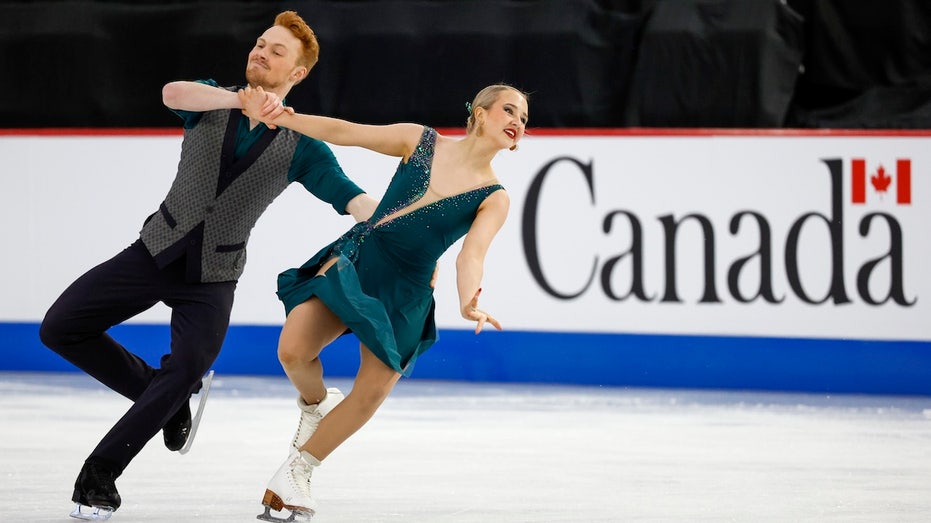
Figure skating is judged on artistry and technical difficulty rather than direct physical contact or strength versus strength. That hasn’t insulated it from the broader debate, but it changes the calculus. Some experts argue that the performance gap between male and female skaters still exists—quad jumps, for instance, are more common and higher among men—but the “safety” rationale is less obvious than in rugby or combat sports.
Skate Canada has been aligned with broader Canadian sport principles that emphasize inclusion, anti-discrimination and safe environments for LGBTQ+ athletes. The Alberta law, by explicitly restricting women’s divisions to “biologically female” athletes, directly collides with that inclusion-first approach.
What the Alberta law actually does—and why Skate Canada reacted
The Fairness and Safety in Sport Act requires “in-scope organizations” to develop eligibility rules that restrict female-only categories to biologically female athletes. The language is framed around fairness and safety, especially for girls and women. Alberta’s pitch to voters: this is about protecting opportunities for female athletes, not targeting trans people.
Skate Canada’s response makes clear that its concern isn’t only about who can skate; it’s about alignment with its “national standards for safe and inclusive sport.” In practice, that means:
- Skate Canada cannot guarantee that its own inclusion policies can be fully implemented in a province where eligibility is constrained by law.
- Trans athletes and non-binary skaters could face a different set of rules in Alberta than elsewhere in Canada, undermining national consistency.
- There are potential human-rights risks—if a national event follows Alberta rules, it could be challenged as discriminatory under federal or other provincial human rights frameworks.
Crucially, Skate Canada is not banning Alberta athletes. It is targeting the hosting role—where the federation has maximum leverage and public visibility—while leaving day-to-day participation intact. That’s a strategic choice aimed at pressuring the province without punishing Alberta skaters outright.
A clash of mandates: Who runs Canadian sport?
This fight highlights a deep structural tension: sport in Canada is governed by overlapping jurisdictions.
- Provinces control most education and recreation systems, and heavily influence grassroots sport and funding.
- National sport organizations manage high-performance pathways, national teams, and standards for national competitions.
- Federal agencies provide funding and set broad human rights and Safe Sport expectations.
When Alberta tells sport bodies that female-only divisions must be based on biological sex, but Skate Canada maintains a more inclusive policy framework, both are effectively asserting regulatory authority over the same space. This isn’t just about trans athletes; it’s about which level of governance gets the final say.
In that sense, this dispute functions as a proxy constitutional conflict. While it may not be litigated at the Supreme Court tomorrow, it sets up the conditions for future legal challenges:
- Could an athlete argue discrimination if barred from a category in Alberta but allowed in other provinces?
- Could a province argue that a national federation is penalizing it for democratically passed legislation?
- What happens when federal funding conditions on inclusion collide with provincial restrictions?
Is Alberta really “aligned” with the IOC?
Premier Danielle Smith claims that Skate Canada is “offside with the international community, including the International Olympic Committee, which is moving in the same direction as Alberta.” That’s an overstatement at best.
The IOC’s most recent framework on fairness, inclusion and non-discrimination in sport (2021) actually shifted away from rigid testosterone thresholds and placed greater responsibility on international federations to craft sport-specific eligibility rules. It emphasized:
- No presumption of advantage solely on the basis of trans status.
- Proportionality: restrictions must be evidence-based and necessary to achieve fairness and safety in a given sport.
- Respect for human rights and avoidance of harm.
Many international federations have indeed tightened eligibility rules for women’s categories, especially where strength, speed and collision risks are high. But a blanket legal requirement that female categories be limited to “biological females” goes further than most international frameworks, which typically allow for some form of participation by trans women under certain conditions or in separate categories.
In other words, the global trend is toward more scrutiny and sometimes more restrictive rules for women’s elite categories—but not necessarily toward legislated sex-only eligibility across all sports and levels. Alberta’s law sits on the harder end of that spectrum.
What mainstream coverage often misses
Most headlines frame this as a simple culture-war battle: “Skate Canada chooses trans inclusion; Alberta chooses women’s fairness.” That misses several important angles:
- The economic and developmental impact: Hosting national and international skating events brings tourism, local spending, and visibility. It also gives young athletes in that region a chance to see high-level competition at home, which research shows can influence participation and retention.
- The athlete voice gap: Much of the public debate is between politicians and administrators. We hear less from actual skaters—cisgender, trans, and non-binary—about how these policies affect their sense of belonging and opportunity.
- The mental health dimension: For trans youth, exclusion from gender-affirming activities is correlated in multiple studies with higher rates of depression and suicidality. For cisgender girls, fear of losing opportunities or feeling unsafe also has psychological impacts. Policy choices are not just about medals; they’re about wellbeing.
- The risk of a province-by-province patchwork: If other provinces follow Alberta’s lead—or, conversely, codify trans-inclusive rules—Canada could face an uneven sport landscape where an athlete’s rights depend heavily on their postal code.
Expert perspectives: Fairness, inclusion, and the science question
Experts are increasingly clear that the old binary—“total inclusion” vs. “total exclusion”—ignores the complexity of both biology and identity.
Sports law scholar Dr. Hilary Findlay has noted in previous work that federations must balance three competing pillars: the right to non-discrimination, the protection of women’s categories, and the integrity of competition. She argues that, “solutions that flatten one of these pillars in favour of the others are politically satisfying but legally fragile.” A law that prioritizes sex-based categories without meaningful accommodations may eventually be challenged on human rights grounds.
Sports medicine researcher Dr. Joanna Harper, herself a trans woman and advisor to several federations, has emphasized that “there is no single universal ‘male advantage’ figure that applies to all sports and all events.” In judged sports like figure skating, technical skill, artistry, and training environment may matter more than pure power metrics. That complicates efforts to justify broad legal bans across all sports under a single fairness or safety rationale.
On the other side, advocates for sex-based categories, such as former Olympian and women’s sports campaigner Sharron Davies, have argued that failing to act decisively erodes trust in women’s sport: “If female athletes believe the category doesn’t protect their opportunities, you’ll see quiet withdrawals and lost talent, not loud protests.” Their concern is less about current numbers of trans athletes—still small in most sports—and more about setting precedents that might matter as participation grows.
What this means for athletes on the ground
For Alberta skaters, the immediate impact is subtle but real:
- They can still enter Skate Canada events, but they’ll travel outside the province for national-level competitions.
- Their clubs lose the chance to host high-profile competitions that often come with infrastructure investments and local interest.
- Trans and non-binary skaters receive a mixed message: their national federation signals inclusion, while their provincial law suggests exclusion in some categories.
Parents, coaches, and local associations are now sandwiched between conflicting frameworks. Some may quietly adjust club policies to remain as inclusive as possible, while technically complying with provincial law. Others may lean into the law as a shield against controversy.
Looking ahead: Three plausible trajectories
Barring a quick political climbdown—which seems unlikely—several paths are possible:
- Quiet stalemate and workarounds
Skate Canada keeps its hosting freeze; Alberta keeps its law; events simply go elsewhere. Athletes adapt, and the dispute becomes another example of symbolic polarization with limited formal resolution. This is the path of least resistance, but it normalizes policy fragmentation. - Legal or funding pressure
A trans athlete (or advocacy group) could challenge the law under provincial or federal human rights codes, arguing discrimination in access to sport. Alternatively, the federal government could tighten funding conditions around inclusion, indirectly pressuring provinces and NSOs. Either would make this a formal test case, not just a political fight. - Move toward tiered or “open” categories
Some experts foresee a future where women’s categories remain sex-based at elite levels, while youth and recreational tiers allow more gender-identity-based participation, or where “open” categories exist alongside women’s divisions. If that model gains ground, Alberta may eventually adjust or carve out exceptions to avoid isolation, and organizations like Skate Canada may find a more stable compromise.
The bottom line
Skate Canada’s boycott of Alberta for major events is a warning shot: national federations are willing to use economic and symbolic leverage to defend their interpretation of inclusion, even against provincial governments. Alberta’s response signals equal determination to define fairness in women’s sport in explicitly sex-based terms.
This isn’t the last such clash Canada will see. As more provinces, federations, and international bodies refine their rules, the country is drifting toward a messy middle ground—with real consequences for athletes who are caught between laws, policies, and political narratives that often speak about them, rather than with them.
What happens next in Alberta will help determine whether Canada can craft a nuanced, evidence-based approach to sex and gender in sport—or whether it settles for a patchwork of incompatible rules that makes national sport less national, and more a map of our ideological divides.
Topics
Editor's Comments
What stands out in this case is how quickly sport has become a proxy battlefield for much larger cultural and constitutional questions. Alberta’s government is not simply setting a policy about who can enter which race; it is asserting the right of a province to define the meaning of ‘fairness’ and ‘safety’ in ways that may collide with both federal human-rights norms and international sport standards. Skate Canada, for its part, is testing the limits of the leverage that national federations possess: they cannot rewrite provincial laws, but they can withhold prestige events and the economic benefits that come with them. The risk is that athletes become collateral damage in a struggle that is as much about symbolism as substance. A more constructive path would demand three uncomfortable admissions: that women’s sport does require some sex-based protections; that trans and non-binary athletes deserve meaningful, not token, opportunities; and that law is a blunt instrument for resolving questions that are highly sport-specific. Without that nuance, Canada will edge toward a patchwork of incompatible rules that map our political divides more than our commitment to evidence or equity.
Like this article? Share it with your friends!
If you find this article interesting, feel free to share it with your friends!
Thank you for your support! Sharing is the greatest encouragement for us.