Week 14’s Real Story: How the NFL’s Divisional Races Are Rewriting the League’s Power Map

Sarah Johnson
December 8, 2025
Brief
Week 14 of the 2025 NFL season quietly reshaped divisional power. This analysis explains how front-office strategy, depth, and analytics, not just stars, are redefining the Steelers, Jaguars, Packers and more.
NFL Week 14 Isn’t Just About Scores: It’s About How the League Is Quietly Redefining Power
Week 14 of the 2025 NFL season did more than separate contenders from pretenders. It exposed how quickly power can shift in a league built on parity, and how front-office philosophy, analytics, and structural rules are reshaping who controls each division. The Steelers, Jaguars, and Packers grabbing sole possession of first place is not just a one-week storyline; it’s a snapshot of deeper strategic realignments that have been building for years.
To understand why these particular teams now sit atop their divisions — and why the Rams, Seahawks, 49ers, Buccaneers, Panthers and Saints are locked in razor-thin races — you have to zoom out: to roster construction philosophy, the evolving economics of the quarterback position, and the way the NFL’s schedule and playoff format reward depth and adaptability more than pure star power.
The Bigger Picture: How the Modern NFL Manufactures Parity — and Then Breaks It
The NFL is structurally designed for turnover at the top. Since 2002, when the league adopted its current 32-team, eight-division format, roughly 4–5 new division winners emerge each season. In multiple recent years, half of all division champions were different from the year before. That churn is by design — salary caps, compensatory picks, and a worst-first draft order push struggling teams back into relevance.
But what Week 14 reveals is that some franchises have learned to weaponize that parity. The Steelers, Jaguars, and Packers are all, in different ways, exploiting the same three long-term trends:
- The value of non-elite-but-stable quarterback play relative to roster depth.
- The rise of analytically informed decision-making in 4th downs, play-calling, and roster management.
- Defensive adaptability in an era of increasingly positionless offense.
The divisional standings coming out of Week 14 aren’t random. They’re a reflection of which teams have adjusted fastest to this new reality — and which are still chasing an older model of team-building built around aging stars or unstable coaching situations.
Steelers in the AFC North: Stability as a Competitive Weapon
The AFC North has long been defined by physical defenses and narrow margins. Historically, it’s also one of the most volatile divisions; in the last 10–15 seasons, nearly every team in the North has taken a turn at the top. The Steelers securing sole possession of first place in Week 14 is significant not just for this year’s playoff seeding, but for what it signals about franchise identity in an evolving NFL.
Pittsburgh has leaned heavily into continuity: ownership, front office, and a coaching philosophy that changes gradually, not dramatically. They’ve had three head coaches since 1969 — an almost unheard-of level of stability in a league where half the teams frequently change coaches every 3–4 years.
In the current environment, that stability serves three functions:
- Defensive continuity: The Steelers are consistently near the top of the league in pressure rate and takeaways. In a league where offensive efficiency has risen markedly over the last decade, sustained defensive disruption is becoming a market inefficiency.
- Locker room resilience: In tight divisional games, teams that are used to high-pressure spots and consistent messaging tend to execute better in late-game situations.
- Scheme familiarity in divisional play: AFC North games are often decided by a handful of plays. Knowing your divisional opponents’ tendencies over years, not just seasons, can swing a season series.
Week 14’s divisional win — giving Pittsburgh sole possession of first — matters disproportionally because AFC North tiebreakers often come down to head-to-head and division record. In a division where playoff berths have frequently been decided at 10–7 or 11–6, that one extra game of separation in early December is essentially a multiplier on every decision the front office has made over the last three seasons.
Jaguars in the AFC South: From Perennial Rebuilder to System Franchise
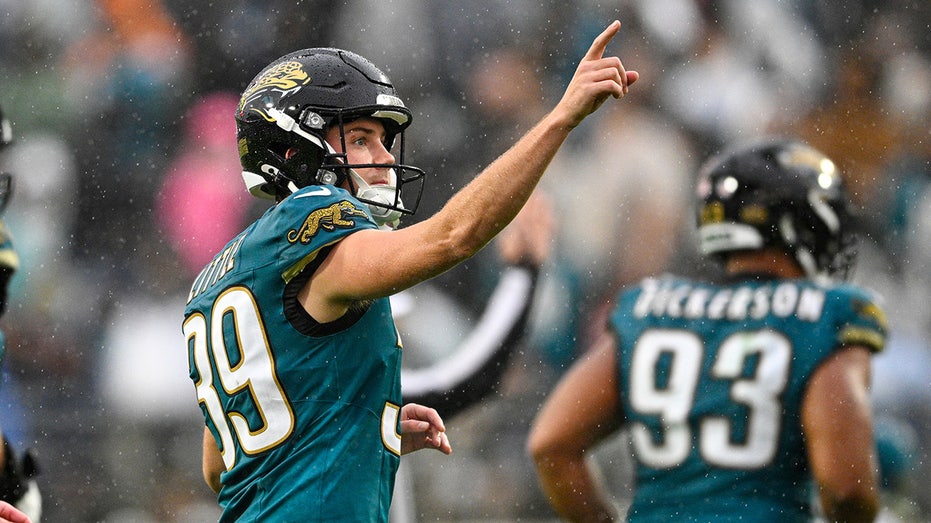
The Jaguars’ rise to sole possession of first in the AFC South is arguably the most structurally important development out of Week 14. Historically, Jacksonville has symbolized NFL volatility: frequent coaching changes, front office resets, and boom-or-bust seasons. Yet over the last several years, the Jags have been transitioning from an ad-hoc rebuilder to something closer to a system franchise.
Several factors underpin this shift:
- Quarterback continuity: While the league has tilted toward elite quarterback-driven offenses, there’s emerging evidence that the combination of a good (not necessarily top-two) quarterback and a deep, well-schemed roster can be just as sustainable — especially in a weaker division.
- Investment in offensive infrastructure: Jacksonville has funneled resources into offensive line stability and receiver depth, building an ecosystem that doesn’t completely collapse if one skill player is lost to injury.
- Capitalizing on a transitional division: The AFC South has cycled through identities: from Peyton Manning’s Colts dominance, to the Texans’ brief run, to stretches where no team looked like a true contender. Jacksonville’s Week 14 divisional win positions them as the default adults in a division still sorting out its long-term hierarchy.
The underlying story here isn’t just that the Jaguars have taken a one-game lead. It’s that they’re aligning their organizational strategy with the direction the league is heading: younger cores, flexible cap structures, and balanced rosters that can withstand a 17-game grind.
Packers in the NFC North: The Post-Franchise-QB Experiment Is Working
No division better captures the tectonic shift in team-building than the NFC North. For three decades, Green Bay’s identity was tied to Hall of Fame-level quarterback play. Week 14’s result — the Packers standing alone atop the division — suggests something more radical: Green Bay may have successfully pivoted from a superstar-dependent model to a systemic one.
Two key dynamics stand out:
- Development over acquisition: Green Bay has long eschewed splashy free-agent signings in favor of drafting and developing. In the post-legend-QB era, that philosophy now extends to scheme cohesion and cross-training players to handle multiple roles, creating a resilient mid-tier roster with fewer glaring weaknesses.
- Exploiting divisional transitions: The NFC North has been in flux — aging rosters, coaching turnover, and inconsistent quarterback play across rivals. By stabilizing early and building around youth, the Packers have positioned themselves as the default long-term favorite even if they lack the single most dominant player in the division.
Week 14’s win over a divisional opponent is more than a single result; it’s a validation that Green Bay’s long-term plan can sustain success in a league where many teams reset every three years.
NFC West Logjam: Rams, Seahawks, 49ers and the Cost of Sustained Relevance
Elsewhere, the NFC West remains one of the most strategically fascinating divisions in football. With the Rams and Seahawks tied at the top and the 49ers just one game back, Week 14 underscores how three different roster-building philosophies can coexist — and collide — in a single division.
- Rams: Historically aggressive in trading picks for established talent, then attempting a “soft rebuild” on the fly. Their presence at the top now suggests that a carefully orchestrated retool — rather than a full teardown — can keep a team relevant without a years-long slump.
- Seahawks: A hybrid model: strong emphasis on drafting, but with selective, targeted external additions. Their position reflects an ability to stay competitive during transitions, particularly at quarterback and along the offensive line.
- 49ers: Perhaps the league’s best example of top-heavy talent construction: elite players at multiple positions, but a cap structure that requires constant juggling. Being one game back illustrates how thin the margin is when you rely on stars staying healthy.
From a macro perspective, Week 14 shows the tradeoffs of each approach. Top-heavy rosters can dominate when healthy but are vulnerable over 17 games. Depth-oriented teams may lack elite ceilings but are better positioned to survive the attrition of late-season divisional play.
NFC South: Buccaneers, Panthers, Saints and the Battle of Transitional Teams
The NFC South standings after Week 14 — Buccaneers and Panthers at 7–6, Saints pulling an upset on the road — are less about who’s great and more about who’s least unstable. This division has been in identity crisis mode since the exits or decline of household-name quarterbacks that once defined it.
The Buccaneers’ home loss to the Saints is a classic example of a structural problem: teams that rely heavily on a handful of veterans and scheme familiarity often struggle when forced into maladjusted game scripts or when opponents disrupt early rhythm. New Orleans’ upset reveals two bigger trends:
- Division familiarity narrows talent gaps: In-division opponents often know each other’s tendencies better than out-of-conference foes do, making upsets more likely even when one roster appears superior on paper.
- Quarterback variance rules the NFC South: None of the teams in this division have fully stabilized their long-term quarterback situation in the same way the league’s top-tier franchises have. That makes outcomes more volatile week to week — and magnifies the impact of each divisional win or loss.
With the Bucs and Panthers tied at 7–6 and the Saints capable of spoiling seasons, Week 14 marks the point where the NFC South race becomes less a measure of who’s good and more a test of which organization can impose short-term order on long-term uncertainty.
What This Really Means: December Football Is Now a Front-Office Report Card
Week 14 used to be talked about in clichés — “separation week,” “the stretch run,” “must-win games.” But the current NFL environment makes these games something more: real-time audits of front-office decision-making over multiple years.
Across these divisions, several shared themes emerge:
- Divisional games are leverage moments: With the expanded 17-game schedule and a 7-team playoff field per conference, division record and conference record matter more than ever in tiebreakers. Week 14 divisional wins are, in effect, multi-game swings.
- Depth is now a competitive advantage: In an era of longer seasons and growing injury rates, the teams atop divisions right now are largely the ones that can survive losing one or two key contributors without collapsing.
- Analytics have quietly become the norm: From 4th-down aggressiveness to pass-run balance on early downs, the teams gaining separation tend to be those implementing analytically informed decision-making, even if they don’t brand themselves that way publicly.
Expert Perspectives: How Analysts Read Week 14’s Power Shifts
Football strategists and economists have been sounding the alarm for years: late-season success is less about who gets “hot” and more about who built the most robust organizational structure.
Sports economist and analytics pioneer Cade Massey has long emphasized that “the NFL is designed to compress differences, so durable advantage almost always traces back to process, not just players.” The Steelers, Jaguars, and Packers embody that idea right now; their Week 14 wins are the product of systems, not just stars.
Defensive strategist and former coach Rex Ryan has similarly argued that divisions like the AFC North reward programs that can repeatedly win ugly games. Week 14 reinforced that: the teams rising are those comfortable in one-score, low-margin contests where execution and preparation matter more than explosive highlights.
Looking Ahead: What Week 14 Tells Us About January — and Beyond
Several forward-looking implications emerge from this week’s results:
- Playoff seeding will amplify these Week 14 swings: Securing sole possession of a division lead in early December dramatically increases the odds of hosting a playoff game — historically a significant edge. Home teams have often won around 55–60% of playoff games over multi-year spans.
- Wild card races will punish inconsistency: In divisions like the NFC West, the third-place team could still be one of the conference’s best. In others, like the NFC South, the winner may host a game with a record not much better than wild card contenders — raising persistent questions about the fairness of seeding rules.
- Coaching and front-office evaluations are underway: December isn’t just about making the playoffs; it’s also when owners decide which organizational philosophies to double down on. Teams watching the Steelers, Jaguars, and Packers may be tempted to mimic their models — sometimes without understanding the patience those models require.
Speculatively, we may be witnessing the early stages of a new multi-year hierarchy: Pittsburgh reasserting itself as the AFC North’s default benchmark, Jacksonville finally maturing into the AFC South’s stabilizing force, and Green Bay proving it can win in a post-superstar-QB era. If that holds, Week 14 of 2025 will be remembered less for individual games and more as the week when those identities solidified.
The Bottom Line
Week 14 didn’t just clarify the playoff picture; it clarified which organizational strategies work in the modern NFL. Stable systems, deep rosters, and analytically aligned coaching staffs are separating from teams still chasing short-term fixes or living off past identities. The standings today are less a snapshot than a mirror — reflecting years of choices by general managers, owners, and coaches that are only now fully coming into view.
Topics
Editor's Comments
One under-discussed angle in mainstream coverage of Week 14 is how scheduling quirks interact with divisional dynamics. The league’s effort to maximize national ratings often produces late-season slates heavy on divisional matchups, turning December into a compressed, intra-division mini-season. That’s a structural choice with competitive consequences: it amplifies the value of adaptable coaching and deep rosters, while exposing teams whose early-season success was schedule-driven rather than process-driven. We should also question whether the current seeding rules — which guarantee home games to division winners regardless of record — still make sense in an era of extreme variance between divisions. If an NFC South champion at 9–8 hosts a 12–5 wild card from a tougher division, the tension between tradition and fairness becomes harder to ignore. Week 14’s outcomes aren’t just shaping this year’s bracket; they’re quietly fueling the long-running debate over how the NFL should balance regional rivalries with merit-based seeding in the postseason.
Like this article? Share it with your friends!
If you find this article interesting, feel free to share it with your friends!
Thank you for your support! Sharing is the greatest encouragement for us.