Yemen’s Southern Power Play: How the STC Is Using Oil and the Red Sea to Rewrite the War

Sarah Johnson
December 18, 2025
Brief
The STC’s push into Yemen’s oil-rich south is more than a battlefield gain; it’s a strategic bid to trade resources and Red Sea leverage for U.S. backing in a de facto partitioned Yemen.
Yemen’s Southern Gambit: How a Separatist Power Grab in Oil Country Could Redraw the Map of the Gulf
Yemen’s Southern Transitional Council (STC) is not just carving out territory; it is openly courting Washington as a frontline partner against the Iran-backed Houthis and other Islamist factions while signaling a de facto bid to resurrect an independent South Yemen. Control of key oil-rich and coastal governorates gives the STC leverage that could reshape both Yemen’s internal war and the wider balance of power in the Red Sea and the Gulf.
Behind the headlines, this is a test of three fragile assumptions that have underpinned Western policy for a decade: that Yemen will remain one country, that the “anti-Houthi camp” can be held together, and that counterterrorism and great‑power competition can be managed without choosing sides in Yemen’s internal map. All three are now under strain.
Why this moment matters
The STC’s claim to control all eight southern governorates, including strategic eastern regions such as Hadramawt and al-Mahra, coincides with three critical dynamics:
- A splintering anti-Houthi coalition that had been tenuously held together under the Saudi-backed Presidential Leadership Council.
- Escalating Houthi attacks on Red Sea shipping, which have already drawn U.S. and allied airstrikes and made maritime security a top-tier priority for Washington.
- Growing Emirati influence in southern Yemen’s ports and energy corridors, giving Abu Dhabi an indirect but powerful seat at the table in any future settlement.
The STC sees an opening to present itself to the U.S. as a pro-Western, anti-Iran, counterterrorism-friendly actor that can deliver both security and access to oil and coastal infrastructure. The question is whether Washington can exploit that offer without accelerating Yemen’s fragmentation into rival statelets—each backed by competing regional powers.
The bigger picture: A country that never fully unified
To understand the stakes, it’s essential to recall that Yemen’s unity is relatively recent and deeply contested:
- 1967–1990: An independent socialist People’s Democratic Republic of Yemen (South Yemen) existed, backed by the Soviet Union, with Aden as its capital. North Yemen was a separate republic, with its own alliances and tribal networks.
- 1990: The two Yemens unified, largely driven by economic necessity and shifting geopolitics after the Cold War. But power was quickly centralized in Sana’a under President Ali Abdullah Saleh.
- 1994 civil war: Southern leaders attempted to secede; the north crushed the rebellion, leaving deep resentment in the south over marginalization, land grabs, and exclusion from political and economic power.
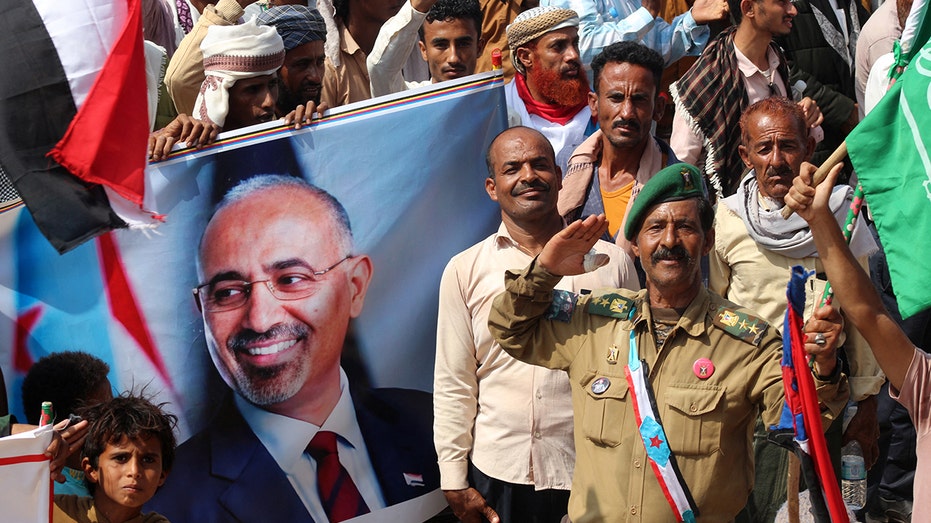
- 2007 onwards: The Southern Movement (“al-Hirak”) emerged, demanding autonomy or independence. The STC, formed in 2017 with strong Emirati backing, is the most organized and militarily capable heir to that cause.
In other words, the STC is not an overnight phenomenon; it is the latest expression of a 30‑year grievance that unity has effectively meant northern dominance. The current war—sparked by the Houthi takeover of Sana’a in 2014–2015—gave southern actors both the opportunity and justification to formalize their own power structures under the banner of stability and counterterrorism.
What’s really driving the STC’s push now?
Several overlapping motives explain why the STC is moving aggressively in Hadramawt and al-Mahra and loudly courting Washington.
1. Oil, borders, and strategic geography
Hadramawt and al-Mahra are not just desert expanses; they are strategic in three ways:
- Energy resources: Hadramawt hosts some of Yemen’s most significant oil fields and export infrastructure. In a country where oil accounted for roughly 70–85% of government revenue before the war, control of these fields is political power.
- Cross-border leverage: Al-Mahra borders Oman and has long been a smuggling and transit corridor for goods, fuel, and arms. Whoever controls it can tax flows, police (or exploit) smuggling, and influence Gulf border security.
- Coastal access: Southern governorates sit astride the Gulf of Aden and near the Bab el-Mandeb strait—chokepoints for global shipping between Asia and Europe.
By consolidating these areas, the STC is not only building a territorial claim for future statehood; it is also amassing the revenue base needed to be more than a militia coalition.
2. Emirati strategy by proxy
The STC’s rise is deeply entwined with the UAE’s broader Gulf strategy. Abu Dhabi has systematically invested in port infrastructure and coastal security from the Horn of Africa (Assab in Eritrea, Berbera in Somaliland) to Yemen’s southern and Red Sea coasts.
Supporting the STC offers the UAE:
- a friendly authority over Aden and other southern ports;
- an anti-Islamist, anti-Muslim Brotherhood partner aligned with its ideological red lines; and
- a lever of influence independent of—and sometimes at odds with—Saudi policy.
The STC’s public rhetoric about fighting the Muslim Brotherhood and courting U.S. companies mirrors Emirati messaging. That doesn’t negate the genuine southern grievances, but it shows how regional rivalries are mapped onto local conflicts.
3. Positioning for a post-war settlement
With the Houthis entrenched in the north and peace initiatives repeatedly stalling, many Yemeni and regional actors privately assume that a neat, centralized post-war Yemen is improbable. The STC appears to be betting on a de facto confederal or partitioned outcome, in which:
- the Houthis dominate much of the north;
- the STC (and allies) control the south and east; and
- a weak internationally recognized government exists largely as a diplomatic veneer.
By demonstrating territorial control now and inviting U.S. military and economic engagement, the STC is trying to turn battlefield gains into international legitimacy—and eventually, formal recognition of a separate southern state.
Why this pits core U.S. priorities against one another
The U.S. faces an uncomfortable triangle of priorities in Yemen:
- Preserving Yemen’s territorial integrity as per U.N. resolutions and the stated policy of backing one Yemeni state.
- Countering Iran and the Houthis, whose attacks on shipping and regional allies have direct security and economic consequences.
- Managing counterterrorism threats from al-Qaeda in the Arabian Peninsula (AQAP) and other extremist groups.
The STC is attempting to turn that triangle into a choice: embrace us as your partner against Iran and jihadist groups—even if that nudges Yemen closer to partition. As researcher Bridget Toomey notes, the U.S. can theoretically work with the STC on counterterrorism within the current governing framework, but overtly supporting secession would undercut the very government Washington recognizes.
This tension has precedent. In Iraq, U.S. cooperation with Kurdish forces against ISIS enhanced the Kurdistan Regional Government’s leverage, culminating in an independence referendum in 2017 that Washington opposed. Yemen now risks a similar dynamic: tactical reliance on a sub-state actor that is strategically committed to changing the national map.
Overlooked risks: Fragmentation inside the anti-Houthi camp
The STC frames its expansion as a security success against “hostile forces” allegedly coordinating with the Houthis. But from the standpoint of Yemen’s internationally recognized government, and some local actors in Hadramawt and al-Mahra, these are unilateral power grabs that:
- weaken the already fragile Presidential Leadership Council;
- provoke other factions—including Islah (Yemen’s Muslim Brotherhood-linked party) and tribal networks—to mobilize in self-defense; and
- risk intra-southern conflict between STC-aligned units and local militias that do not share the independence agenda.
This matters for Washington because a fractured anti-Houthi front could inadvertently strengthen the Houthis, who have historically exploited their opponents’ divisions. The more time and resources anti-Houthi factions spend battling each other in the south and east, the less coherent pressure they can apply on Sana’a.
Houthis, Hezbollah, and the regional chessboard
The STC’s insistence that the Houthis are tied to Iran, Hezbollah, and even Somalia’s al‑Shabab echoes a broader regional narrative: Yemen as one front in a larger struggle between an Iranian-led axis and a U.S.-aligned bloc.
There is ample evidence that Iran has provided the Houthis with weapons, training, and technical assistance—especially on drones and missiles that threaten Saudi, Emirati, and now international shipping interests. The U.N. and multiple governments have documented weapons shipments and Iranian-made components in Houthi arsenals. The Houthis’ slogan—“Death to America, death to Israel”—is not just rhetoric; it signals ideological alignment with Tehran’s revolutionary narrative and has translated into attacks on Israel-linked and Western shipping.
But it’s important to separate what is well-documented (Iranian support, Hezbollah advisors, maritime attacks) from claims that are more politically useful to the STC’s pitch, such as sweeping allegations of Houthi cooperation with every major extremist group across the region. Those claims may contain kernels of truth in specific tactical arrangements but should not be accepted at face value without independent verification.
Economic promises and the “resource-for-recognition” play
The STC’s offer to “open southern Yemen’s oil, agriculture, fisheries and tourism industries to American companies” is not just about development; it is a diplomatic tool. By tying U.S. commercial interests to southern resources, the STC is seeking to create constituencies in Washington and American industry that would favor stability under STC rule—even if that conflicts with the goal of a unified Yemen.
We’ve seen similar dynamics elsewhere: in Libya, competing governments in Tripoli and the east have weaponized control of oil terminals to court foreign backing; in Iraqi Kurdistan, long-term energy contracts have become a tool to lock in international support. In each case, resource deals rarely stay “purely economic”—they become political anchors.
For Yemen, the risk is that fragmented control over oil fields and export routes (with the Houthis controlling some northern resources and the STC others) locks in a war economy and makes any future national revenue-sharing agreement far harder to negotiate.
Looking ahead: What to watch in the coming months
Several indicators will reveal whether the STC’s gambit is reshaping the conflict or setting the stage for a new phase of fragmentation:
- U.S. policy signals: Does Washington increase direct engagement with STC officials and security forces, or does it channel support strictly through the Presidential Leadership Council? Quiet intelligence cooperation could expand even without public endorsement.
- Saudi–UAE coordination or divergence: Riyadh has traditionally favored a unified Yemen as a buffer, while Abu Dhabi has been more comfortable with autonomous local partners. How they reconcile their differences on the STC will shape the battlefield and any future negotiations.
- Local reactions in Hadramawt and al-Mahra: If tribal leaders and local elites push back against STC control, we could see a new front of localized conflict—even if the Houthis remain relatively distant.
- Houthi responses in the Red Sea: If the STC’s alignment with the U.S. and UAE becomes more explicit, the Houthis may frame attacks on southern ports or shipping as resistance to “foreign occupation,” complicating maritime security efforts.
- Internal STC cohesion: The STC itself is a coalition of armed factions. If promised statehood or resource control does not materialize evenly, internal rifts could emerge, weakening its claim to be a stable partner.
The bottom line
The STC’s seizure of key southern and eastern territories, paired with a high-profile appeal to Washington, is less about today’s battlefield and more about tomorrow’s political map. It crystallizes a hard choice for the U.S. and its allies: whether to prioritize short-term gains against the Houthis and Iran by deepening ties with a separatist force, or to hold the line on Yemeni unity at the risk of alienating one of the few relatively coherent, pro-Western actors on the ground.
The uncomfortable reality is that Yemen’s formal borders have outlived the political and military structures needed to sustain them. Whether the international community acknowledges it or not, the country is already partitioned in practice. The STC’s move is an attempt to turn that de facto reality into de jure recognition—armed with oil, coastlines, and an offer to stand on America’s side in a conflict that increasingly transcends Yemen itself.
Topics
Editor's Comments
One underexplored dimension of the STC’s strategy is how it interacts with broader debates about state failure and the redrawing of borders in the Middle East. For years, policymakers have insisted on the sanctity of colonial-era borders, even as Libya, Syria, Iraq, and Yemen have functionally fragmented. Yemen may be the clearest case where the legal fiction of unity stands in stark contrast to realities on the ground: the Houthis run a quasi-state in the north, the STC and allied forces dominate the south and east, and the recognized government struggles to exert authority anywhere. The STC is essentially calling the international community’s bluff—saying that if stability, counterterrorism, and secure trade routes are the real priorities, then insisting on a single Yemeni state may be counterproductive. The risk is that accepting this logic in Yemen normalizes partition as a tool of conflict management elsewhere, with unpredictable knock-on effects in fragile multi-ethnic or multi-regional states facing their own secessionist currents.
Like this article? Share it with your friends!
If you find this article interesting, feel free to share it with your friends!
Thank you for your support! Sharing is the greatest encouragement for us.