Inside Trump’s ‘100 Foreign Policy Wins’: Power, Deterrence, and the Risks of a New Doctrine

Sarah Johnson
December 18, 2025
Brief
An in-depth analysis of Polaris’ ‘100 Trump Foreign Policy Wins’ report, unpacking the strategy behind Iran strikes, Gaza diplomacy, NATO’s 5% pledge, and hemispheric drug war escalation.
Trump’s ‘100 Foreign Policy Wins’: Strategic Reset or Politicized Scorecard?
Polaris National Security’s new report touting “100 Trump Foreign Policy Wins From 2025 the Media Wants You to Miss” is more than a brag sheet. It’s an attempt to redefine what U.S. power looks like in a second Trump term – and to frame a sharp break with the institutional foreign policy consensus that guided most of the post–Cold War era. Understanding this document means understanding a deeper struggle over what America’s role in the world should be, who gets to define security, and how far Washington is willing to go to use force, economic pressure and diplomatic disruption to achieve its aims.
Rather than treating the report as a neutral list of accomplishments, it’s more revealing to see it as a political and strategic manifesto: it codifies the worldview of Trump-aligned national security circles and signals where U.S. policy may be heading on Iran, Israel-Palestine, migration, NATO, and the Western Hemisphere. It also exposes the risks: legal gray zones, blowback, overstretched commitments, and the potential erosion of international norms that have underpinned U.S. influence for decades.
A Break with the Post–Cold War Consensus
The report’s framing – “wins,” “the media wants you to miss,” “historic pace” – is deliberate. It positions Trump’s foreign policy as a corrective to what his allies describe as four years of “weakness” and, more broadly, to 30 years of bipartisan globalization and multilateralism. The pillars are familiar from his first term, but sharpened:
- Hard deterrence over diplomatic engagement
- Transactional alliances with heavy burden-sharing demands
- Militarized borders and migration policy as a core national security issue
- Conflation of non-state threats and regimes (cartels with terrorists, Iran with regional instability)
Historically, Republican and Democratic administrations from George H.W. Bush through Obama largely accepted a model of U.S. leadership tightly bound to institutions like NATO, the U.N., the WTO and multilateral arms-control regimes. Even when presidents used force unilaterally (Iraq 2003, Kosovo 1999), they tended to justify it within a broader architecture of rules and alliances.
Trump’s second-term foreign policy, as celebrated in this report, flips that script: institutions are tools, not anchors; coalitions are useful if they follow Washington’s lead, expendable if they constrain it. This is why the same report can boast about a 13–0 U.N. Security Council vote on Gaza while also celebrating airstrikes on Iranian nuclear facilities carried out without any multilateral mandate.
Western Hemisphere ‘Reorientation’: Counter-Narcotics or Covert Regime Strategy?
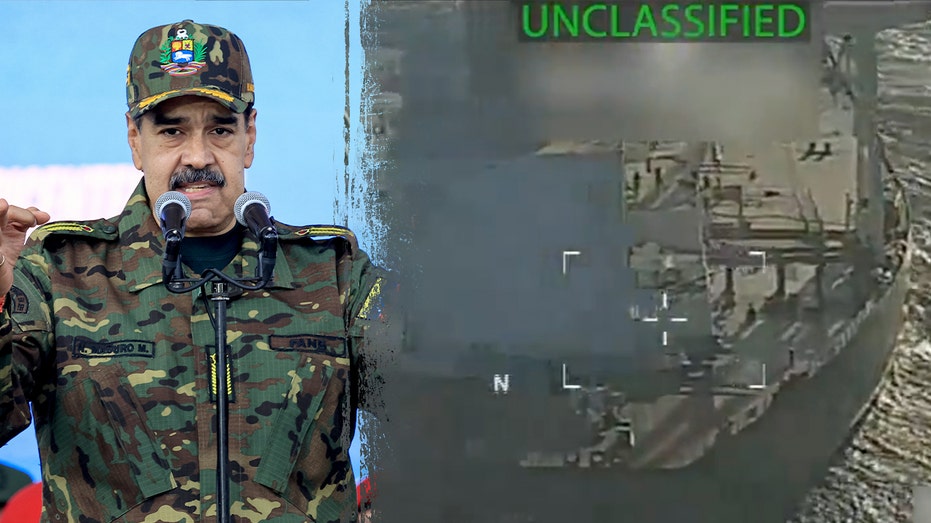
The Venezuela-related actions grouped under “Operation Southern Spear” illustrate the new hemispheric posture. Expanded counter-narcotics operations off Venezuela’s coast, including airstrikes on maritime vessels linked to groups like Tren de Aragua and the ELN, are framed as defending Americans from fentanyl and other illicit drugs.
On its face, this fits a long U.S. pattern: from Plan Colombia in the 2000s to DEA operations in Central America, Washington has repeatedly militarized the drug war. But Polaris calls this “the most significant hemispheric reorientation of U.S. foreign policy in decades,” and that language is doing a lot of work.
Several deeper shifts are in play:
- From “shared responsibility” to unilateral enforcement: Post-NAFTA and post–Plan Colombia rhetoric emphasized development, rule of law, and joint responsibility. Operation Southern Spear leans heavily toward kinetic, unilateral enforcement near another state’s coastline.
- Blurring law enforcement and war: Airstriking cartel-linked maritime targets inches closer to treating transnational criminal groups as quasi-military adversaries. That carries legal and diplomatic risks, especially if civilian casualties or misidentification occur.
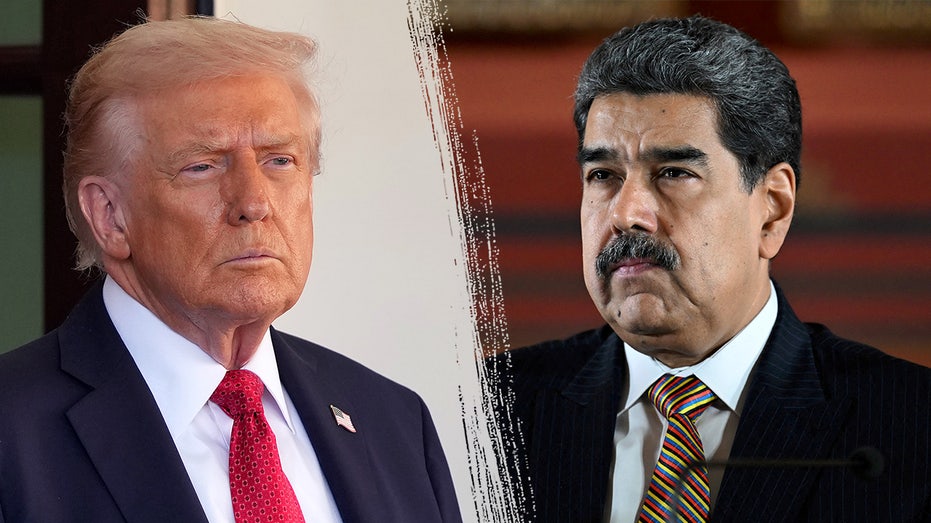
- Regime change by pressure? Raising the U.S. reward for information leading to Nicolás Maduro’s arrest to $50 million – alongside public accusations of narcotrafficking by the U.S. attorney general – tightens the linkage between anti-drug policy and an implicit goal of regime change. We’ve seen similar patterns with Manuel Noriega in Panama (1989) and, more partially, with the indictments against top Venezuelan officials in 2020.
The question that will shape 2026 and beyond is whether these tools are narrowly targeted or function as a broader template for dealing with hostile regimes in the hemisphere, especially those aligned with China or Russia. If cartel-linked ships can be hit off Venezuela with limited international pushback, what stops a future administration from extending this logic to other gray-zone actors – or from allies doing the same, citing U.S. precedent?
Iran, Gaza, and the Middle East: Deterrence with Escalation Risks
The report’s celebration of June B-2 strikes against Iranian nuclear facilities and the October Gaza ceasefire agreement captures the core tension in this foreign policy: an instinct for muscular coercion coupled with occasional high-profile diplomatic deals.
Striking Iran’s Nuclear Infrastructure
According to the report, U.S. B-2 bombers used bunker-buster munitions against Iranian nuclear facilities, sending a message that Washington “will not tolerate a nuclear-armed Iran.” This is a dramatic escalation beyond the sabotage and cyber-operations (e.g., Stuxnet) of the 2010s.
Historically, Israel’s strikes on Iraq’s Osirak reactor (1981) and Syria’s suspected reactor at Deir ez-Zor (2007) were limited, single-reactor disruptions early in those programs. Iran’s nuclear network is far more dispersed and hardened. Even a successful strike may:
- Delay but not eliminate nuclear capabilities
- Strengthen hardliners in Tehran who argue only a nuclear deterrent can prevent U.S. attack
- Trigger regional retaliation via proxies in Iraq, Syria, Lebanon, and Yemen
Trump allies argue deterrence requires unmistakable shows of force. But deterrence is a relationship, not a one-time event; it depends on how Iran calibrates its response. If Tehran accelerates enrichment in secret facilities or withdraws from remaining monitoring agreements, Washington may find itself managing a more urgent and less transparent nuclear crisis in 2026.
The Gaza Ceasefire: Breakthrough or Fragile Interlude?
The report casts the October Gaza ceasefire – which it says secured an immediate halt to fighting, the return of all surviving hostages except one, and a framework for demilitarization, an international stabilization force, and reconstruction – as a signature diplomatic victory.
On paper, elements of this resemble past U.S.-backed arrangements, such as the U.N.-IFOR transition in Bosnia or the multinational force in Lebanon in the early 1980s. But Gaza presents a tougher set of constraints:
- Non-state actors vs. state militaries: There’s no clear, unified Palestinian state authority capable of enforcing demilitarization, and Hamas retains clandestine infrastructure.
- Regional spoilers: Iran, Hezbollah, and other regional players have incentives to undermine a U.S.-brokered arrangement that sidelines their influence in Gaza.
- Domestic politics in Israel and the U.S.: Any substantial reconstruction effort will be scrutinized by constituencies that either distrust Palestinian governance or see U.S. policy as enabling Israeli military occupation.
The 13–0 Security Council vote on a U.S.-led Gaza resolution – with Russia and China abstaining – is symbolically important. It shows that even amid great-power rivalry, Washington can still assemble broad diplomatic coalitions when the alternatives (ongoing carnage, regional escalation) are seen as worse. But the durability of such a ceasefire will be the true test. If violence resumes or governance arrangements collapse, the “win” narrative will look premature.
UNRWA, Hostages, and Humanitarian Fault Lines
The prohibition on U.S. taxpayer funding for UNRWA, the main relief agency for Palestinian refugees, underscores the administration’s willingness to weaponize aid as leverage. Washington cites alleged ties between some staff and Hamas; UNRWA denies institutional involvement in terrorism.
Past Republican and Democratic administrations alike have used conditionality on aid, but they usually paired pressure with a robust humanitarian narrative to maintain moral legitimacy. The more Washington is seen as collectively punishing refugees, the more space it creates for rivals – especially China and Gulf donors – to step in as humanitarian patrons.
The broader pattern here is that the Trump doctrine treats humanitarian mechanisms not as end in themselves but as bargaining chips within a security-centric framework. This may achieve short-term political goals but risks accelerating the global perception that the U.S. has abandoned the traditional distinction between civilians and combatants in its policy design.
NATO at 5% of GDP: Strength or Sustainability Problem?
Perhaps the most startling datapoint in the Polaris report is the NATO summit pledge in The Hague: alliance members committing to raise defense spending to 5% of GDP by 2035, more than double the longstanding 2% benchmark.
For context, during the Cold War, U.S. defense spending hovered between 5–9% of GDP; European allies mostly ranged from 2–4%. In the post–Cold War era, many European states fell below 2%, prompting persistent U.S. complaints.
A 5% target signals several things:
- Deep anxiety about Russia and China: If implemented, this would amount to the largest sustained Western military build-up since the 1950s, effectively acknowledging a long-term twilight struggle with Moscow and Beijing.
- Major domestic trade-offs: For many European democracies, shifting to 5% means either higher taxes or cuts in social programs. That is politically combustible, particularly as populist parties gain strength across the continent.
- Risk of decoupling public opinion from NATO: If NATO becomes associated domestically with austerity and social strain, public support may erode even as budgets grow.
Trump’s longstanding complaint that allies must “pay their fair share” clearly carried through into his second term. But the danger is that squeezing allies too hard may produce performative pledges that aren’t fully delivered – or ignite anti-NATO backlashes that Moscow will be eager to exploit.
Diplomatic “Gambles”: Syria, Turkey, Saudi Arabia
Lisa Daftari’s criticism in the article points to what many foreign policy professionals see as the Achilles’ heel of Trump’s approach: a willingness to extend sweeping trust and concessions to strongmen and transactional partners in ways that may sacrifice long-term leverage for short-term optics.
Her reference to Syria’s president being described as a “young, attractive tough guy,” despite unverified claims about severing ties with terrorist organizations, echoes a pattern seen previously with leaders like Kim Jong Un, Recep Tayyip Erdoğan, and Mohammed bin Salman: high-level praise and unorthodox engagement without clear benchmarks or transparent conditionality.
Historically, U.S. engagement with problematic partners – think Mubarak in Egypt, Musharraf in Pakistan, or the Shah of Iran – has often delivered tactical benefits (access, basing, intelligence) while sowing long-term resentment that erupts when those regimes falter. The concern is that Trump’s second-term diplomacy may be repeating this playbook on steroids: more visible, less hedged, and more openly personalized.
On Turkey and Saudi Arabia, the report’s celebratory tone about strategic cooperation glosses over these unresolved questions:
- What happens to U.S. leverage on human rights and democratic governance?
- How are concessions – on arms, technology, or security guarantees – conditioned on those partners’ behavior?
- Are we locking in commitments that will outlast the current alignment of interests?
As Daftari notes, the real judgment will come in 2026, when we can see whether these gambles yielded durable gains or simply handed leverage to leaders who know Washington has publicly staked its credibility on their “tough guy” image.
Nagorno-Karabakh and the Return of Great-Power Mediation
The August U.S.-brokered agreement between Armenia and Azerbaijan to end the Nagorno-Karabakh conflict is notable for another reason: it signals that, despite talk of retrenchment, Washington is still willing to act as a mediator in complex regional conflicts where Russia historically played a central role.
For decades, Moscow cast itself as the security arbiter in the South Caucasus, using peacekeeping deployments and bilateral defense ties to preserve influence. If the U.S. can successfully anchor a new framework involving border security, transit, and economic cooperation, it not only stabilizes a flashpoint but also reasserts itself as a rules-setting power in a region where Russian authority has wobbled since its invasion of Ukraine.
The risk is that such commitments add to an already sprawling U.S. security agenda. Each new mediation effort, stabilization force, or security guarantee stretches diplomatic bandwidth and, potentially, military resources. The Trump administration’s willingness to flex in multiple theaters simultaneously – Iran, Gaza, Venezuela, the Caucasus – could restore a sense of U.S. primacy or could overextend Washington in ways reminiscent of the early 2000s.
What’s Missing from the “100 Wins” Narrative
Beyond ideological framing, there are structural blind spots in the Polaris narrative that matter for assessing the real-world impact of these policies:
- Limited discussion of long-term metrics: The report measures “wins” as discrete events – strikes, resolutions, pledges – not as durable outcomes. We don’t yet know if fentanyl flows have decreased, if Iran’s nuclear trajectory is meaningfully curbed, or if NATO’s pledges will survive domestic politics.
- Civilian impacts are largely invisible: The humanitarian costs of airstrikes, sanctions, and cuts to agencies like UNRWA are underplayed. Yet these costs often shape future instability and anti-American sentiment.
- Underestimation of rival adaptation: Russia, China, Iran, and non-state actors are not static; they learn and adjust. A foreign policy that defines itself through dominance and surprise creates incentives for adversaries to seek asymmetric responses – cyber, economic, or proxy warfare.
In other words, the “100 wins” may be real in a narrow, tactical sense while still seeding future crises. The gap between event-driven success and strategic stability is where the next foreign policy debate will take place, regardless of who occupies the White House in 2029.
Looking Ahead: What to Watch in 2026
Several concrete indicators will show whether this second-term Trump doctrine is stabilizing or destabilizing the global order:
- Iran’s nuclear and regional posture: Does Tehran return to the table, double down on proxies, or accelerate toward a weapon? How do Gulf states respond?
- Actual NATO spending trajectories: Do parliaments pass budgets aligned with the 5% goal, or does political backlash force walk-backs?
- Drug flows and violence in the Americas: Are fentanyl deaths and cartel violence measurably reduced, or have operations simply displaced trafficking routes and empowered new intermediaries?
- Durability of the Gaza ceasefire and governance framework: Can transitional governance and demilitarization take root, or do spoilers and internal fractures unravel the arrangement?
- Domestic political narratives: Do voters perceive these moves as restoring U.S. strength, or as distractions from domestic priorities and economic strains tied to higher defense spending?
Ultimately, the Polaris report is a snapshot of how Trump’s allies want the world to see this foreign policy moment: decisive, unapologetic, and results-driven. The harder question – and the one policymakers and citizens will grapple with in the years ahead – is whether these “wins” add up to a more secure, stable international system or merely a more volatile one in which American power is constantly testing its own limits.
The Bottom Line
Polaris’s “100 wins” document is less a neutral tally than a blueprint for a more unilateral, coercive American foreign policy that prioritizes deterrence, transactional alliances, and militarized responses to transnational threats. It marks a sharp departure from the institutionalist, multilateral model that dominated U.S. strategy after the Cold War. Whether this shift ultimately strengthens U.S. security or accelerates global instability will depend on outcomes we won’t fully understand until well beyond 2026.
Topics
Editor's Comments
What stands out in the Polaris document is how effectively it weaponizes the language of ‘wins’ to flatten complex, multi-year dynamics into a series of discrete, triumphant moments. That framing matters because it nudges both policymakers and the public toward evaluating foreign policy like a scoreboard: strike executed, resolution passed, summit pledge secured – therefore success. The trouble is that international politics rarely conforms to that logic. A strike on Iranian facilities may look like a win now but can easily become the opening chapter of a much more dangerous nuclear standoff. A NATO budget pledge can be trumpeted as historic burden-sharing yet prove hollow if domestic politics won’t sustain it. The narrative also largely erases the experiences of people living under these policies – Venezuelans caught between cartels and coercive sanctions, Palestinians navigating both militant rule and external pressure, Europeans confronting the trade-offs of massive rearmament. As this ‘wins’ discourse spreads, editors and analysts have an obligation to keep pulling the lens back, asking not just, ‘Did it happen?’ but ‘What did it change, for whom, and for how long?’
Like this article? Share it with your friends!
If you find this article interesting, feel free to share it with your friends!
Thank you for your support! Sharing is the greatest encouragement for us.