AmericaFest After the Assassination: How Charlie Kirk’s Legacy Is Rewiring Youth Conservatism

Sarah Johnson
December 18, 2025
Brief
AmericaFest 2025 is more than a memorial for Charlie Kirk. It’s a high-stakes test of youth conservatism, political martyrdom, and how the right will mobilize ahead of the 2026 midterms.
After the Assassination of Charlie Kirk, AmericaFest Becomes a Test of What the Right Wants to Be
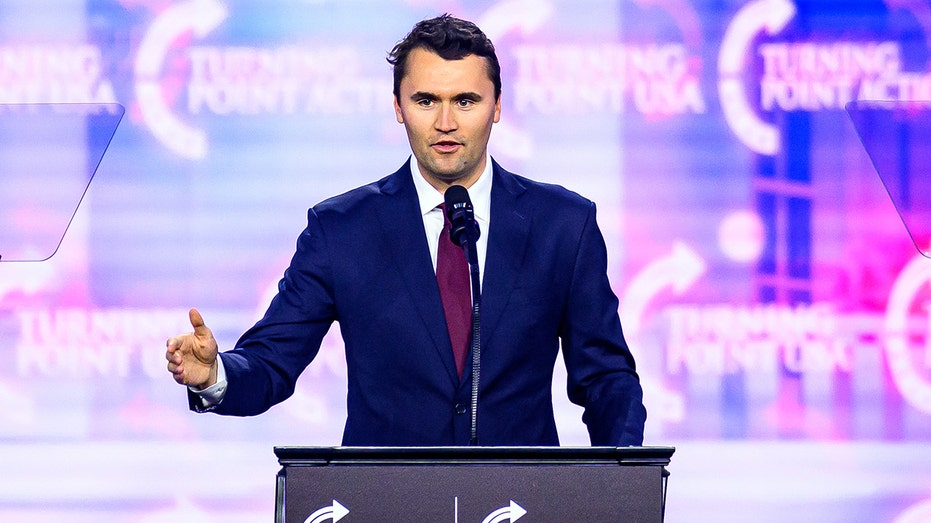
The first AmericaFest since Charlie Kirk’s assassination is not just a memorial conference. It is an early stress test for the future of youth conservatism, the politics of martyrdom, and how the American right will mobilize in an era of rising political violence and generational realignment.
On the surface, this is a familiar story: a major conservative gathering in an election cycle, with high-profile speakers and a focus on energizing young voters. Beneath that surface, however, AmericaFest 2025 reflects three deeper dynamics that will shape U.S. politics over the next decade:
- Whether the conservative movement can turn grief into enduring institutional power rather than transient outrage
- How youth-focused organizations like Turning Point USA (TPUSA) will navigate extremism, polarization, and demands for cross-partisan dialogue
- How both parties interpret and weaponize political violence as part of their narrative heading into the 2026 midterms
From Campus Provocateur to Movement Architect: Why Charlie Kirk’s Death Matters Politically
To understand the stakes at AmericaFest, it’s important to understand what Charlie Kirk built.
Founded in 2012, TPUSA grew from a small campus activism outfit into one of the most influential youth conservative organizations in the country. By the late 2010s, TPUSA claimed a presence on thousands of campuses, hosted massive conferences, and became a key entry point for young conservatives into the MAGA ecosystem. The group blended older conservative themes—free markets, limited government—with newer culture-war issues, particularly around gender, race, and perceived censorship.
Where traditional conservative student groups often functioned as debating societies, TPUSA operated more like a political startup and media brand. It excelled at:
- Producing viral content optimized for TikTok, Instagram, and YouTube
- Building a pipeline between college activists and Republican campaigns
- Creating a sense of identity and belonging around conservative values among younger voters
That made Kirk a nodal figure: part influencer, part organizer, part political entrepreneur. His assassination at a TPUSA event in Utah in September 2025 did not simply remove a celebrity; it disrupted an organizing hub within the conservative movement.
In political terms, his death raises a question that AmericaFest is now trying to answer: will TPUSA become a personality-driven shrine to its founder, or mature into a durable, multi-generational institution that can outlive him?
The New Politics of Martyrdom on the Right
AmericaFest 2025 is explicitly framed as a celebration of Kirk’s “life and legacy” and a recommitment to his mission. That framing is not just emotional; it’s strategic.
Across the ideological spectrum, political movements have long used the deaths of charismatic figures as organizing tools. From Martin Luther King Jr. on the left to William F. Buckley and Reagan-era nostalgia on the right, memory is turned into mobilization. The difference in this moment is the combination of:
- Rising incidents of political violence and threats against public figures
- A fragmented media environment where martyr narratives spread rapidly and selectively
- Younger generations that are both more cynical about institutions and more emotionally driven by authenticity and perceived injustice
Framing Kirk as someone who “changed the world not just by speaking, but by listening” and “pointing a lost generation to faith” serves several purposes:
- Movement cohesion. A shared sense of loss can help unite factions within the right—from establishment conservatives to hardline MAGA activists—around a common symbol.
- Identity formation for young activists. For students attending AmericaFest, adopting Kirk’s legacy is a way to define themselves not only politically, but morally and spiritually.
- Rhetorical insulation. If critics attack TPUSA or its tactics, defenders can frame such criticism as an attack on the legacy of a slain leader.
But there is also a risk. Transforming a living, adapting organization into a memorial can freeze its politics in place. The question months and years from now will be whether “What would Charlie have wanted?” becomes a genuine guide to evolution, or a way to avoid hard debates about strategy, tone, and ideological boundaries.
AmericaFest as a 2026 Midterm Lab
Organizers are explicit: AmericaFest is about energizing a new wave of young voters heading into the 2026 midterms. That matters because the Republican Party faces a structural generational problem.
Survey data over the past decade show:
- Voters under 30 have leaned decisively Democratic in recent national elections, with double-digit margins in many cycles.
- However, a nontrivial share of younger men, especially white and some Hispanic men, are more open to conservative messages on cultural and economic issues than their peers overall.
- Issue polarization is sharper: young voters might support progressive positions on LGBTQ+ rights or racial justice, while being open to conservative positions on free speech, skepticism of elite institutions, and concerns over crime and immigration.
TPUSA’s value to the broader conservative coalition has always been its ability to identify and activate that slice of the youth vote that is movable—or at least mobilizable—for the right. AmericaFest functions as both an emotional rally and a data-collection opportunity: who shows up, which sessions fill, what content goes most viral on social platforms in the conference’s wake.
With Vice President JD Vance headlining, along with figures like Donald Trump Jr. and House Speaker Mike Johnson, AmericaFest doubles as a proving ground for the emerging post-Trump conservative elite. These leaders are not just giving speeches; they are test-driving rhetoric aimed at a generation that has grown up with campus culture wars, COVID politics, and TikTok misinformation all at once.
Dialogue, Polarization, and the Limits of “Crossing the Aisle”
One of the most intriguing threads is TPUSA’s stated desire to maintain “conversations across the political aisle” and Erika Kirk’s insistence that “you have to counter bad ideas with good ideas” through “debate and dialogue.”
On paper, this is a return to a classic liberal-democratic ethos: confronting opposing views in open debate rather than silencing them. In practice, it runs into several friction points:
- Campus speech battles. TPUSA has been at the center of numerous controversies involving protests, de-platforming, and heated confrontations on college campuses. For critics, its events are less about dialogue and more about provocation. For supporters, aggressive tactics are necessary to break through what they see as left-leaning institutional bias.
- Media siloing. When most of the speeches are amplified through ideologically aligned media ecosystems, “debate” can easily become performance for one’s own base rather than persuasion of opponents.
- Asymmetry of risk. After a high-profile assassination, calls for dialogue risk being overshadowed by security concerns and pressure from some on the right to treat the left as an existential enemy rather than a rival worldview.
The Gavin Newsom reference—praising Kirk’s “sincerity” and “grace”—is notable precisely because it cuts against the prevailing narrative of total partisan warfare. It suggests there was at least some attempt to model respectful cross-ideological engagement. Whether AmericaFest leans into that example or uses it primarily as a symbolic gesture will say a lot about where TPUSA is headed.
Security, Radicalization, and the Quiet Question No One Wants to Lead With
What the official event framing cannot and likely will not center is the question hanging over all of this: what conditions produced a political assassination at a youth-focused conservative event—and what does that mean for the future of political organizing?
Over the past decade, the U.S. has seen:
- Rising threats and attacks against elected officials, judges, school board members, and activists across the political spectrum
- The mainstreaming of eliminationist rhetoric—talk that frames political opponents as existential threats or enemies of the nation
- A social media environment that rewards the most extreme, emotionally charged content while making it easy for individuals to self-radicalize in algorithmically reinforced echo chambers
Events like AmericaFest now sit at the intersection of two imperatives: creating open, high-energy mass gatherings and protecting participants from targeted violence. That often means:
- Higher security costs for events, which can be passed on to attendees or limit access for poorer students
- More rigorous vetting and surveillance, raising civil liberties concerns
- A subtle shift in tone, as organizers weigh the real-world consequences of high-octane rhetoric
The strategic question for TPUSA is whether it responds to the assassination by dialing up its more militant, us-versus-them language—or by reframing its mission around resilience, civic engagement, and a more explicitly anti-violence, pro-democratic message. Which choice it makes will reverberate beyond its own base, affecting how universities, donors, and even law enforcement view youth political organizing on the right.
What Mainstream Coverage Is Missing
Most quick-hit coverage of AmericaFest will emphasize the optics: big crowds, marquee speakers, emotional tributes, and punchy soundbites. Less attention is likely to be paid to three critical, longer-term questions:
- Institutionalization vs. personalization. Does TPUSA use this moment to broaden its leadership and governance structures, or does it double down on a founder-centric mythology that could limit adaptability?
- The content of activism training. “Activism training” can mean anything from voter registration and debate skills to aggressive online tactics and cultural warfare. The specific skills TPUSA emphasizes will shape the tone of right-wing youth politics in the 2026 cycle and beyond.
- How grief is translated into policy. Beyond rhetoric, does TPUSA push for concrete legislative or institutional changes—around security, education, speech, or elections—using Kirk’s assassination as a moral anchor? Or does the legacy remain primarily symbolic?
Looking Ahead: What to Watch After AmericaFest 2025
The true impact of AmericaFest won’t be visible in the convention hall photos but in what follows over the next 12–24 months. Key indicators to watch include:
- Campus presence and pushback. Does TPUSA expand its campus chapters, and do universities see more conflict around its events, or does engagement move more online?
- Rhetorical shifts among conservative leaders. Do figures like JD Vance and Mike Johnson use language that escalates grievance and martyrdom, or do they emphasize order, civic responsibility, and peaceful political struggle?
- Youth turnout patterns in 2026. If Republicans overperform among younger voters—especially in swing states and districts—expect TPUSA to claim a significant share of the credit, using that as leverage within the broader conservative coalition.
- Cross-partisan dialogues. Do we see more high-profile engagements like the Newsom–Kirk exchange, or does such outreach become too politically risky in a polarized environment?
In the end, AmericaFest 2025 is both a memorial and a mirror. It reflects what the contemporary right believes about itself: embattled yet resilient, culturally besieged yet energized, deeply suspicious of institutions yet eager to build its own. Whether that self-conception can coexist with a genuine commitment to pluralism and nonviolent democratic contestation is the unresolved question that will outlast the conference lights.
The bottom line: AmericaFest is not just about honoring a slain founder. It’s an early, high-stakes experiment in how a youth-driven conservative movement processes trauma, narrates its own victimhood, and converts those narratives into long-term political strategy. What happens in Phoenix will echo far beyond 2025.
Topics
Editor's Comments
One underexplored angle in coverage of AmericaFest and Charlie Kirk’s assassination is how universities themselves will respond in policy terms. Institutions are already struggling to manage the collision between open expression, student safety, and intense national scrutiny. A high-profile killing tied to a political event could push administrators toward more restrictive event policies, heavier security protocols, and a risk-averse approach to controversial speakers. That, in turn, would likely feed into conservative narratives about censorship and bias, giving TPUSA additional ammunition. There’s a feedback loop here: heightened polarization and violence produce institutional clampdowns, which are then framed as proof of ideological repression. Both the left and right may find that their immediate tactical gains—whether in stricter regulations or more confrontational organizing—come at the expense of the broader norm of universities as spaces for robust, even uncomfortable, democratic contestation. That’s a long-term cost that doesn’t show up in the headlines from a single conference but could shape civic culture for a generation of students.
Like this article? Share it with your friends!
If you find this article interesting, feel free to share it with your friends!
Thank you for your support! Sharing is the greatest encouragement for us.