Beyond a ‘Misspeak’: How the Gabbard–Thompson Clash Exposes Deeper Fights Over Terrorism, Refugees, and Political Blame

Sarah Johnson
December 14, 2025
Brief
Deep analysis of Tulsi Gabbard’s clash with Bennie Thompson over labeling the DC National Guard shooting, exploring terrorism terminology, refugee vetting, and the broader politics of national security language.
Tulsi Gabbard, Bennie Thompson, and the Politics of the Word “Terrorism”
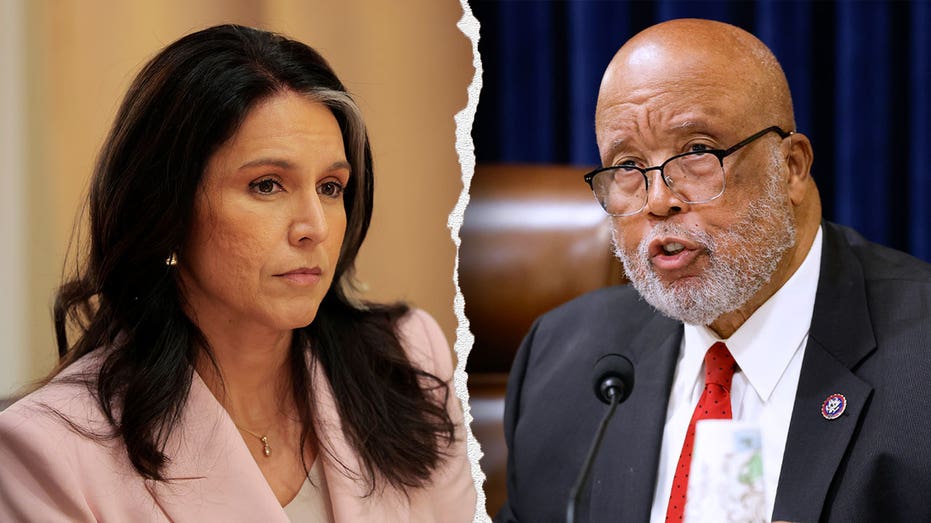
The clash between Director of National Intelligence Tulsi Gabbard and Rep. Bennie Thompson over the phrase “unfortunate accident” is not merely a gaffe cleanup story. It’s a window into three bigger battles shaping U.S. politics: the weaponization of national security language, the unresolved trauma of America’s post‑9/11 counterterrorism paradigm, and the intensifying war over immigration and refugee policy.
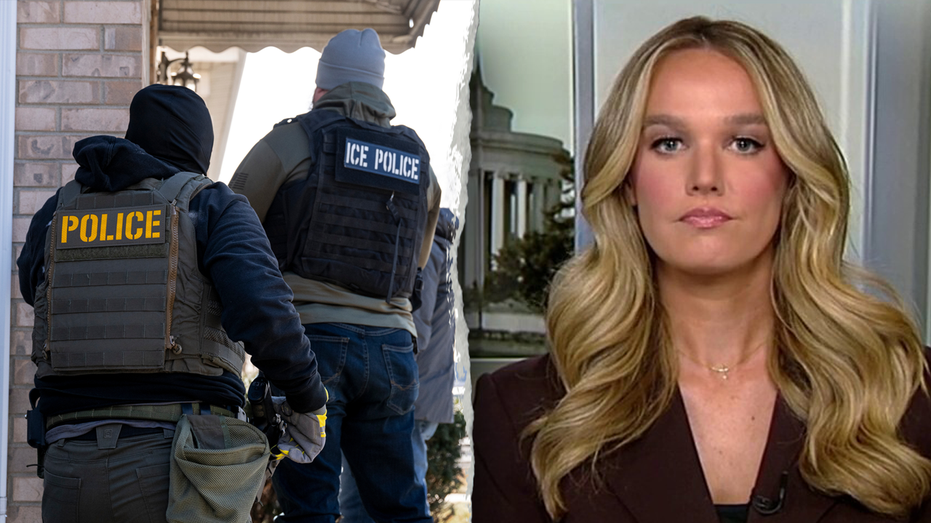
At stake is not just what we call the Thanksgiving Eve shooting of two West Virginia National Guard soldiers near the White House, allegedly by an Afghan refugee. It’s how the United States defines terrorism, how it assigns political blame when refugees are involved, and whether national security decisions get subordinated to partisan narratives.
The Larger Context: Why This Fight Over a Single Phrase Matters
In isolation, Thompson’s “unfortunate accident” phrasing and subsequent walk-back could be dismissed as a slip of the tongue. But it resonates because it sits at the intersection of several long‑running fault lines:
- The politicization of terrorism labels — who is willing to call what “terrorism,” and when.
- Public mistrust over refugee and asylum vetting, sharpened by the chaotic U.S. withdrawal from Afghanistan and subsequent resettlement efforts.
- A partisan blame game over whether this attack represents a systemic failure by the Biden administration, by state officials like Kristi Noem, or by the broader security establishment.
- The evolving threat landscape, where Islamist extremism, far‑right extremism, and lone‑actor violence compete for policy attention.
Gabbard’s sharp criticism — arguing that leaders “refused to identify this Islamist terrorist threat for exactly what it is” — taps into a long-standing conservative narrative that Democratic leaders downplay jihadist violence while overemphasizing domestic right‑wing threats. Thompson’s misstatement then becomes a symbol, not just a mistake.
How America Has Fought Over the Word “Terrorism” Before
The argument over whether this attack is properly labeled “terrorism” echoes earlier clashes:
- Fort Hood (2009): Major Nidal Hasan’s killing of 13 people was initially described by some officials as “workplace violence,” prompting fierce backlash and demands to officially recognize it as an act of Islamist terrorism.
- Pulse nightclub shooting (2016): Authorities framed it as both an act of terrorism and a hate crime; debate raged over whether the shooter’s pledges to ISIS were central or opportunistic.
- Charlottesville (2017) and Buffalo (2022): Critics long argued that federal authorities were slower to use “terrorism” language for white supremacist attacks compared with Islamist incidents.
Across these episodes, the pattern is clear: “terrorism” is not just a descriptive term. It carries moral weight, legal implications, and political consequences. Calling an incident terrorism can trigger different investigative tools, different public expectations, and different partisan narratives. Avoiding the term — or appearing to — can be read as ideological bias or institutional cowardice.
Thompson, as the ranking Democrat on the House Homeland Security Committee, sits at the center of that debate. That’s why his phrase — “unfortunate accident” — drew such heat: it landed in a long‑running argument over whether Democrats are reluctant to foreground Islamist motives while Republicans sometimes weaponize that threat for broader anti‑immigration agendas.
Refugees, Vetting, and the Post‑Afghanistan Backlash
The alleged shooter’s status as an Afghan refugee supercharges the politics. Since the Taliban takeover in 2021, the U.S. has resettled tens of thousands of Afghans through a combination of Special Immigrant Visas, humanitarian parole, and asylum claims. That process has been attacked from two sides:
- Security hawks warn that hurried evacuations and strained vetting systems create gaps that could be exploited by extremists.
- Refugee advocates argue that the U.S. has moved too slowly and cautiously, leaving many Afghan allies in danger.
According to Department of Homeland Security data, tens of thousands of Afghan evacuees were initially brought in under parole authority, with security screening heavily reliant on existing U.S. and allied databases that were never designed for such rapid, large‑scale processing. The Government Accountability Office and several inspectors general have pointed to weaknesses in documentation, data integration, and follow‑on vetting.
That’s the structural backdrop to this case. When Gabbard and Sen. Tom Cotton argue that the attack was “preventable,” they are really pointing to a broader claim: that the U.S. trading speed for security in refugee admissions carries non‑trivial risk. Thompson’s CNN clarification that Noem had approved this asylum case shifts the blame from Biden to a Republican governor — but it doesn’t address the deeper question: is the system itself designed to catch someone who may radicalize after entry, or whose intent wasn’t visible in existing datasets?
What Counts as Terrorism Here?
Legally and analytically, whether this incident is terrorism turns on two main issues:
- Motive: Was the attack ideologically driven — for example, motivated by Islamist extremist beliefs — or was it personal, criminal, or otherwise non‑political? The initial coverage emphasizes the suspect’s refugee status and alleged Islamist threat context, but definitive motive typically emerges only through investigation, digital forensics, and witness statements.
- Target selection: The victims were National Guard soldiers in uniform, near the White House, on a mission to protect the public. That leans toward a symbolic, government‑linked target, which is consistent with terrorist logic — but not conclusive on its own.
Gabbard’s position is to treat it as terrorism essentially from the outset — a stance that emphasizes deterrence and clarity but risks outrunning the investigative facts. Thompson’s misstep, by contrast, presents as the opposite problem: downplaying the incident in language that appears detached from the gravity of what occurred.
Counterterrorism experts have long warned that premature labeling — in either direction — can distort both public perception and policy. Yet politically, there is now immense pressure to take a position quickly. In this environment, “wait for the facts” is often perceived as weakness, not prudence.
The Partisan Battlefield: Security vs. Blame vs. Narrative
The exchange between Thompson and Secretary Kristi Noem at the hearing shows how quickly an operational security failure becomes a partisan weapon:
- Republicans highlight the shooter’s refugee status and alleged Islamist motives to argue Biden’s broader immigration and refugee policies are reckless and endanger Americans and U.S. service members.
- Democrats counter by stressing that specific approvals — including in this case, according to Thompson, by Noem — undercut the idea that this is exclusively a Biden administration failure, and warn against painting refugees broadly as security threats.
Gabbard complicates this usual alignment. As a former Democratic lawmaker who’s moved sharply away from the party, she now occupies a hybrid space: using her national security credentials and role as Director of National Intelligence to reinforce themes that resonate strongly with conservative audiences — particularly the insistence on explicitly naming “Islamist terrorist threats.”
In practical terms, that means this incident is already serving as a case study in hearings, campaign speeches, and media messaging about:
- How far to restrict or pause refugee intakes from specific regions.
- Whether asylum laws should be tightened to include more explicit national security carveouts.
- How much discretion state-level actors should have in refugee placement decisions.
What the Mainstream Debate Is Missing
Most coverage focuses on the rhetorical fight: did Thompson minimize a terrorist attack, and did he then scramble to correct himself? Three crucial issues get far less attention:
- Post‑entry monitoring and support: Even robust pre‑entry vetting cannot predict who will radicalize years later. The U.S. has no systematic strategy to detect or prevent radicalization among resettled refugee communities without trampling civil liberties, and it invests relatively little in integration, mental health, and community‑based prevention programs that can mitigate risk.
- Guard force protection at home: National Guard soldiers increasingly perform civil support roles inside U.S. cities, from protests to border support to critical infrastructure protection. They are both visible and lightly protected, making them attractive targets for anyone seeking symbolic impact. The Thanksgiving Eve attack raises the question: are Guard units given appropriate threat briefings, protective measures, and urban movement protocols while on such missions?
- Uneven threat prioritization: National security agencies have, in recent years, rebalanced resources toward domestic violent extremism, particularly white supremacist threats. That shift was overdue. But critics worry that Islamist extremism is now being treated as a “solved” or lower‑tier problem — even as global conflicts and online propaganda keep the ideological ecosystem alive.
Data & Trends: Where This Fits in the Threat Landscape
Available data over the last decade show:
- Refugee-linked attacks are rare. Studies by U.S. think tanks and government agencies have repeatedly found that refugees admitted under the U.S. program are responsible for a tiny fraction of terrorism cases relative to their population size. The Cato Institute, for example, has calculated the annual likelihood of being killed by a refugee terrorist as extraordinarily low.
- Homegrown and domestic actors dominate the caseload. Most recent terror plots and attacks involve either U.S. citizens or long‑term residents, not newly arrived refugees.
- Low-frequency, high-impact risk still matters. Even if statistically rare, incidents like the killing of Spc. Sarah Beckstrom can reshape public perception and policy, much as isolated but dramatic crimes by undocumented immigrants have driven prior immigration crackdowns.
That tension — between real but small absolute risk and outsized political consequences — is what makes terminology so contentious. Call it terrorism, and it becomes a symbol of systemic failure. Call it an “unfortunate accident,” and you risk being accused of denial.
Looking Ahead: Policy and Political Fallout
Several developments are likely over the coming months:
- Congressional investigations and hearings. Expect Republicans to demand detailed timelines of the suspect’s entry, vetting, and any prior law enforcement contacts. Democrats will try to broaden the conversation to include resourcing for vetting systems and the shared responsibility of state and federal actors.
- Refugee and asylum tightening. Proposals may emerge to further limit or temporarily pause admissions from certain regions or categories, expand database checks, or mandate more intrusive interviews and social media monitoring. Civil liberties groups will warn against collective punishment and discriminatory profiling.
- Guard force protection upgrades. The Pentagon and National Guard Bureau may quietly review rules for off‑post movement, armament, and situational awareness for troops supporting civil missions in urban areas.
- Semantic battles as a campaign issue. Use of the phrase “Islamist terrorism,” who refuses it, and who embraces it will likely become a litmus test in primary debates, media interviews, and attack ads.
The Bottom Line
The confrontation between Tulsi Gabbard and Bennie Thompson is more than a dispute over a poorly chosen phrase. It encapsulates America’s unresolved struggle to balance two imperatives: acknowledging and confronting Islamist-inspired violence — including when it involves refugees — without sliding into broad‑brush demonization that undermines human rights, foreign policy commitments, and domestic cohesion.
How policymakers answer that challenge will shape not just the aftermath of this attack, but the rules that govern who the U.S. lets in, how they are monitored, and how the word “terrorism” is deployed in the next crisis.
Expert Perspectives
Several security and legal experts point to deeper lessons:
Dr. Bruce Hoffman, terrorism scholar at Georgetown University, has long argued that, “The danger is less that we understate or overstate one category of terrorism than that we let politics drive our classification. When terms become partisan, analysis suffers.”
Elizabeth Neumann, former DHS assistant secretary for threat prevention, has emphasized that, “Refugee vetting is one of the most stringent processes in the immigration system. But it was never meant to be a crystal ball. Without sustained investment in integration, mental health, and community partnerships, we are missing key tools to prevent isolated cases from becoming tragedies.”
Mary McCord, executive director of the Institute for Constitutional Advocacy and Protection, warns, “The impulse to label attacks as ‘terrorism’ immediately can be understandable, but we need clarity about legal definitions and evidentiary standards. Otherwise, we risk criminalizing identity rather than conduct and intent.”
FAQ
Why does it matter whether this attack is called terrorism?
The label affects everything from investigative resources and legal frameworks to public perception and policy responses. “Terrorism” implies ideological motives and can justify broader surveillance, harsher penalties, and foreign policy reactions. Mislabeling — in either direction — can distort priorities, stigmatize communities, or minimize real threats.
Are refugees a major source of terrorist attacks in the U.S.?
No, in statistical terms. Over decades, refugees have represented a tiny proportion of terrorism-related cases compared to U.S. citizens or long‑term residents. However, even rare incidents can drive sweeping policy changes because they are highly visible and emotionally charged, especially when victims are service members or law enforcement.
What could have been done differently to prevent this incident?
That depends on what the investigation ultimately reveals: Was there prior intelligence, online activity, or warning behavior that went unnoticed? Were there gaps in vetting data at entry? Answers could point to improving interagency information-sharing, enhancing post‑entry monitoring in partnership with communities, and strengthening Guard force protection in public spaces.
Is there evidence that U.S. leaders ignore Islamist terrorism?
Since 9/11, Islamist terrorism has received sustained attention, particularly from law enforcement and intelligence agencies. However, political messaging has shifted in recent years, with more explicit focus on domestic violent extremism. Critics like Gabbard argue this has led to an underemphasis on Islamist threats; others say it’s a necessary rebalance after years of disproportionate focus abroad.
What should citizens watch for going forward?
Watch for concrete policy proposals — not just rhetoric — around refugee vetting, Guard protection, and terrorism definitions. Also track whether investigations produce clear evidence of motive, and whether politicians adjust their language in response or double down on their initial narratives.
Topics
Editor's Comments
One uncomfortable but necessary question here is whether both sides are more interested in scoring points than in fixing the underlying systems. Gabbard is right that language matters; calling a lethal attack on uniformed soldiers an “unfortunate accident” is tone‑deaf at best. But her rapid, unequivocal terrorism framing before the full motive picture is public also serves a political narrative about Islamist threats and refugee risk. Thompson, meanwhile, appears more focused on deflecting blame toward Kristi Noem than transparently explaining what went wrong in the asylum process. The public deserves more than a semantic tug‑of‑war. We need a granular accounting: what did the vetting actually look like in this case? Were there warning signs post‑entry? How are Guard members being protected while serving domestically? Until those questions are answered with specificity, the debate risks hardening into partisan talking points while the institutional vulnerabilities that allowed this tragedy remain largely intact.
Like this article? Share it with your friends!
If you find this article interesting, feel free to share it with your friends!
Thank you for your support! Sharing is the greatest encouragement for us.