Rob Reiner’s Killing and What It Exposes About Mental Health, Privilege, and Justice

Sarah Johnson
December 18, 2025
Brief
Beyond the horrific facts of Rob and Michele Reiner’s killing, this analysis examines mental health failures, celebrity family dynamics, and the justice system’s limits in handling apparent psychiatric crises.
Rob Reiner’s Killing Allegedly by His Son: A Hollywood Tragedy Exposes America’s Quietest Crisis
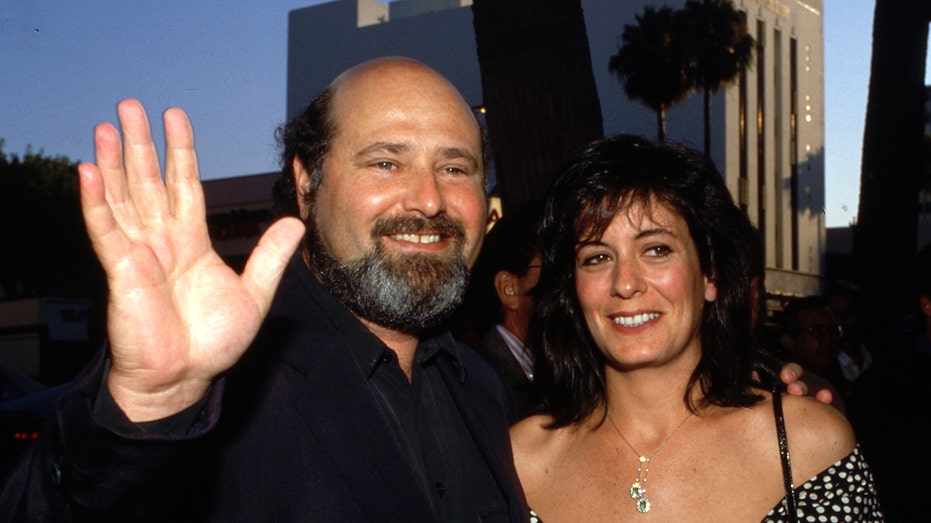
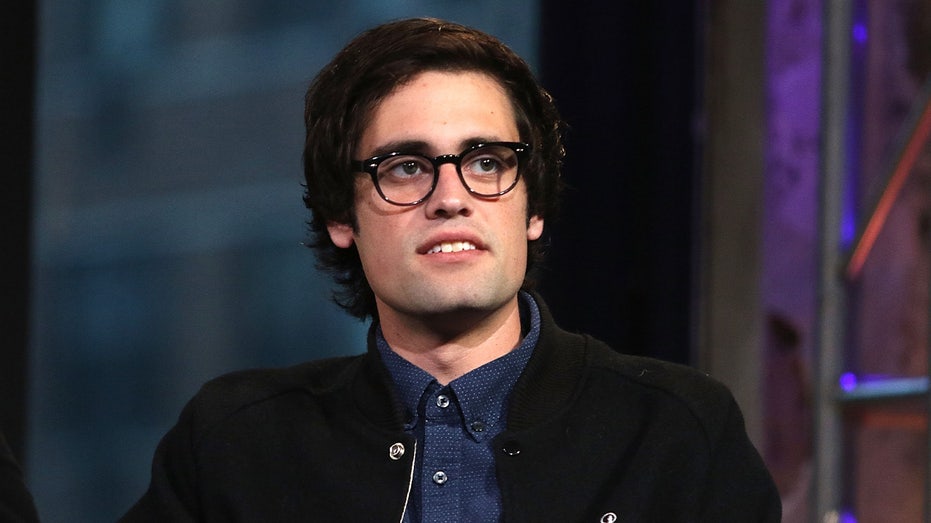
The alleged murder of beloved director and actor Rob Reiner and his wife Michele, reportedly at the hands of their 32-year-old son Nick, is more than a horrific family crime. It is a convergence point for several of the most uncomfortable issues in American life: the mental health collapse of young adults, the pressures and distortions of celebrity family systems, the limits of the criminal‑justice system in cases involving apparent psychiatric distress, and the way the media narrates — and often sensationalizes — domestic tragedy.
What makes this story especially consequential is not only who Rob Reiner was — a political and cultural figure with deep ties in Hollywood and Washington — but what this crime suggests about where our social safety nets fail even the most privileged families. When a wealthy, well-connected family in a neighborhood like Brentwood cannot prevent a trajectory that ends in double homicide, it forces a darker question: what chance do families have who lack money, influence, or access?
The bigger picture: Hollywood tragedy in a long American lineage
Hollywood has seen family violence and shocking deaths before — from Phil Spector’s murder conviction to the Menendez brothers’ killing of their parents, from Robert Blake to the still-contested narratives around Natalie Wood. But this case sits closer to the Menendez and Spector precedents in one respect: the collision between celebrity, family dysfunction or distress, and a criminal-justice system that struggles to parse mental health, privilege, and accountability.
Historically, high-profile domestic homicides involving famous figures tend to become cultural Rorschach tests. The Menendez case in the 1990s became a battleground over abuse, entitlement, and whether juries could see wealthy young defendants as victims. Phil Spector’s trial raised questions about misogyny, celebrity impunity, and how long Hollywood would look away from known patterns of violence. In each case, the courtroom proceedings became a proxy for wider debates on class, power, trauma, and justice.
The Reiner case arrives at another inflection point. Over the last decade:
- U.S. adult serious mental illness rates have hovered around 1 in 20, according to the National Institute of Mental Health.
- Domestic homicide remains stubbornly persistent; FBI data shows roughly 1 in 5 homicide victims are killed by family members.
- High-cost urban centers like Los Angeles have seen a surge in visible mental health crises among young adults, while treatment systems remain fragmented and overloaded.
Against that backdrop, a son reportedly behaving erratically at a high-profile Christmas party, then accused of stabbing his parents to death within 24 hours, is not simply a grim family story. It’s a case study in how the warning signs we tolerate — or normalize — can turn catastrophic, even in circles with supposedly unlimited resources.
What this really means: mental health, family privilege, and the criminal-justice bind
Several elements stand out in the emerging narrative:
- Witness accounts of strange, destabilized behavior. Reports from Conan O’Brien’s Christmas party describe Nick as “freaking everyone out,” acting “crazy,” and obsessively asking guests if they were famous. That’s not just social awkwardness; it sounds like potential paranoia, disordered thinking, or a break from reality — classic signs of acute psychiatric crisis or substance-induced psychosis.
- The rapid escalation from public disturbance to lethal violence. If the timeline holds — party argument one night, double homicide the next — the interval underscores how quickly family conflict involving an unstable individual can escalate. Domestic violence advocates have long warned that family disputes can turn fatal in hours, not weeks.
- A high-profile defendant in a system built for low-profile cases. Los Angeles County’s justice system is overburdened, underfunded, and deeply politicized. When the accused is the son of a famous Hollywood and political insider, district attorneys face two contradictory pressures: avoid any perception of leniency, and avoid appearing vengefully punitive in a case that may involve serious mental illness.
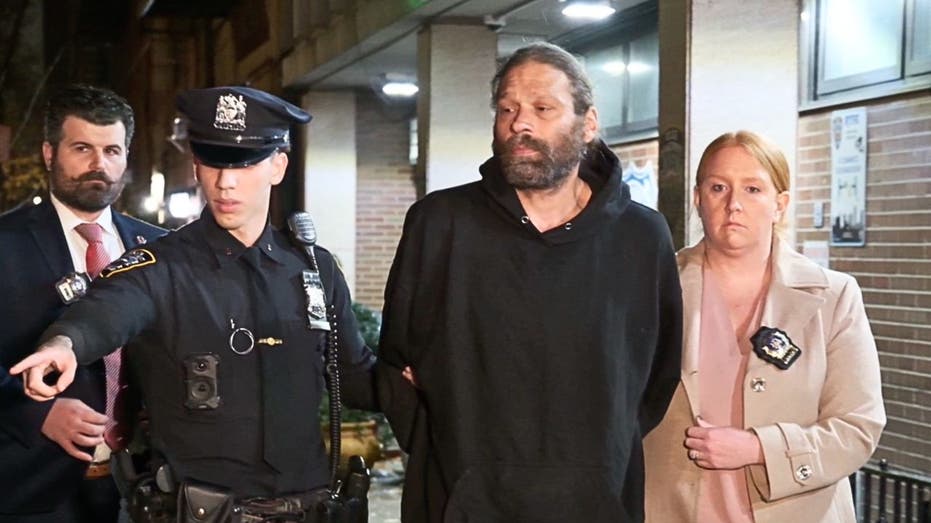
The charging decision — two counts of first-degree murder with special circumstances, opening the door to life without parole or the death penalty — signals that prosecutors are treating this as a conventional aggravated homicide, at least at the outset. Yet the visual of Nick in a blue suicide-prevention vest in court hints that his mental state is going to be central to the defense strategy and to public debate.
In other words, this case is likely to become a crucible for the question: How should we punish — or treat — those who commit horrific violence under conditions of serious mental disturbance? It is the same question that recurs after mass shootings, high-profile domestic murders, and cases involving psychosis, addiction, or traumatic brain injury. The answers remain inconsistent, often driven more by political optics than by evidence-based policy.
The overlooked dynamics: when privilege does not buy safety
The Reiner murders will inevitably be covered as a Hollywood tragedy. What risks being ignored is the way this case punctures the comforting assumption that wealth and status insulate families from the worst outcomes of mental and behavioral crises.
In reality, privilege often changes the shape of risk rather than eliminating it:
- Access to resources means access to treatment, but also to enablers — lawyers, PR advisors, and social circles that may protect a struggling family member from consequences until it’s too late.
- Shame and reputation loom larger. In a celebrity family, admitting that an adult child is violent, unstable, or addicted can feel professionally and politically explosive. That can delay decisive action: involuntary holds, restraining orders, or firm boundaries.
- The illusion of control can be stronger. When you are used to solving problems with money and connections, it’s easy to believe a son melting down at a party is manageable — a PR issue rather than a life-or-death warning.
For every Reiner family in Brentwood, there are thousands of families in far less visible neighborhoods living with similar fears about an adult child whose behavior has become unpredictable or dangerous. The difference is that those families often cannot find a psychiatrist taking new patients, cannot afford residential treatment, and may not even be able to get police to respond quickly to escalating behavior unless someone is already hurt.
In that sense, the Reiner case is a macabre equalizer: a reminder that untreated or poorly treated mental illness and family conflict can overwhelm even the strongest structural advantages.
Expert perspectives: what professionals see behind the headlines
Forensic and mental health experts will be central to how this story unfolds. Their fields have grappled for decades with cases where mental illness, family systems, and high-profile defendants collide.
Renowned forensic psychiatrist Dr. Park Dietz, who has consulted on multiple high-profile homicide cases, has long argued that public perception of insanity defenses is distorted. In interviews about similar cases, he has noted that, “The vast majority of mentally ill people are not violent, and the vast majority of violent offenders are not found legally insane. The law sets a very narrow standard that doesn’t always track with clinical reality.”
That gap between legal and clinical views will matter here. If Nick’s behavior at the party reflects emerging or longstanding psychosis, his defense may lean toward diminished capacity or insanity claims. But legal insanity is rarely recognized; national data suggest less than 1% of felony defendants raise the insanity defense, and only a fraction of those succeed.
Domestic violence experts also see familiar patterns. Dr. Jacquelyn Campbell, a leading researcher on lethal domestic violence, has documented that a history of escalating conflict, substance use, or mental instability can be predictors of homicide risk within families. While this case involves adult child–parent violence rather than intimate-partner homicide, some risk dynamics — escalation, lack of effective intervention, untreated behavioral problems — can look similar.
Legal scholars will focus on the death penalty exposure. California has a governor-imposed moratorium on executions, but the statute remains on the books. Seeking special-circumstance murder charges in a high-profile case keeps the death penalty politically alive, even if executions are unlikely in the near term. That decision is less about this individual case and more about the long-running tug-of-war over whether California remains, in law, a death penalty state.
Data & evidence: how rare is this kind of crime?
Filicide (a parent killing a child) and parricide (a child killing a parent) are statistically rare but deeply consequential forms of homicide. According to a Bureau of Justice Statistics analysis:
- Roughly 2–4% of U.S. homicides involve offspring killing a parent.
- Parricide perpetrators are often adult sons in their 20s or 30s.
- A significant subset of parricide cases involves documented mental illness, long-term family conflict, or severe abuse histories.
However, public attention is not tied to prevalence; it’s tied to profile. When a famous figure is involved, an otherwise statistically rare crime becomes a national obsession. That can cut both ways. Intense coverage can spur conversations about mental health, family violence, and treatment access — or it can devolve into voyeurism and armchair psychiatry.
Nick’s appearance in a suicide-prevention vest is also a data point in a broader crisis. The U.S. suicide rate in 2023 reached its highest level in decades, with men in their 20s and 30s at particularly elevated risk. Jails and prisons have become some of the largest de facto mental health institutions in the country. The image of a high-profile defendant being protected from self-harm in custody is emblematic of that system failure: we are catching psychological collapse in the most punitive, least therapeutic setting possible.
Looking ahead: the trial, the narrative, and the policy stakes
This case will likely unfold along several tracks:
- The legal battle over intent and mental state. First-degree murder with special circumstances requires prosecutors to prove deliberate, premeditated killing and to sustain the special aggravating factors. The defense will almost certainly interrogate Nick’s psychiatric history, substance use, and state of mind. Expect a contest of expert witnesses and a fight over whether this was a calculated act or an explosion within a compromised mind.
- The media’s framing. Early coverage has already veered toward sensational detail — the party fight, the Brentwood setting, the connection to the Obamas, the suicide vest. The family’s public plea for privacy and for “speculation to be tempered with compassion and humanity” is a direct attempt to push back against this. Whether that plea is honored will shape how much this case informs public understanding versus feeding voyeuristic curiosity.
- The policy conversation that may or may not follow. At least three reforms are relevant but rarely discussed in sustained ways after cases like this:
- Strengthening and humanizing laws around involuntary psychiatric holds and long-term treatment for individuals in repeated crisis.
- Expanding community-based crisis response teams so families are not forced to choose between doing nothing and calling armed police.
- Reassessing the use of capital exposure in cases involving significant mental illness, in a state that has halted executions but not the death penalty itself.
Speculatively, if significant evidence of longstanding psychiatric issues emerges, this case could become a rallying point for both mental health advocates and criminal-justice reformers arguing that the U.S. still treats symptomatic behavior as a public safety issue first and a medical issue second.
The bottom line
The alleged killing of Rob and Michele Reiner by their son is not only a devastating loss for their family and for the communities they touched in entertainment and politics. It is a window into an American paradox: we live in a culture that talks about mental health constantly, yet still struggles to act when warning signs are flashing in front of us — especially within our own homes.
This case will be litigated in a courtroom, but the larger indictment may be of our broader systems: mental health care that is reactive and fragmented; a criminal-justice system asked to manage psychiatric crises with tools designed for punishment; and a media environment that too often rewards speculation over sober analysis. How the Reiner story is told — and what we choose to learn from it — will determine whether it becomes just another Hollywood tragedy, or a turning point in how we confront the quiet emergencies happening in families across the country.
Topics
Editor's Comments
One of the most troubling aspects of the Reiner case is how familiar its core dynamics are if you strip away the celebrity context. Many families quietly live with an adult child whose behavior has become erratic, volatile, or frightening, often after years of untreated mental illness or substance use. They cycle through emergency rooms, short hospital stays, and brief treatment windows, but rarely find sustained, integrated support. Policy debates tend to fixate on extreme reforms—loosening involuntary commitment laws, for instance—without investing in the expensive, unglamorous infrastructure of long-term community care, supportive housing, and family-centered interventions. The Reiners’ status may finally draw attention to this gap, but there is a risk that the story remains frozen as a Hollywood aberration rather than a systemic warning. A contrarian but necessary question is whether we will again focus on the individual ‘monster’ and the horror of his alleged acts, while ignoring the quieter, bureaucratic failures that paved the path to that bedroom in Brentwood. Until we confront those systemic shortcomings, we will continue to rely on police, jails, and prisons as our primary response to psychiatric crises—with predictably tragic results.
Like this article? Share it with your friends!
If you find this article interesting, feel free to share it with your friends!
Thank you for your support! Sharing is the greatest encouragement for us.