Trump’s $11 Billion Taiwan Arms Deal: How Porcupine Strategy and Missile Stockpiles Are Rewriting Deterrence

Sarah Johnson
December 18, 2025
Brief
An in-depth analysis of Trump’s $11B Taiwan arms deal, explaining how HIMARS, ATACMS, and drones reshape deterrence, test U.S. industrial capacity, and accelerate the strategic countdown in the Taiwan Strait.
Trump’s $11 Billion Taiwan Arms Deal: Deterrence, Deadlines, and the New Cold War in Asia
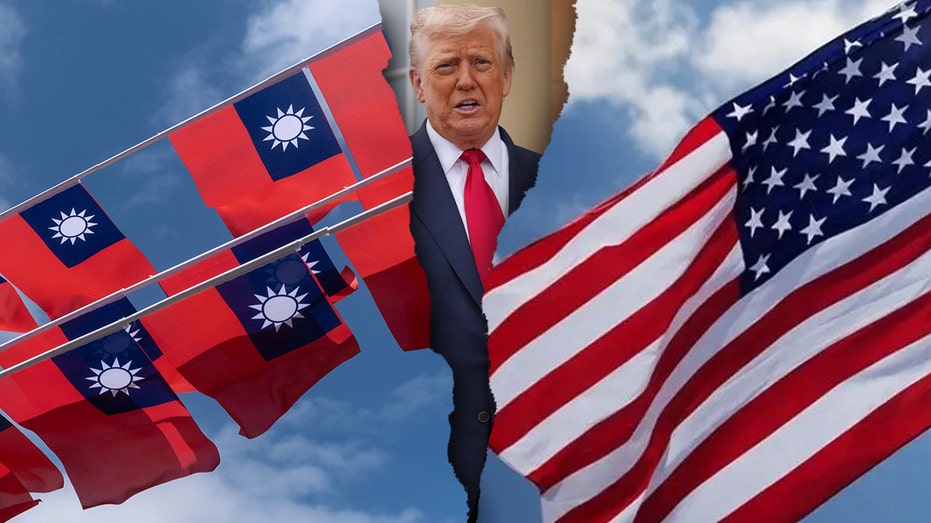
There is a reason this $11+ billion arms package to Taiwan is being described as historic. It is not just about weapons; it is about time. The Trump administration’s deal lands at the intersection of three converging clocks: China’s accelerating military buildup, Taiwan’s shrinking window for deterrence, and U.S. domestic debate over how much risk Washington is willing to run to keep Beijing at bay.
Why This Deal Matters Now
The headline number – more than $11 billion – makes this the largest single U.S. arms sale to Taiwan on record. But the composition of the package is far more revealing than the total price tag. High Mobility Artillery Rocket Systems (HIMARS), Army Tactical Missile Systems (ATACMS), self-propelled howitzers, drones, Javelin and TOW anti-tank missiles, and Harpoon refurbishment kits are not prestige platforms; they are tools for attrition warfare designed to make an invasion or blockade of Taiwan slow, painful, and uncertain.
This is Washington’s answer to a strategic question that has been hanging over the Indo-Pacific for a decade: if China is steadily eroding U.S. dominance around Taiwan, can Taiwan be turned into a porcupine – bristling with enough precise, mobile firepower that any attempt to seize it would be ruinously costly?
How We Got Here: The Long Arc of the Taiwan Arms Debate
To understand the significance, it helps to trace the evolution of U.S.–Taiwan defense ties.
- 1979 – The Taiwan Relations Act (TRA): After Washington switched diplomatic recognition from Taipei to Beijing, Congress passed the TRA, obligating the U.S. to provide Taiwan with arms of a “defensive character” and to maintain the capacity to resist coercion against the island. This deliberately stopped short of a formal defense treaty but created a legal foundation for ongoing arms sales.
- 1982 – The August 17 Communiqué: Washington signaled it would gradually reduce arms sales to Taiwan, even as it continued them under the TRA. This tension – promising both Beijing and Taipei contradictory things – has defined the “strategic ambiguity” era ever since.
- 1990s–2000s – Uneven support: Major packages were often delayed or watered down out of concern about provoking Beijing. Some key systems were withheld outright. Taiwan’s procurement was also hampered by its own political battles and budget constraints.
- 2010s – China’s tipping point: The People’s Liberation Army (PLA) began closing the capability gap with the U.S., especially in missiles, air defense, and naval power around Taiwan. PLA Rocket Force deployments across from Taiwan expanded dramatically; by some U.S. estimates, China now fields more than 1,000 ballistic and cruise missiles aimed at the island and surrounding bases.
- Late 2010s–2020s – The shift to asymmetry: A broad consensus emerged in Washington defense circles that Taiwan should move away from big, vulnerable platforms (tanks, large ships, advanced fighter fleets as the centerpiece) and toward mobile, survivable, cheaper precision systems that can survive PLA strikes and still exact a heavy cost.
The current $11+ billion package is a textbook example of this “asymmetric defense” doctrine being operationalized at scale.
What the Weapons Tell Us About U.S. Strategy
Look closely at the core systems:
- 82 HIMARS launchers & 420 ATACMS missiles: HIMARS has become iconic in Ukraine, where it has allowed Kyiv to strike logistics hubs, ammunition depots, and command posts deep behind Russian lines. In Taiwan’s hands, paired with ATACMS, these systems are about threatening PLA staging areas, ports of embarkation, and airfields along China’s coast and potentially Chinese ships at sea.
- 60 self-propelled howitzers: These provide mobile, survivable artillery that can relocate quickly – crucial when facing dense missile and drone surveillance.
- Drones worth >$1 billion: Unmanned systems are becoming the backbone of modern conflict – for reconnaissance, targeting, and increasingly strike missions. For Taiwan, drones are essential to maintain situational awareness over the Strait and to cue other fires.
- Javelin & TOW missiles (>$700 million): Lessons from Ukraine show well-trained infantry with modern anti-tank missiles can significantly blunt armored advances. These systems are intended to turn any PLA landing into a costly slog through urban and mountainous terrain.
- Harpoon refurbishment & software upgrades (~$1.1+ billion): Keeping existing anti-ship missiles viable and improving command, control, and targeting software is about stitching these disparate systems into an integrated kill chain – so Taiwan can detect, track, and hit naval and amphibious targets quickly.
This is not a symbolic sale. It is an operational blueprint: Taiwan as a distributed, networked, missile-centric defense environment designed to survive the first strike and keep fighting.
China’s Furious Response – and What’s Behind It
Beijing’s sharp condemnation – warning that Taiwan is becoming a “powder keg” and calling independence efforts “doomed” – follows a familiar script but reflects deeper anxieties.
From Beijing’s perspective, these sales:
- Complicate invasion planning: Every additional HIMARS battery and coastal missile launcher increases the number of targets the PLA would need to neutralize in a first strike. If Taiwan can keep enough launchers hidden, dispersed, or hardened, the PLA would have to plan for sustained attrition, not a quick decapitation.
- Undermine psychological coercion: A key Chinese strategy has been to convince Taiwanese voters that resistance is futile and the U.S. unreliable. High-profile arms packages challenge that narrative, reinforcing the sense that Washington is betting on Taiwan’s long-term defense.
- Signal tighter U.S.–Taiwan alignment: Even though these are “just” arms sales, Beijing sees them as de facto security guarantees, moving the U.S. and Taiwan closer to a quasi-alliance.
The rhetoric about the U.S. using Taiwan to “contain China” is partly domestic messaging. The Chinese Communist Party needs to frame any U.S. support to Taiwan as hostile encirclement. But underneath the propaganda, PLA planners are forced to confront a harder problem: a Taiwan that is more capable, better networked with the U.S., and learning lessons from Ukraine in real time.
Are We Sleepwalking Toward a Taiwan Crisis?
Critics of large-scale arms sales warn that these packages could accelerate the very war they are meant to prevent, by convincing Beijing that its window to act is closing. The logic is simple: if Taiwan’s defenses get significantly stronger after, say, 2028, the PLA might calculate it must move sooner rather than later.
Here is where the debate gets uncomfortable. Multiple U.S. commanders in recent years have suggested China could attempt coercive action or an invasion in the late 2020s or early 2030s. At the same time, U.S. defense planners have warned that America’s own stockpiles of critical munitions – including some of the very systems in this package – are dangerously thin after years of underinvestment and heavy transfers to Ukraine.
The question is whether this deal closes the deterrence gap faster than it sharpens China’s sense of urgency. The answer will depend on implementation: delivery timelines, Taiwan’s training and doctrine, and the speed with which the U.S. backfills its own inventories.
What Mainstream Coverage Often Misses
Much of the public discussion focuses on the dollar amount and China’s angry statements. Several deeper issues deserve more attention:
- Industrial capacity as strategy: The U.S. may “burn through key missiles in a week” in a high-intensity conflict with China, as some experts warn. That makes this deal not just a sale, but a production signal. Expanding HIMARS, ATACMS, Javelin, and drone manufacturing capacity for Taiwan also expands capacity the U.S. itself would rely on if war came.
- Taiwan’s political will and reforms: Weapons are only as effective as the doctrine and political decisions behind them. Taiwan has been rethinking conscription, reserve training, and civil defense – historically weak points. If this package is to be more than a photo op, Taipei must follow through on tough, often unpopular reforms.
- Escalation ladders: These systems are all nominally defensive, but ATACMS in particular can reach targets well beyond Taiwan’s immediate vicinity. That raises questions about how Beijing would respond if these capabilities were used against coastal mainland bases in a crisis.
- Signal to allies beyond Taiwan: Tokyo, Seoul, and Manila are watching closely. A robust, sustained U.S. commitment to Taiwan reinforces broader perceptions of American reliability in the Indo-Pacific. A stumble – delayed deliveries, political reversals, or export controls – would do the opposite.
Expert Perspectives
Several defense and regional experts frame this package less as an isolated deal and more as a test of whether Washington has fully absorbed lessons from recent conflicts:
- Asymmetric defense advocates argue that this is finally the scale of munitions-centered support Taiwan needs. They note that in high-intensity wars, cheap, distributable systems – drones, truck-mounted launchers, man-portable missiles – often punch above their weight compared to billion-dollar platforms.
- China specialists warn that Beijing’s threshold for “intolerable” U.S. actions is shifting. While previous arms sales were grudgingly accepted as routine, a package of this size, clearly designed to target PLA logistics and staging areas, could factor into tougher Chinese coercive tactics short of war: cyberattacks, economic pressure, or more aggressive air and naval incursions.
- Arms control and escalation experts raise concerns about a slowly militarizing status quo, where each new sale normalizes a higher level of tension in the Taiwan Strait, but without any parallel diplomatic track to manage crisis communication or miscalculation.
Key Data Points and Trends
- PLA spending: China’s official defense budget has grown roughly fivefold since the early 2000s, with much of that focused on missile forces, naval platforms, and airpower relevant to a Taiwan scenario.
- U.S. arms sales trajectory: U.S. notifications of arms sales to Taiwan have increased in frequency and strategic sophistication over the past decade, shifting from platform-centric to munitions and network-centric systems.
- Military balance: Multiple independent assessments suggest the PLA has achieved local numerical superiority in many categories around Taiwan, but Taiwan’s geography, potential for asymmetric defense, and U.S. support still complicate any assault.
- Stockpile strains: U.S. officials and think tank studies have repeatedly warned that current U.S. inventories of long-range precision munitions are insufficient for a prolonged conflict, making rearmament a strategic priority.
What to Watch Next
Several indicators will reveal whether this arms deal genuinely strengthens deterrence or simply adds fuel to an already volatile standoff:
- Delivery timelines: Are these systems and munitions arriving in time to matter, or bogged down by production bottlenecks and bureaucratic delays?
- Taiwan’s training tempo: Does Taiwan accelerate large-scale exercises integrating HIMARS, drones, and coastal defense, and does it reform reserve and civil defense structures?
- Chinese military signaling: Do we see a spike in PLA exercises simulating blockades, precision strikes on mobile launchers, or joint landing operations?
- U.S. domestic debate: Does this package trigger serious Congressional scrutiny about Indo-Pacific munitions stockpiles, industrial capacity, and war-gaming assumptions – or does the conversation stay stuck at symbolic politics?
The Bottom Line
The $11+ billion arms sale is not just another line item in the foreign military sales ledger. It is a bet – that more capable, survivable, and plentiful weapons in Taiwanese hands can raise the costs of aggression enough to keep the peace. But it is also a test of whether Washington, Taipei, and their allies can move as fast as Beijing is transforming the regional balance.
Deterrence in the Taiwan Strait is no longer a static equation. It is a race between capacity, political will, and perception. This deal shifts the numbers. Whether it changes the outcome will depend on what comes next.
Topics
Editor's Comments
One underappreciated angle is how much this deal exposes the mismatch between U.S. declaratory policy and operational reality. Washington still clings to the language of the Taiwan Relations Act and ‘strategic ambiguity,’ yet it is fielding a set of capabilities that look very much like the backbone of a shared war plan: long-range fires, integrated targeting, and survivable command and control. In practice, the U.S. is edging toward de facto security alignment with Taiwan without the political and diplomatic scaffolding that usually accompanies such a shift – no formal alliance, no crisis communication mechanisms with Beijing tailored to these new risks, and limited public debate at home about what Americans are actually prepared to do if deterrence fails. That gap matters. History suggests that when deterrence architectures evolve faster than the political narratives and diplomatic arrangements around them, the risk of miscalculation grows. The hardware in this deal may be necessary, but without a parallel strategy for managing perceptions and escalation, it is not sufficient.
Like this article? Share it with your friends!
If you find this article interesting, feel free to share it with your friends!
Thank you for your support! Sharing is the greatest encouragement for us.