Why the Vatican’s 25,000‑Ribbon Nativity Marks a New Phase in the Global Abortion Battle

Sarah Johnson
December 18, 2025
Brief
The Vatican’s 25,000‑ribbon Nativity is more than devotional art. It’s a strategic, movement‑aligned signal in a post‑Roe world, reshaping how the Church intervenes in global abortion debates.
Vatican’s Pro‑Life Nativity Is About Much More Than Ribbons – It’s a Strategic Signal in a Global Abortion Fight
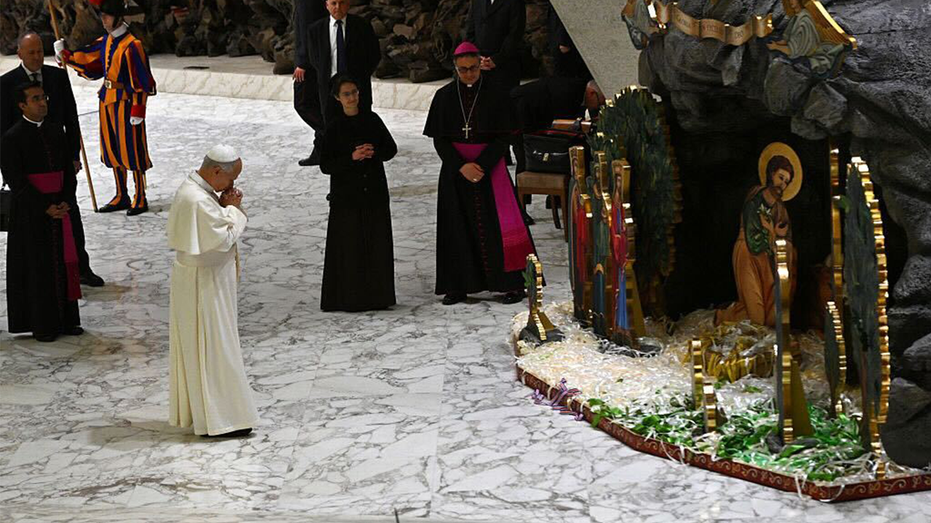
The Vatican’s decision to center this year’s Nativity scene around 25,000 babies said to have been “saved from abortion” is not just a devotional gesture. It’s a carefully calibrated cultural and political statement at a time when abortion battles are reshaping law, religion, and democracy from the United States to Latin America and Europe.
By weaving tens of thousands of ribbons into the straw beneath a pregnant Mary, the Vatican is doing three things simultaneously: reaffirming Catholic doctrine on life, visually legitimizing a controversial brand of street-level activism, and testing how far it can go in symbolically intervening in a post‑Roe world without directly wading into partisan politics. The display is less about one Christmas and more about where the global abortion debate is headed next.
The deeper context: From Roe’s fall to Rome’s stage
To understand why this Nativity matters, you have to place it in the arc of the last 50 years of abortion politics.
Since the 1973 Roe v. Wade decision, the Catholic Church has consistently positioned abortion as a foundational “non‑negotiable” moral issue. Papal documents from Humanae Vitae (1968) to Evangelium Vitae (1995) framed abortion as an intrinsic evil and called for legal protection of the unborn. Yet the Church has often struggled to translate doctrinal clarity into public influence, especially in secularizing Western societies where abortion had been widely legalized and increasingly normalized.
That dynamic shifted after the U.S. Supreme Court’s 2022 decision in Dobbs v. Jackson Women’s Health Organization, which overturned Roe and returned abortion regulation to the states. The decision sparked a surge in both pro‑life and pro‑choice mobilization, ballot measures, and litigation. Pro‑life organizations like 40 Days for Life — whose work is being honored in the Vatican display — claim increased impact and visibility, but they also face growing regulatory and legal scrutiny over clinic protests, data privacy, and alleged harassment.
Against this global backdrop, the Vatican’s choice of Nativity theme is not incidental. It comes after a decade in which Pope Francis (now succeeded in this story by Pope Leo XIV) sought to emphasize mercy, poverty, and migration in public-facing imagery, sometimes downplaying abortion as the central marker of Catholic identity. This new display, explicitly celebrating anti‑abortion activism and quoting a pope asserting that “life is protected from conception,” signals a recalibration: a return to more overt, visually powerful pro‑life messaging.
Why this particular Nativity is different
Nativity scenes have long doubled as catechesis and politics. Medieval European crèches reinforced social hierarchies; Cold War-era displays sometimes framed Christmas as a bulwark against atheistic communism. But several aspects of this year’s Vatican installation stand out:
- A pregnant Mary: Depicting Mary visibly pregnant foregrounds the fetus — in Catholic theology, Christ Himself — as a person before birth. It’s a visual argument for personhood at conception.
- Quantified activism: The 25,000 ribbons explicitly connect spiritual imagery to measurable outcomes attributed to a specific campaign, 40 Days for Life. That’s a notable shift from generic “pro‑life” symbolism to endorsing a particular operational model: prayer vigils and presence outside abortion facilities.
- Global sourcing: The Costa Rican artist and the Central American donation highlight a trend: much of the most energized pro‑life activism now comes from the Global South, even as some Western countries liberalize abortion laws.
The scene effectively turns the Vatican’s audience hall into a narrative space: abortion becomes not a contested political question but the backdrop for a story of rescue, intercession, and gratitude. In doing so, it reframes a policy debate as a spiritual victory tally.
What this really signals about Vatican strategy
Behind the aesthetics lies a strategic calculation: the Church is repositioning itself to shape the next phase of the abortion debate, which is moving from courtroom abstractions to on‑the‑ground access, local regulations, and conscience protections.
Several motivations appear to be in play:
- Re‑centering abortion as a moral priority: After years when critics accused Rome of being ambiguous or “soft” on abortion, publicly blessing a Nativity that celebrates specific anti‑abortion interventions is a rebuttal. It tells pro‑life activists: the Vatican sees you, and you’re not just tolerated — you’re showcased.
- Promoting a “pastoral, not punitive” model: By highlighting prayer, support for mothers, and individual stories of babies “saved,” the Vatican is amplifying a compassionate, accompaniment-based narrative, not primarily a legalistic or punitive one.
- Testing public reception: The Nativity allows the Church to gauge global reaction to more explicit pro‑life imagery without issuing new doctrinal documents or direct interventions in national politics. Symbolism becomes a low-risk way to reassert priorities.
The contested role of 40 Days for Life
40 Days for Life’s inclusion is both deliberate and controversial. The organization, founded in 2004 in Texas, claims to have facilitated over 25,000 “saved lives” globally through prayer vigils, fasting, and witness outside abortion facilities. While supporters describe the campaigns as peaceful and prayerful, critics — including clinic staff and reproductive rights groups — argue that such vigils can cross the line into intimidation or emotional pressure.
By incorporating the group’s self-reported numbers into the Nativity, the Vatican is doing more than offering moral encouragement; it is implicitly validating their metrics and methods. That matters because those methods are increasingly at issue in policy debates:
- Several European countries have debated or enacted buffer zones around clinics to limit protests.
- In the United States, local ordinances and federal law (such as the FACE Act) govern conduct at clinic entrances.
- Some jurisdictions are exploring whether “sidewalk counseling” constitutes protected speech or targeted harassment, especially when aimed at vulnerable or distressed women.
By turning those numbers into sacramental symbolism — each ribbon a saved life — the Vatican strengthens activists’ claims that their presence is not just expression but literally life‑saving. For pro‑choice advocates, this risks sacralizing behavior they see as coercive.
“Scientific reality” and the rhetoric of the womb
Shawn Carney’s remarks that the Nativity “speaks to the scientific reality of the unborn child” reflect a broader pro‑life strategy: blend theological claims with scientific language to appeal beyond faith communities.
From ultrasound images to fetal heartbeat laws, pro‑life campaigns have increasingly leveraged developments in prenatal medicine. Embryology clearly shows that a genetically distinct human organism exists from conception, a point that many medical experts acknowledge. However, whether that organism should be granted full legal personhood from conception remains a philosophical, legal, and political question, not a strictly scientific one.
By collapsing the distinction — equating “scientific reality” with the moral conclusion that abortion is “by far the greatest moral crisis of our time” — pro‑life leaders seek to frame opposition to abortion as rational and evidence-based, while portraying support for abortion rights as denial of basic facts. Expect this data‑laden moral rhetoric to intensify, especially as prenatal imaging becomes even more detailed and accessible.
What mainstream coverage tends to miss
Most reporting on this story will focus on the optics: a beautiful Nativity, a sympathetic activist, a pope blessing the scene. What typically gets less attention are the quieter, underlying shifts this display hints at:
- A pivot back to movement-aligned symbolism: The Vatican is not just reiterating doctrine; it is borrowing the movement’s language of “saved babies” and embedding it in its holiest imagery. That tightens the bond between institutional Church and grassroots activists, after a period when some felt sidelined.
- A test case for a more assertive papacy on abortion: Carney’s comment that Pope Leo XIV is “righting the ship” compared with Francis captures a sentiment among certain conservatives: they want clearer, sharper lines on life issues. The Nativity is a visual reassurance that those expectations are being heard.
- A global redistribution of moral energy: The fact that the art and donation come from Costa Rica — a country that only recently legalized in‑vitro fertilization after a long standoff with the Inter‑American Court of Human Rights — shows how the epicenter of Catholic pro‑life zeal is increasingly in the Global South.
Data points that frame the stakes
Carney cites “72 million abortions around the world every year.” That estimate aligns with figures from the Guttmacher Institute and the World Health Organization, which have placed the global annual number of induced abortions at around 73 million in recent years. Two less‑discussed data points are crucial for understanding the broader picture:
- Legal status vs. abortion rates: Research consistently shows that abortion rates do not drop simply because abortion is banned; they tend to be lower where contraception is widely available and sex education is comprehensive. The Church has historically opposed artificial contraception, a stance that complicates data‑driven strategies to reduce abortions.
- Safety disparities: The WHO has estimated that almost half of all abortions worldwide are unsafe, disproportionately affecting women in poorer countries with restrictive laws. This means that efforts to “save babies” through prohibition alone may elevate maternal mortality unless accompanied by extensive social support and health care.
The Vatican’s ribbon‑strewn manger implicitly celebrates outcomes (fewer abortions) without directly confronting these tensions: How do you reduce abortions in ways that protect women’s health and dignity while remaining faithful to Catholic teaching on contraception and sexuality? That unresolved question will define the next phase of Catholic engagement on abortion more than any one Nativity scene.
Looking ahead: What to watch
This Nativity may be a preview of a broader shift rather than an isolated gesture. Watch for:
- Policy interventions: Will Pope Leo XIV or Vatican dicasteries issue new guidance on political engagement, conscience protections for health workers, or support for crisis pregnancy centers?
- Global South leadership: Expect more Rome‑endorsed initiatives rooted in Latin America, Africa, and Asia, where Catholicism is growing and where pro‑life activism often has strong local support.
- Backlash and counter‑narratives: Women’s rights groups and some Catholic theologians may increasingly push back against the romanticization of anti‑abortion activism without equal emphasis on social safety nets, maternal health, and gender justice.
- Internal Church debates: Priests, bishops, and lay leaders will have to navigate how to echo Rome’s symbolism locally. Do they double down on clinic‑adjacent activism, or focus on long‑term structural support for families?
The bottom line
On its surface, the Vatican’s pro‑life Nativity is a visually striking celebration of babies said to be spared from abortion. Underneath, it’s a strategic move in a long-running struggle over the moral imagination of the global Catholic community and the broader public. By fusing the Nativity — one of Christianity’s most beloved images — with a tally of “saved lives” from a specific form of activism, the Vatican is betting that aesthetics, symbolism, and story can do what policy arguments alone often can’t: reframe abortion not as an abstract right or wrong, but as a deeply personal drama of life, loss, and hope.
How persuasively that story travels beyond already convinced believers will shape not only the politics of abortion, but also the future credibility of the Church as a moral voice in a divided world.
Topics
Editor's Comments
What makes this Nativity unusually revealing is not the Church’s opposition to abortion—that’s been stable for decades—but the decision to fuse a devotional scene to a specific activist metric and tactic. It raises a larger, underexplored question: is the Catholic Church moving from being primarily a teacher of principles to being an explicit co‑author of movement strategy? If so, the Church will have to own not just the moral ends but the practical means, including how protesters behave outside clinics and what happens to women who carry unplanned pregnancies to term. The display’s emotional clarity contrasts with the policy ambiguity around contraception, social welfare, and gender equality that ultimately shape abortion rates. In the coming years, the Church’s credibility may hinge less on how emphatically it celebrates ‘saved babies’ and more on whether it can present a persuasive, humane blueprint for the complex lives of the mothers attached to those ribbons.
Like this article? Share it with your friends!
If you find this article interesting, feel free to share it with your friends!
Thank you for your support! Sharing is the greatest encouragement for us.